


























































Arterial Blood Pressure Response to Heavy Resistance Exercise

Arterial Blood Pressure Response to Heavy Resistance Exercise
Photo Credit Image by Flickr.com, courtesy of Iwan Gabovitch

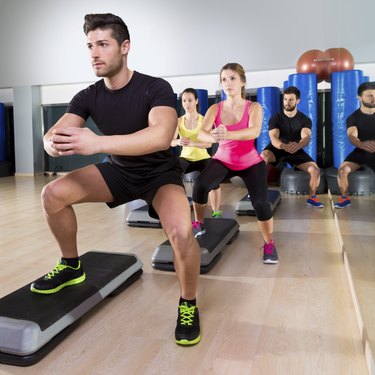
Resistance training, or lifting weights, is an excellent way to increase strength, improve balance and enhance lean body mass. Whether you lift free weights, use exercise machines, do calisthenics or use exercise balls, blood pressure is affected by the amount of effort you exert.

Background

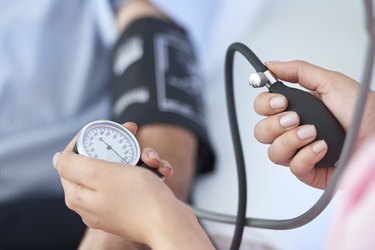
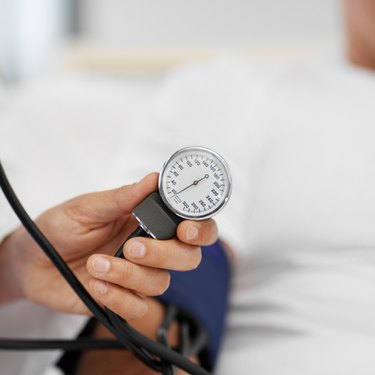
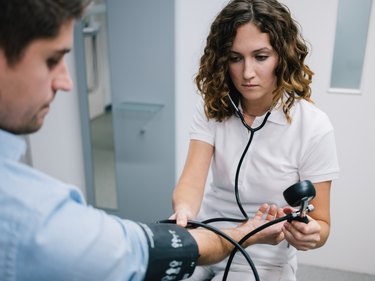
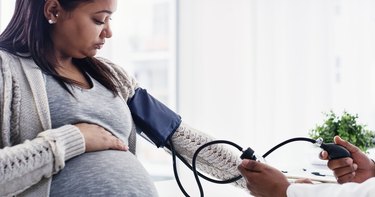
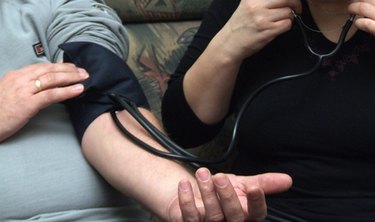
When your heart contracts, it sends 50ml to 75ml of blood through vessels, according to McArdle, Katch and Katch in "Exercise Physiology: Energy, Nutrition, and Human Performance." This increases the pressure on your arterial walls. The measurement of this pressure is known as systolic blood pressure, which is measured in millimeters of mercury (mmHg). The pressure on your arterial walls between heartbeats is known as diastolic blood pressure. An average blood pressure reading would be 120/80 mmHg (read 120 over 80) with 120 being your systolic blood pressure and 80 your diastolic blood pressure.

Response

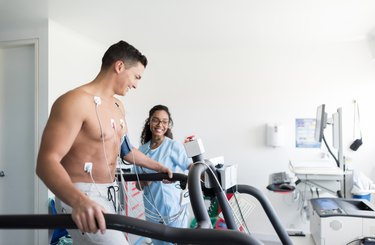
Any type of exercise increases systolic blood pressure based on the intensity of your workout. Diastolic blood pressure usually increases with exercise, too, but occasionally it decreases during aerobic activities. As your muscles contract to lift weights, they compress your blood vessels. This causes a spike in blood pressure, say McArdle, Katch and Katch. The American College of Sports Medicine's Resource Manual for Guidelines for Exercise Testing and Prescription explains that blood pressure can average 300/108mmHg during intense resistance training. ACSM also says that blood pressure typically peaks at 320/250 mmHg, but it can go even higher.

Recovery

Following resistance exercise, blood pressure rapidly returns to normal levels. In fact, ACSM explains that people who resistance train regularly tend to have lower systolic and diastolic blood pressure than previously.

Alternatives

Holding your breath while lifting heavy weights is called the Valsalva maneuver. This causes a significant increase in blood pressure. ACSM recommends exhaling while lifting weights and inhaling while lowering them to minimize blood pressure spikes. According to ACSM, blood pressure doesn't increase as significantly during a single repetition maximal lift as it does with lighter weights when they are lifted to the point of fatigue. Therefore, to prevent extreme blood pressure spikes during exercise, you could do single maximal lifts or multiple repetitions until you are tired but not completely fatigued.

Caution

If you have hypertension (systolic blood pressure over 140 or diastolic blood pressure over 90), heart disease or diabetes, use extra caution when performing resistance exercises. Do not lift extremely heavy weights or do the Valsalva maneuver.

References

  • "Exercise Physiology: Energy, Nutrition, and Human Performance;" William D. McArdle, Frank I. Katch, and Victor L. Katch; 2007
  • ACSM's Resource Manual for Guidelines for Exercise Testing and Prescription; American College of Sports Medicine; 2006

Article reviewed by Anton Alden Last updated on: Jan 22, 2010

Must see: Photo Galleries