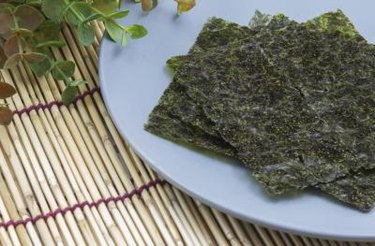
Nori seaweed, also known as roasted seaweed, often comes in large, flat sheets suitable for use in making sushi. You may also crumble it into your favorite recipes to add flavor without adding fat. Eating roasted seaweed provides you with a variety of nutritional benefits.
Vitamin B-6
Video of the Day
A 1/3-cup serving of roasted seaweed provides you with 39 percent of the daily recommended intake of vitamin B-6 if you follow a 2,000 calorie diet. This vitamin, also known as pyroxidine, influences brain function, helping manufacture neurotransmitters and hormones. Research published in the June 2011 issue of "Seminars in Cell and Developmental Biology" indicates that the vitamin B-6 in roasted seaweed plays a critical role in human brain development, although too much may also have detrimental effects.
Video of the Day
Fiber
Include a serving of roasted seaweed in your diet, and you take in 3 g of fiber. Adult men and women require 25 to 38 g of fiber each day, although your needs decrease as you age -- those over the age of 51 need 21 to 30 g daily. The fiber in this food may help lower your risk of diabetes and heart disease, but it also influences bowel health; getting adequate amounts of fiber prevents diverticulitis, hemorrhoids and constipation.
Iodine
Roasted seaweed is a good source of iodine, with one serving containing 65 percent of the amount you should consume each day. Your thyroid relies on iodine to function correctly; without enough in your meal plan, you may develop an enlarged thyroid or other thyroid problems. It is critical to get enough iodine in your diet while pregnant -- without this nutrient, you may give birth to a baby with mental retardation. While sushi is not recommended during pregnancy due to the dangers posed by possible raw fish bacterial infections and mercury contamination, you can consume roasted seaweed in other dishes.
Vitamin B-12
Eat roasted seaweed to get more vitamin B-12 in your diet. A 1/3-cup portion of this sea vegetable contains 21 percent of the amount of the vitamin B-12, also called cobalamin, you require each day. Vitamin B-12 helps form red blood cells, DNA, RNA and boosts immune function. A study published in the July 2011 issue of the "European Journal of Pediatrics" suggests that elderly populations are more likely to have a deficiency than other age groups, although children may also experience a lack of this important vitamin.
- Fitbit: Seaweed, Nori, Dry
- University of Maryland Medical Center; Vitamin B-6 (Pyridoxine); June 2009
- "Seminars in Cell and Developmental Biology"; Pyridoxine Supply in Human Development; F.G. Bowling; June 2011
- MedlinePlus: Dietary Fiber
- American Thyroid Association: Iodine Deficiency
- University of Maryland Medical Center; Vitamin B12 (Cobalamin); June 2009
- "European Journal of Pediatrics"; Solid Food Refusal...; E. Ide, et al.; July 2011