
























































Description of Flexibility in a Fitness Plan

Description of Flexibility in a Fitness Plan
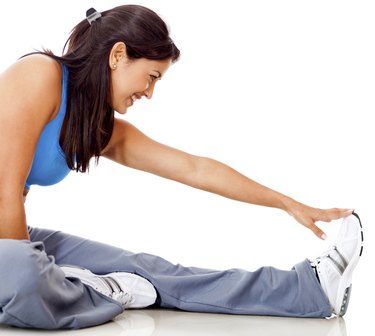
Photo Credit stretching girl image by Dmitri MIkitenko from Fotolia.com

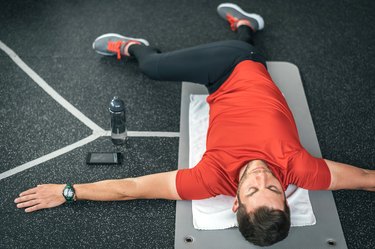
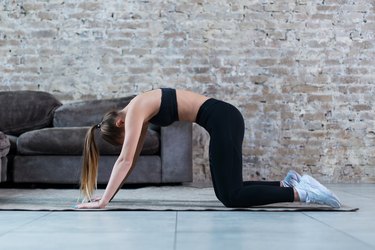
Flexibility is one of the three key components in a fitness plan, the others being cardiorespiratory exercise and resistance exercise. One exciting factor in stretching is that you can work on it at almost any time. "Active Living Every Day," by Steven Blair, Andrea Dunn, Bess Marcus, Ruth Ann Carpenter and Peter Jaret, suggests stretching during TV commercials. Stretch while sitting at your desk, cooking dinner, cleaning house or doing yard work too.

Definition

"Flexibility is the ability to move a joint through its complete range of motion," according to the American College of Sports Medicine's "Guidelines for Exercise Testing and Prescription."

Importance

You have reduced movement of a joint if the muscles surrounding it are tight. ACSM explains that decreased flexibility can diminish your ability to perform the activities of daily living, especially as you age. "Stretching Anatomy," by Arnold Nelson and Jouko Kokkonen, adds that stretching decreases muscle soreness and aids with injury prevention. Therefore, stretching should be an integral part of your fitness plan.

Methods

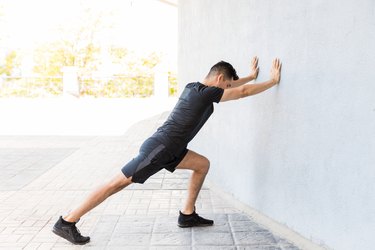
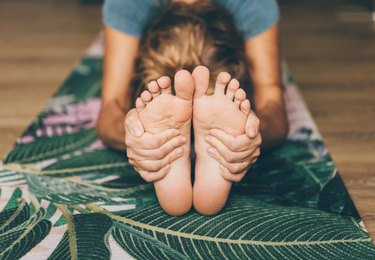
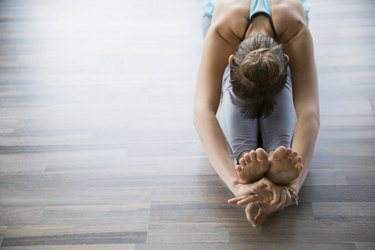
There are four major types of stretches according to "Stretching Anatomy": dynamic, ballistic, proprioceptive neuromuscular facilitation (PNF) and static stretching. Nelson and Kokkonen explain that dynamic stretching involves fast, sport-specific movements and is similar to ballistic stretching, which is a series of "bobbing movements" that use contraction of some muscles to stretch other muscles. PNF utilizes a series of muscle contractions and relaxations. Due to the high risk of injury, the general population should avoid these three modes of stretching. Rather, ACSM recommends static stretching, which involves slow, controlled movements and pauses.

Frequency

Start by stretching two or three times each week, but make a goal of stretching everyday. Stretch for five minutes before and after each exercise session.

Duration

ACSM's "Guidelines for Exercise Testing and Prescription" recommends holding each stretch for 15 to 30 seconds. Repeat every stretch two or three times per session. Your total session length will depend on how many stretches you choose, hold long you hold each stretch and how many repetitions you accomplish.

Intensity

There is no exact science for stretching intensity, but ACSM recommends stretching just until you feel tightness. Your flexibility program should not be painful.

Muscle Groups

Your flexibility plan should involve stretching all major muscle groups: chest, shoulder, biceps, triceps, upper back, lower back, abdominals, gluteals, quadriceps, hamstrings and calves.

References

  • "Active Living Every Day"; Steven N. Blair, et al.; 2001
  • "Guidelines for Exercise Testing and Prescription"; American College of Sports Medicine; 2006
  • "Stretching Anatomy"; Arnold G. Nelson and Jouko Kokkonen; 2007

Article reviewed by Amy Raymond Last updated on: Mar 23, 2010

Must see: Photo Galleries

Member Comments