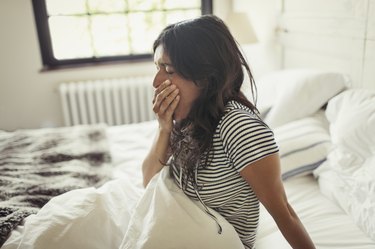
Beeeppp. Your alarm goes off and you're scrambling for the snooze button even though you hit the sheets at a reasonable time the night before. You're not normally so groggy after a full night's rest, so what gives?
If you logged a full eight hours in bed but still can't shake that sleepy feeling the next day, odds are there's a simple reason — and solution.
Video of the Day
Video of the Day
Here, Carl Bazil, MD, PhD, director of Columbia University's Sleep Disorders Center, shares the six most common reasons you're waking up tired, along with tips to help you get better zzzs.
1. You Hit the Gym Too Late, or Too Hard
In most cases, a solid sweat session during the day will help you catch quality shut-eye at night. But if you work out too soon before bedtime, you might have a tougher time falling asleep, Dr. Bazil says. That's because your body is jazzed up from all the adrenaline and it might need more time to wind down. Luckily, the solution in this case is simple: Exercise earlier in the day.
But if you work out in the morning and your sleep is still off at night, then it's possible you're overdoing it. When you exercise too much or too vigorously, you put stress on your body, which can throw things out of whack. Indeed, overtraining is linked to problems with your adrenal glands and hormonal imbalances that result in fatigue, according to a February 2013 review in the Journal of Novel Physiotherapies.
Fix it: If you've been training hard, try dialing it down. Take a day or two off from the gym and give your body adequate time to rest and recover. Try some light, restorative exercise like walking or yoga instead.
2. You're Fighting Off a Bug
Slept eight hours and still dragging? There's a chance you're getting sick. When you're fighting off a bug, your immune system needs all your energy to fend off foreign invaders. You might feel extra sleepy because your body is forcing you to hit the brakes, so it can recover and heal itself.
In addition to fatigue, you'll often have other symptoms — like a sniffle or a cough — when you're in the early stages of catching a cold. If you suspect you're coming down with something and start taking over-the-counter meds, they might also be causing your sleepiness.
"Remember that most over-the-counter cold remedies contain antihistamines, which can be another reason you still feel drowsy after a full night's sleep," Dr. Bazil says.
Fix it: If you're really under the weather, sneak in a nap, and get to bed early, too. When you're awake, avoid any strenuous activities. Also, make sure to stay hydrated and nourish your body with healthy, wholesome foods.
3. You Drank Something That's Disturbing Your Sleep
Sometimes what you ate or drank earlier in the day can affect your shut-eye. "Alcohol is a prime offender here," Dr. Bazil says. "You may think it helps you sleep, but your sleep is not as efficient, and you may be waking or partly waking during the night without knowing it."
An April 2013 article in Alcoholism: Clinical and Experimental Research found that drinking alcohol can hamper sleep quality and obstruct the restorative functions of sleep. Plus, when you toss back a stiff one can affect your zzzs too. Consuming alcohol within four hours of bedtime causes more fragmented sleep, according to an August 2019 study in Sleep.
The other major culprit? Caffeine. Sipping java may help keep you alert and on your toes during the day, but it might also be sabotaging your sleep at night. That's because caffeine stays in your system hours after you've had your cup of joe, which could cause problems with falling and staying asleep, according to the National Sleep Foundation.
Fix it: Reduce the amount and frequency of your alcohol and caffeine intake, especially in the hours before bedtime.
4. You Actually Slept Too Much
It's common sense that getting too little sleep makes you tired. But did you know that too much can make you drowsy too? That's right, oversleeping can also cause you to feel sluggish and lethargic. In fact, any divergence from your regular sleep patterns can disrupt your body's rhythms and sap your energy, according to Harvard Health Publishing.
Fix it: Listen to your body to learn how many hours of sleep are ideal for you. Once you find that sweet spot, stick to it, even on weekends.
Tip
You've probably heard that eight hours is the magic number when it comes to your nightly sleep needs, but that's not entirely accurate. Most adults need between seven and eight hours of sleep each night, but some people may need a bit less and others a bit more (like nine or even 10), says Angela Holliday-Bell, MD, a board-certified physician, certified sleep specialist and founder of The Solution Is Sleep LLC. If you're in the latter group, you'll likely still feel tired after sleeping only seven or eight hours.
5. You’re Stressed
Have a lot on your mind lately? If your brain is working overtime as your head hits the pillow, your sleep will likely suffer. Stress is one of the most common causes of sleep disruption, says Dr. Bazil.
According to a 2017 Stress in America survey by the American Psychological Association, up to 45 percent of Americans report disrupted sleep due to worrying.
And chances are good that job-related stress is responsible for your less-than-sound slumber. A December 2014 study in Sleep found that work was the primary cause for people not feeling rested enough.
Fix it: Dr. Bazil recommends techniques like meditation, guided imagery and progressive relaxation to help de-stress before you hit the sheets.
6. You Woke Up a Lot
From noisy neighbors to a restless bedmate, a whole host of things can wrest you from dreamland. So, even if you're in bed for a full eight hours, tossing and turning a lot — even if you're not really aware of it — can make you feel as though you didn't catch a wink of sleep.
In fact, interrupted slumber can be just as bad for your body as no sleep at all. Research in the July 2014 issue of Sleep Medicine found that a whole night of disrupted shut-eye adds up to no more than four hours of sleep. What's more, waking up repeatedly can lead to a shortened attention span and a negative mood the next day.
Fix it: Wearing ear plugs, using a white-noise machine and/or wearing an eye mask to bed can help drown out sleep-disrupting light and noise and keep your slumber from being disturbed.
Related Reading
When to See a Doctor
If none of these reasons are causing you to wake up tired, you might be dealing with a more serious underlying health issue.
"Persistent sleepiness after long sleep could also be a sign of a sleep disorder, such as sleep apnea," says Dr. Bazil.
Sleep apnea is a condition that occurs when a person's breathing starts and stops during sleep. Symptoms include:
- Daytime sleepiness
- Insomnia
- Loud snoring
Talk to your doctor or a sleep expert if you have any signs of sleep apnea.
- Journal of Novel Physiotherapies: “Overtraining, Exercise, and Adrenal Insufficiency”
- Alcoholism: Clinical and Experimental Research: “Alcohol and sleep I: effects on normal sleep.”
- Sleep: “Evening intake of alcohol, caffeine, and nicotine: night-to-night associations with sleep duration and continuity among African Americans in the Jackson Heart Sleep Study”
- National Sleep Foundation: “Caffeine and Sleep”
- Harvard Health Publishing: “Are you tired from...too much sleep?”
- American Psychological Association: “By the numbers: Our stressed-out nation”
- Sleep: “Sociodemographic characteristics and waking activities and their role in the timing and duration of sleep.”
- Sleep Medicine: “Effects of one night of induced night-wakings versus sleep restriction on sustained attention and mood: a pilot study”
- Mayo Clinic: “Sleep Apnea”
Is this an emergency? If you are experiencing serious medical symptoms, please see the National Library of Medicine’s list of signs you need emergency medical attention or call 911.