












The muscular system in your body is composed of skeletal muscle, cardiac muscle and smooth muscle. Skeletal muscle attaches primarily to your skeleton and moves voluntarily or by reflex. Cardiac muscle is the muscle of your heart and contracts involuntarily. Finally, smooth muscle is found in your blood vessels, eyes, hair follicles and the walls of hollow organs like your stomach and intestines.
Skeletal Muscles Create Movement
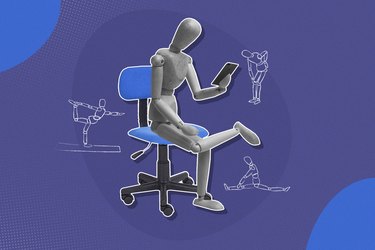
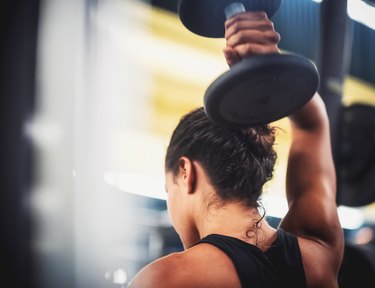
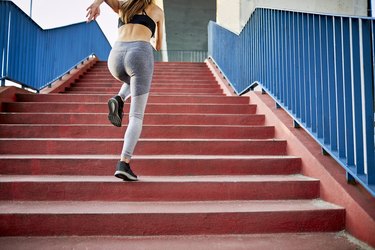
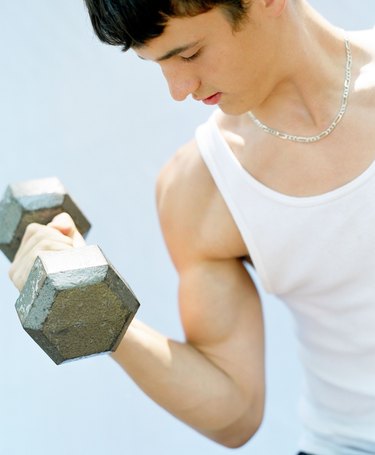
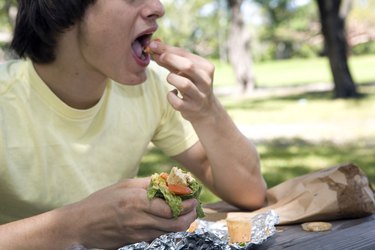
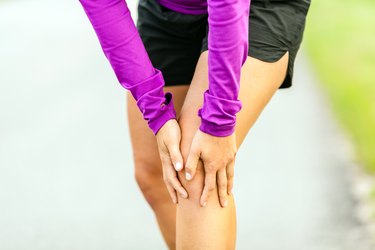
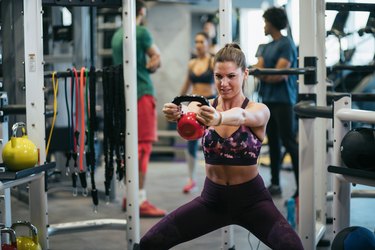
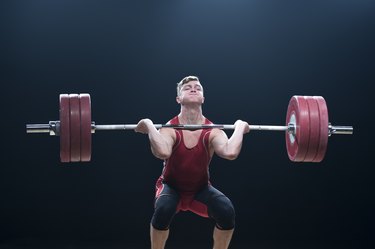
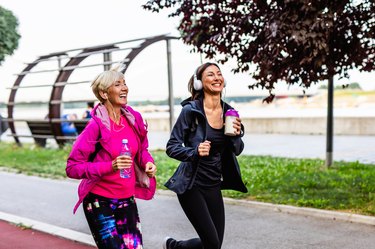
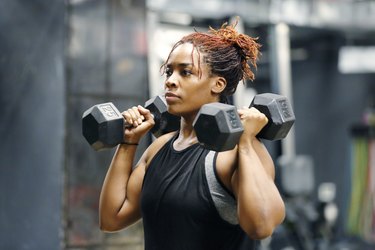
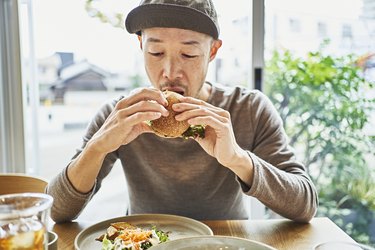
The primary function of skeletal muscle is to produce voluntary gross and fine movements to keep you alive. Large movements include walking, standing, gathering food, cooking food, turning in a chair, running, playing sports and lifting weights. Fine motor skills or smaller movements include chewing, closing your eyes, blinking, typing, writing and talking. Your skeletal muscles will also contract as a reflex to stimuli, like moving your hand from a very hot coffee cup or blinking your eyes when an eyelash lands on the surface of the eye.
Skeletal Muscles Protect Organs
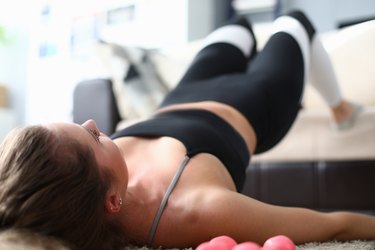
The abdominal muscles and the muscles of your lower back help to protect your vital organs. Your abdominal cavity is not protected by bones in the way that your rib cage protects your heart and lungs. Your rectus abdominus, or "six pack" muscle; your obliques, found at the sides of your torso; and your transverse abdominus, running side to side across the front of your abdominal cavity, protect your organs from the front and sides. From the lower back, your lats, quadrates lumborum and your psoas muscles, which run from the bottom area of your ribs to your pelvic bones, protect your organs from the back of your abdominal cavity.
Cardiac Muscle Pumps Blood
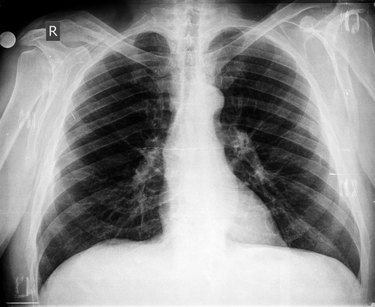
The contraction of the heart muscle is involuntary and primarily controlled by your heart's own electrical system, with and without influence from factors in the blood. Your heart is responsible for receiving blood back from your muscles, pumping it into your lungs, receiving the blood from the lungs then pumping it out into your arteries to supply your entire body. When your heart muscle does not receive enough blood due to dead heart tissue or lack of sufficient oxygen, you will have a heart attack.
Smooth Muscle Aids Digestion
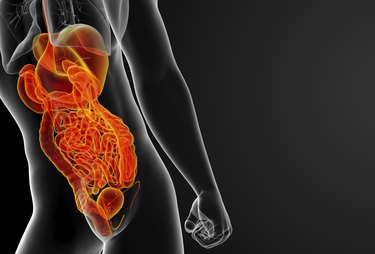
The smooth muscles in your stomach and intestines work to process the food you eat. The involuntary contractions in your stomach and intestines aid in digestion and in moving the food along your digestive tract, ultimately directing indigestible substances to your rectum.
Smooth Muscle Ensures Blood Flow
There are smooth muscles in the walls of your blood vessels. When your heart contracts, your arteries expand to accept the blood. The smooth muscles in your arteries contract to push the blood throughout the blood vessel systems in your body, ultimately pushing the blood from your arterioles into your capillaries to return back to the heart. When plaque builds up on the walls of your arteries, your arteries harden and the muscles in your arteries will not contract properly.
References
- "Exercise Physiology, Energy, Nutrition & Human Performance"; William D. McArdle, Frank I. Katch and Victor L. Katch; 2007
- "Personal Trainer Manual"; American Council on Exercise; 1997


