
How Bad Is It Really? sets the record straight on all the habits and behaviors you’ve heard might be unhealthy.
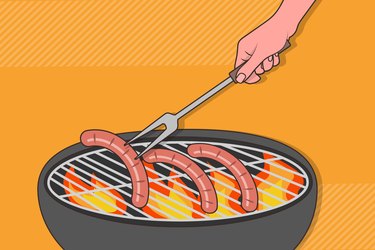
Whether you're flipping burgers or veggie skewers, charcoal grilling imparts a nice smokey flavor to your dishes. While grilling uses less oil and makes food more flavorful, there are some potential health risks that come with using charcoal, especially if you're using it frequently and in dangerous situations.
So before you fire things up, here's everything you need to know about the risks and benefits of charcoal grilling. Plus, get tips on how to reduce your risks and enjoy charcoal grilling safely.
Video of the Day
Video of the Day
The Risks of Charcoal Grilling
"Although charcoal by itself isn't a carcinogen, grilling or cooking with charcoal is linked to an increased risk of cancers for two reasons," say Tammy and Lyssie Lakatos, RDN, CDN, founders of the Nutrition Twins and authors of The Nutrition Twins' Veggie Cure.
"One is because grilling on charcoal creates smoke that is unhealthy to breathe, just like cigarette smoke. The second reason is that when you cook on charcoal, it uses very high heat and carcinogenic heterocyclic amines (HCAs) and polycyclic aromatic hydrocarbons (PAHs) are formed when you cook animal proteins at high temperatures."
1. Inhaling Carbon Monoxide and PAHs
Charcoal grilling emits carbon monoxide, which can be life-threatening if too much of it replaces the oxygen in your red blood cells, according to the Mayo Clinic. Carbon monoxide poisoning is a greater risk if you use a charcoal grill indoors.
"Never cook with charcoal indoors — no matter how well-ventilated you think your home is," says Nicole Rodriguez, RDN, a dietitian and personal trainer based in New York. "In fact, the Consumer Product Safety Commission warns against even storing a grill indoors with freshly used charcoal."
Although the amount of carbon monoxide emitted isn't as much of a concern when grilling outdoors, some studies show that charcoal grilling also releases volatile organic compounds (VOCs) that are created from the smoke and can be inhaled, the Lakatos twins say.
"Long-term exposure [to these fumes] can lead to a variety of respiratory illnesses and cancer. The toxins from the smoke can also enter the body through the skin, and research has shown that it can be an equally concerning issue," the Lakatos twins explain.
Skin absorption of PAHs from barbecue fumes is greater than the amount absorbed from inhalation of these chemicals, according to a May 2018 study in Environmental Science & Technology.
And when comparing cancer risks of PAHs from barbecue gas emissions based on the type of fuel: liquid propane gas, lump charcoal and charcoal briquettes, the greatest concentration of PAHs was from grilling over charcoal briquettes, according to a July 2017 study in Pulmonary Disorders and Therapy.
2. HCAs and PAHs in Cooked Meats
HCAs and PAHs increase the risk of cancer by causing changes in DNA, according to the National Cancer Institute (NCI). When animal proteins are cooked under high temperatures — such as on a charcoal grill — the amino acids (building blocks of protein), sugars and creatine (from animal protein) react and form HCAs in the meat.
On the other hand, PAHs form when the fat and juices from the meat drip on the fire and create smoke, which sticks to the surface of the meat. HCAs and PAHs are more likely to form in meats that are cooked under higher temperatures (burnt or charred meats), cooked for longer periods of time or exposed to lots of smoke.
That said, studies that link exposure to HCAs and PAHs with cancer have only been confirmed in animals, which have been given much higher doses of these chemicals compared to what people normally eat, Rodriguez says. In fact, the rodents involved in these studies were fed a thousand times the doses people usually consume, per the NCI.
As for human research, numerous studies have shown an association (rather than a causal effect, like with animal studies) between meat cooking methods and and increased risk of certain cancers, per the NCI, but more research needs to be done to better understand this issue.
3. Fires and Injuries
Another risk to consider when charcoal grilling is burns and injury. "Always have your hair tied back and take caution in allowing children near any grill," Rodriguez says. She suggests wearing goggles to prevent smoke from irritating your eyes.
Follow your grill's directions closely and avoid placing it near flammable objects, like clothing, plants and wooden structures.
The Benefits of Charcoal Grilling
1. Flavor
You get that rich, smokey flavor in your food when using charcoal. "Many people love the aromatic flavor that is created when the meat drips onto the grill, smokes and then adds an additional flavor," the Lakatos twins say.
2. Cut Down on Fat
Grilling also reduces the amount of fat, saturated fat and calories as the fat drips off the meat and onto the charcoal, the Lakatos twins say. But, as we previously mentioned, the smoke contains PAHs that bind to the meat.
How to Reduce Your Cancer Risk
Although charcoal grilling poses a variety of health risks, there are several strategies you can try to significantly reduce your risks and enjoy the delicious flavor it offers.
1. Use a Clean Grill
"Make sure your grill is clean. Don't leave charred food on it or it will continue to smoke and create more carcinogens," the Lakatos twins say.
Cooking with a small flame to reduce the cooking temperature and avoiding overcooking meat can also help reduce carcinogens.
2. Go for Lean Cuts of Meat, Seafood and Vegetables
Choose leaner cuts of meat and avoid drippings that can cause smoke, Rodriguez says. Consider swapping meat for fish and seafood, vegetables, tofu and veggie burgers.
Smaller cuts of meat and seafood also cook faster, lowering HCA levels and reducing the smoke that contains PAHs.
According to a May 2016 study in Food Chemistry, removing meat drippings (aka, cutting off the fat before cooking) reduced the amount of four different PAHs by 48 to 89 percent, and removing smoke reduces 41 to 74 percent of PAHs in grilled meats. The same study also noted that grilling under stable combustion, aka a stable heat, reduces PAHs.
To prevent too much smoke, wait until the charcoal is greyish/white before cooking and consider indirect cooking with charcoal (to avoid direct exposure of meat to open flames/coals). Also try flipping the meat more often to prevent charring, and removing the charred meat before eating it.
3. Marinate Your Meat
Marinating your food before grilling, using a dry rub or seasoning with fresh herbs, like rosemary, thyme and oregano, on both sides of the meat can also reduce the amount of HCAs in your food because of their antioxidants, the Lakatos twins say.
"Pre-cooking the food will also shorten the grill time, which means less exposure to smoke and less time for the charcoal to get hot," the Lakatos twins say. "Trim off all visible fat from meats so it doesn't drip onto the grill and create more smoke."
What's the Healthiest Type of Charcoal for Grilling?
The healthiest charcoal is natural lump charcoal because it doesn’t contain additives or flammable petroleum products, the Lakatos twins say. Although charcoal briquettes can burn for a longer period of time, they contain additives and binding agents that produce a chemical smell. They also release large amounts of carbon monoxide, which can be fatal if used in a poorly ventilated space.
An August 2012 case report from The Medical Journal of Australia found that a 42-year-old person died from carbon monoxide poisoning after grilling with charcoal briquettes in the verandah of his small apartment and using the freshly used coals as a heat source.
Is Gas Grilling Safer?
Whether you're using charcoal or gas, grilling food creates HCAs and PAHs. But gas grilling creates less smoke, reducing the amount of PAHs that are formed, the Lakatos twins say.
Charcoal grilling also emits more carbon monoxide and employs higher cooking temperatures than gas grilling, which increases the formation of HCAs.
"You can control the temperature on a gas grill and keep the temperature lower, so you can more easily prevent the meat from charring and creating carcinogens like HCAs. Plus, with lower heat, you can greatly reduce smoking, so there will be fewer dangerous PAHs," the Lakatos twins say.
In addition, gas grills (liquid propane grills) are better for the environment and produce a 1/3 of the carbon footprint of charcoal grills, according to a November 2009 study in Environmental Assessment Review. The same study also found that gas grills are much more efficient at cooking.
So, How Bad Is It Really to Cook on a Charcoal Grill?
When it comes down to it, cooking on a charcoal grill every now and then might not be so bad if you do the following:
- Regularly clean your grill
- Use smaller, leaner cuts of meat or swap in seafood and vegetables
- Make sure the coals are ready to avoid direct flames on the meat
- Cook meat on indirect flames (where coals are placed on the sides, meat in the middle) and flip meat often
- Marinate your meat, as enhancing the flavor with antioxidant-rich fresh herbs and spices and avoiding overcooking can help lower your risks of potentially carcinogenic HCAs and PAHs.
Although any type of grilling creates HCAs and PAHs, gas grilling can significantly reduce the formation of these chemicals by using a lower cooking temperature and creating less smoke.
"Either modality should be used in moderation. Slow-cook methods, such as braising and utilizing a Crock-Pot, and quick methods such as air-frying pose fewer risks," Rodriguez says.
"At the end of the day, grilling season is short, and preparing meats on the grill, for most people, can be enjoyed in moderation."
- Food Chemistry: "Effects of Grilling Procedures on Levels of Polycyclic Aromatic Hydrocarbons in Grilled Meats"
- Environmental Assessment Review: "Charcoal Versus LPG Grilling: A Carbon-Footprint Comparison"
- The Medical Journal of Australia: "Carbon Monoxide-Induced Death and Toxicity From Charcoal Briquettes"
- Mayo Clinic: "Carbon Monoxide Poisoning"
- Environmental Science & Technology: "Importance of Dermal Absorption of Polycyclic Aromatic Hydrocarbons Derived From Barbecue Fumes"
- Pulmonary Disorders and Therapy: "Inhalation Exposure to PM-Bound Polycyclic Aromatic Hydrocarbons Released from Barbecue Grills Powered by Gas, Lump Charcoal, and Charcoal Briquettes"
- National Cancer Institute: "Chemicals in Meat Cooked at High Temperatures and Cancer Risk"