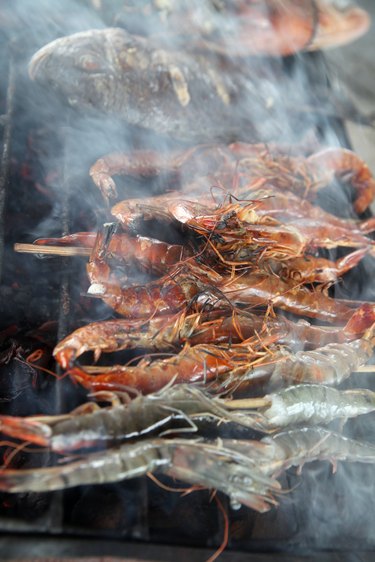
Smoking food is one of the oldest methods of preservation. When food is plentiful, a wise course of action is to set aside as much as possible for leaner times. Before the invention of refrigeration, smoking was the safest way to do this. All types of foods can be treated, but meats are the most common foods given both flavor and longevity by smoking.
The Difference between Curing and Smoking
Preserving food by various methods has been practiced throughout human history. Cato, an early Roman historian who lived from 234 BC to 149 BC, wrote of the use of salt to preserve both meats and vegetables. The salt removes much of the water present and inhibits the growth of bacteria.
Nitrates, occurring naturally in many arid regions of the world, have also been used to safeguard against spoilage. Preservation by these methods is referred to as "curing," Food treated by curing must be re-hydrated and carefully rinsed before use. It is also still considered raw, so meats will still require cooking. According to the Food and Drug Administration, nitrates as a food additive are not to exceed a definitive amount and must be accompanied by further processing.
Smoking involves exposing food to both the smoke and heat from a low fire, usually with wood selected for both flavoring aspects and the correct amount of moisture to create enough smoke. This dries the food, cooks it to kill bacteria and imparts flavor to the finished product.
What Smoke Does and Does Not Do
Smoking food slowly will dry it sufficiently to package carefully and store for later use. The heat is normally sufficient to cook meats safely, but the meat must be thin enough for the heat to penetrate the entire piece. This is done either by slicing thin strips or by using lower temperatures over a longer time. The exact method will vary according to the type of meat, type of smoking process and desired result.
When done properly, the smoke can cause the natural oils and saps from the wood to coat the food. This effect is key to both preserving and flavoring the food. Essentially, it creates a barrier between the air and the meat or vegetables by vaporizing the sap and allowing it both cling to and penetrate the food.
What smoking does not do is enable meats to be stored indefinitely. Smoked food can be used several weeks later, but will still need to be packed and stored in such a way as to prevent the growth of bacteria. Vacuum packing smoked meats will remove much of the air that promotes spoiling while preserving the distinct taste of the smoking agent used. While smoking can increase shelf life of meats, it is not sufficient to insure proper food safety without extra measures being taken.
Properly smoked meats can be stored in a dry cool place for as much as a year. This is the source of many popular types of hams and sausages. Fish and poultry have a higher rate of degradation and should be carefully stored and checked for any signs of spoilage before serving, regardless of the length of time since they were preserved.
Variations and Flavor
The types of smoking vary widely from region to region. The availability of fresh foods is the first factor to consider. Smoking is best done with meats and vegetables that have not been previously processed. Over-cooking by the smoking process can ruin any efforts. Additives such as salt, sauces and different combination of foods in close proximity all can affect the product.
Meats are often marinated prior to smoking to add another dimension to the taste. Packing minced meat into casing, either natural or man made, produces sausages, one of the most varied type of smoked meat available.
Methods
Some smoking is done by arranging the prepared food directly over a low fire. This allows for the height and exposure to the smoke and heat to be directly controlled. Unfortunately, it requires constant supervision and when done under open skies is subject to unexpected changes in weather. Changes in wind alone can affect the effort, and rain usually means an end to the smoking.
Smoking done in a sealed system is less prone to the effects of weather. This also reduces, but does not eliminate, the need for supervision as the heat and smoke are more controlled. The negative effect is that smoking done this way is not portable and, depending on the size and complexity of the apparatus used, can be expensive.
Safety
The choice of wood used is a major concern. Lumber from a mill is not advised, as commercial lumber is usually treated with chemicals to prevent insect infestation and resist rot. These chemicals can be highly dangerous if ingested or inhaled. Wood harvested specifically for use in cooking, either by the person doing the smoking or bought commercially, is the advised way to smoke any foods.
If done on a stove top, proper air flow is essential. Under no circumstances should a fire be used in any structure that is not equipped to provide proper ventilation and safety.
Done with proper wood, food handling and safety, smoking can be done almost anywhere and with multiple types of foods.


Member Comments