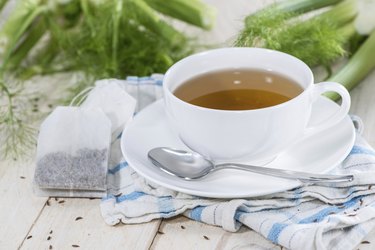
Fennel, which is also known as Foeniculum vulgare, is an aromatic plant used widely for both culinary and medicinal purposes. The seeds of the fennel plant have an aniselike aroma and often feature in Indian and Middle Eastern cooking. Fennel is used to improve digestion, relieve flatulence, treat hypertension, increase milk production in breast-feeding mothers, and treat respiratory and gastrointestinal disorders. To make fennel tea, lightly crush a teaspoonful of fennel seeds with a mortar and pestle and then steep the seeds in boiling water.
Digestive Health
Video of the Day
Since ancient Roman and Egyptian times, fennel has been regarded as a powerful digestive aid. In a 2012 review in the "International Journal of Food Sciences and Nutrition," author Marco Valussi reported that consumption of fennel increased spontaneous gastric motility and gastric acid secretions in animal models. Valussi also reported that an herbal combination including fennel eliminated intestinal pain in 95 percent of patients who had chronic, nonspecific colitis.
Video of the Day
Lower Blood Pressure
Scientific studies on the use of fennel as a diuretic for hypertension have produced mixed results. A study published in 2001 in "Clinical and Experimental Hypertension" examined the effects of a fennel extract on blood pressure and urinary volume in rats. In one group of rats, blood pressure significantly decreased after two days of treatment, and urinary volume increased by 100 percent. However, in another group of rats, blood pressure returned to placebo values after an initial decrease and no diuretic effect was observed. Further studies are needed to determine which parts of the fennel plant are responsible for its diuretic effects and to elaborate on existing studies.
Calming Colic
Parents of colicky infants have traditionally used fennel to help calm their crying babies. Several studies have shown favorable results in evaluating the efficacy of fennel for decreasing colic symptoms. In a study published in 2003 in "Alternative Therapies," researchers reported that use of fennel extract eliminated colic in 65 percent of infants, significantly more than in infants given a placebo. Consult with your pediatrician before giving fennel tea to your infant.
Increased Milk Supply
Fennel is ubiquitous in commercially produced herbal tea blends for nursing mothers. However, scientific research on the efficacy of fennel and other herbs promoted as lactation aids is lacking. More research needs to be conducted to determine whether drinking fennel tea will help stimulate your milk production.
Other Health Benefits
Fennel is a traditional household remedy for treatment of symptoms of the respiratory tract including bronchitis and chronic coughs, kidney stones, dysmenorrhea, vomiting, diarrhea and defection of sperm. Fennel also may be helpful in the management of bacterial and fungal infections. In a study published in 2008 in the "Indian Journal of Physiology and Pharmacology," researchers reported promising results in using fennel eyedrops for treating glaucoma in rabbits. Further studies are needed to determine whether fennel is effective in treating all of these conditions.
- Arabian Journal of Chemistry: Foeniculum Vulgare: A Comprehensive Review of Its Traditional Use, Phytochemistry, Pharmacology, and Safety
- International Journal of Food Sciences and Nutrition: Functional Foods With Digestion-Enhancing Properties
- Clinical and Experimental Hypertension: Pharmacological Evidence of Hypotensive Activity of Marrubium Vulgare and Foeniculum Vulgare in Spontaneously Hypertensive Rat
- Journal of Ethnopharmacology: Herbal Medicines as Diuretics: A Review of the Scientific Evidence
- Alternative Therapies: The Effect of Fennel (Foeniculum Vulgare) Seed Oil Emulsion in Infantile Colic: A Randomized, Placebo-Controlled Study
- Breastfeeding Medicine: ABM Clinical Protocol #9: Use of Galactogogues in Initiating or Augmenting the Rate of Maternal Milk Secretion
- Journal of Medicinal Plants Research: A Review of Chemistry and Bioactivities of a Medicinal Spice: Foeniculum Vulgare
- Indian Journal of Physiology and Pharmacology: Oculohypotensive Effects of Foeniculum Vulgare in Experimental Models of Glaucoma