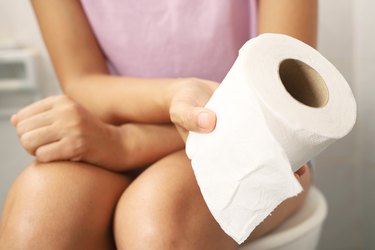
Your skin feels thin and dry. Hot flashes strike at the most inopportune times. Now you're feeling constipated. Welcome to menopause.
The dramatic drop in the sex hormone estrogen that occurs with menopause can cause a constellation of symptoms — and for some people, constipation and the uncomfortable feelings it brings may be on the list.
Video of the Day
Video of the Day
"It's not menopause per se that is causing your constipation," explains Stephanie Faubion, MD, MBA, medical director of the North American Menopause Society (NAMS) and director of the Mayo Clinic Center for Women's Health in Rochester, Minnesota.
"You may not be working out because of your age or menopause symptoms such as hot flashes," she says. Lack of regular physical activity increases your risk for constipation. In addition, some medications may make it harder for stool to pass, per the Cleveland Clinic.
There are some other reasons constipation may be linked with menopause, according to the NAMS. For example, estrogen helps maintain muscle tone. When it declines, you can experience weakness in your pelvic area. This weakness can cause parts of your intestines to droop, which makes it more difficult to pass stool.
Stress and anxiety may also play a role in causing constipation during menopause. A June 2018 study in Menopause found people going through menopause who felt stressed and anxious were more likely to have trouble going to the bathroom than their peers who reported feeling calmer.
Be aware that constipation or any change in stool habits can also be a sign of colon cancer, and this risk increases with age, Dr. Faubion says. That's why the U.S. Preventive Services Task Force recommends colon cancer screening for adults age 45 to 75.
Constipation and Menopause: What You Can Do
"The key to controlling postmenopausal constipation, gas and bloating starts with maintaining bowel regularity," says Will Bulsiewicz, MD, MSCI, a gastroenterologist in Mount Pleasant, South Carolina, and author of the book Fiber Fueled.
Here are simple steps that you can take to ease the problem:
Talk to Your Doctor
Your doctor might be able to suggest medications or supplements for constipation, Dr. Bulsiewicz says. Having this conversation is a safer option than attempting to self-treat with laxatives on your own.
Exercise Regularly
Aim for at least 150 minutes of moderate-intensity aerobic activity or 75 minutes of vigorous aerobic activity each week, according to the American Heart Association.
Choose cardio activities you like so you'll be more likely to stick with them — maybe that's walking, swimming, cycling, dancing or something else entirely.
And don't forget strength training, which can help prevent bone loss, a common consequence of getting older and the changes that occur during menopause, according to the NAMS.
Get Plenty of Fiber
Try to get 25 grams of fiber each day in your diet, according to the Academy of Nutrition and Dietetics.
In addition to fruits and vegetables, switch to whole grains — giving up refined white-flour products is healthier in general. Discover new tastes to keep it interesting, like farro, barley and buckwheat. Also be sure to drink plenty of water, which will help the fiber do its job, Dr. Bulsiewicz says.
Make Menopause More Bearable With This 20-Minute Workout
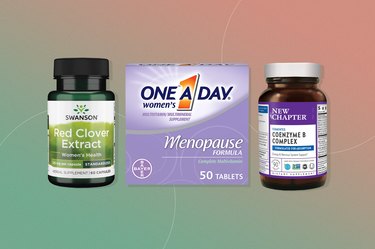
Vitamins Can't Increase Estrogen, but These 5 Supplements May Help With Menopause Symptoms
8 Myths About Menopause to Stop Believing

Why Sex Can Be Painful After Menopause and How to Cope

5 Ways to Care for Yourself if You’re Going Through Medical Menopause
- Stephanie Faubion MD, MBA, medical director, North American Menopause Society, and director, Mayo Clinic Center for Women's Health, Rochester, Minnesota
- Cleveland Clinic: “What Will Help You With Constipation After Menopause?”
- North American Menopause Society: “Other Body Changes Affecting Sexuality”
- North American Menopause Society: “Bone Health: Exercise Is a Key Component”
- Menopause: “Constipation and Diarrhea During the Menopause Transition and Early Post Menopause: Observations From the Seattle Midlife Women’s Health Study”
- Will Bulsiewicz, MD MSCI, gastroenterologist
- American Heart Association: “American Heart Association Recommendations for Physical Activity in Adults and Kids”
- Academy of Nutrition and Dietetics: “Fiber”
- U.S. Preventive Services Task Force: "Colorectal Cancer: Screening"
Is this an emergency? If you are experiencing serious medical symptoms, please see the National Library of Medicine’s list of signs you need emergency medical attention or call 911.