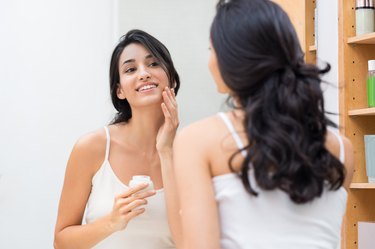
Chubby cheeks are cute on a baby, but if you long for a more chiseled, mature look, lifestyle changes might help. Genetics largely determine the shape of your face, but if you're carrying extra pounds, slimming down your whole body may also reveal a more slender face.
You can't specifically lose weight from your face, but lowering your overall body fat will mean you lose fat from your face, too. A quality diet, exercise, hydration and skin care all help your face look its best.
Video of the Day
Video of the Day
Why You Can't Target Face Fat
Your body stores fat in cells throughout your body. When you burn fat through diet and exercise, your body must first convert the stored fat to usable energy through a complex chemical process.
From which cells it mobilizes fat is genetically determined. You can't guarantee when you lose weight that you'll shrink the parts of your body you consider as a "problem."
Your face may look overly full if you're carrying a little extra — or a round face could also be due to your bone structure or the shape of your salivary glands.
As you age, you may also notice that your face's fat shifts downward, into your jowls and chin. This is due to the natural loss of collagen, which provides skin firmness and perkiness in your youth. Changing your age or your genetics just isn't possible, but changing your weight can still slim down your face.
Moderate Fat Loss to Protect Your Face
Classic strategies of cutting calories and moving more helps slim down your face, as well as other excess fat stored in your body. Figure approximately how many calories you burn daily by using an online calculator that figures in your size, age, gender and activity level. Then, create a 500- to 1,000-calorie deficit by eating less and choosing smaller portions to yield a 1 to 2 pound per week loss.
You might desire faster loss, but cutting calories too drastically can backfire. If you eat fewer than 1,200 as a woman or 1,800 daily as a man, you'll stall your metabolism, which only makes weight loss harder.
Crash dieting can also make your facial skin sag, turning plump fat into droopy wrinkles. Your skin has stretched around any excess fat in the face; when you lose weight too quickly, your skin doesn't have enough time to gradually shrink back.
Eat Whole Foods to Support a Healthy Weight
Lose weight in your face — and your whole body — by trimming your calorie intake and by making the best quality food choices you can. Fresh fruits and vegetables offer plenty of antioxidants and phytonutrients that support your complexion's health. These foods also have few calories, so you can eat large servings without overshooting your calorie goal.
Lean protein is part of a weight-loss program, too. It helps you feel satisfied at meals and helps discourage your body from burning lean muscle mass along with fat as you reduce calories. Aim for at least 0.55 grams per pound of body weight per day to experience these benefits. Good sources include fish and seafood, low-fat dairy, lean beef and white-meat chicken.
Include a moderate serving of whole grains at some meals — they're packed with fiber and other nutrients — and eat unsaturated fats from nuts, seeds, olive oil and avocado, which also promote skin health. Avoid sugary treats as much as possible; sugar contributes to the breakdown of collagen — your skin's supporting structure — causing skin to sag and fat to droop more readily.
Exercise to Lose Weight and Brighten Your Complexion
Healthy amounts of cardiovascular exercise improve circulation so you look brighter and more vibrant, regardless of the shape of your face. Build up to the minimum 150 minutes of moderate-intensity cardio weekly as recommended by the Centers for Disease Control and Prevention.
A brisk walk, light bike ride or water aerobics are examples of ways to do these workouts. If you exercise more — 300 minutes or longer per week — you'll get even greater weight loss and health benefits.
Strength training also helps you in your quest to lose pounds. You preserve lean muscle mass, which provides a valuable boost to your metabolism. It takes more calories, or energy, for your body to maintain lean muscle. Do at least two total-body workouts per week that address every major muscle group. Squats, pushups and pull-ups will help you lose face fat much more readily than face-specific exercises you do in the mirror.
Lifestyle Strategies to Promote a Healthy Face
Lifestyle strategies make the most of the face you do have and discourage the effects of aging and genetics. Always wear sunscreen, especially if you find yourself exercising outdoors more often to burn burn calories.
Limit your intake of high-sodium foods — such as processed snacks, canned soups and fast food — as excess sodium can cause water retention, which could show up as extra volume in your cheeks and under the eyes.
Stay hydrated to keep circulation and water retention to a minimum, too. Don't underestimate the benefits regular quality sleep plays in the appearance of your face, either. Aim for between seven and nine solid hours per night.
Contouring with a cool-toned foundation, contouring powder or cream in a shade or two darker than your natural skin tone can also help you create the appearance of a thinner face, especially if you don't have time to drop the fat you want in time for a deadline.
- Harvard Health Publications: Why Your Face Ages and What You Can Do
- Yale Scientific: Targeted Fat Loss: Myth or Reality?
- American College of Sports Medicine: Metabolism is Modifiable with the Right Lifestyle Changes
- Anti Aging Secrets: Reduce Wrinkles and Look Younger; Marnie Peterson
- National Sleep Foundation: National Sleep Foundation Recommends New Sleep Durations
- Centers for Disease Control and Prevention: How Much Physical Activity Do Adults Need?