



































Anterior Arm Muscle Anatomy

Anterior Arm Muscle Anatomy
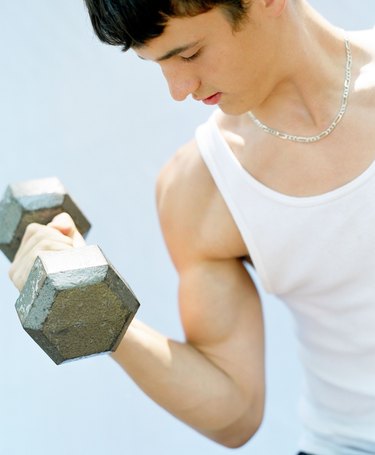
Photo Credit John Foxx/Stockbyte/Getty Images

The anterior arm muscle anatomy is made up of three muscles in the anterior compartment. The biceps brachii, brachialis and the coracobrachialis, located in the upper arm, work together to form the anterior arm muscle anatomy. The biceps muscles go down the front side or anterior of the humerus and make up part of the upper arm's muscle mass.

Functions

The primary function of the biceps is to flex the elbow, which moves the forearm toward the shoulder. The secondary function is to supinate the forearm, which means rotating the hand from the palms-down position to the palms-up position. The biceps raises the arm and allows you to curl your wrist.

Biceps Brachii

As Body Building says, "the biceps brachii is the two-headed muscle, long and short heads, of the upper arm." It's attached to the shoulder blade in two places and extends along the anterior of the upper arm bone. The brachii is inserted by way of a tendon on the largest part of the lower arm bone. When contracted, the movable end is pulled up and the arm bends at the elbow.

Brachialis

The brachialis lies deep in the biceps brachii and attaches to the humerus and ulna. It's the strongest elbow flexor of the arm. When the palms are up or supinated, the brachialis are strong flexors. When the forearm is pronated, the biceps brachii usefulness is reduced, while the brachialis still functions fully.

Coracobrachialis

The coracobrachialis, the smallest of the three muscles, is situated at the upper and medial part of the arm. It's responsible in raising the arm away and toward the body. As mentioned in AbcBodybuilding, "When the arm is raised, the coracobrachialis reveals itself as a narrow elevation emerging from under the cover of the anterior auxiliary fold and running medial to the body of the humerus."

References

Article reviewed by Anton Alden Last updated on: May 26, 2011

Must see: Photo Galleries

Member Comments