




































































Calcium is an essential mineral needed for healthy bones, muscle tone and many other biochemical functions in your body. Dairy products such as milk, cheese and butter are excellent sources of calcium, although they are poorly digested by people who are lactose intolerant. Nondairy sources of dietary calcium are plentiful and can prevent a mineral deficiency in those with lactose intolerance.
Lactose Intolerance
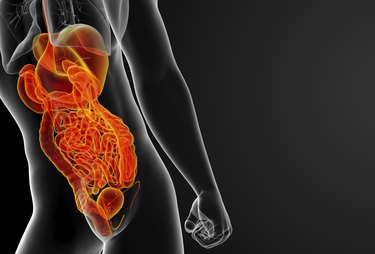
Lactose intolerance is an inability to properly digest lactose, a sugar found in dairy products, because of deficient production of the enzyme lactase. Lactase breaks down lactose into simple sugars that are then absorbed in the bloodstream. Lactose intolerance is a common condition, with an estimated 75 percent of adults worldwide displaying some decrease in lactase production during adulthood, according to "Contemporary Nutrition: Functional Approach." The condition is most common among those of African and Asian ancestry, and least common among those of northern European descent. Symptoms of lactose intolerance begin 30 minutes to an hour after consuming lactose products, and they include abdominal pain, bloating, flatulence, diarrhea and nausea.
Importance of Calcium
According to the Office of Dietary Supplements of the National Institutes of Health, the recommended dietary intake for calcium ranges between 1,000 and 1,300 mg daily for adults, depending on age, gender and pregnancy. More than 75 percent of Americans do not meet their current calcium recommendations, putting them at risk for osteoporosis and bone fractures, as reported in "Nutrition and Diagnosis-Related Care." In addition to strong bones, calcium is also required for muscle contraction and relaxation, as well as blood pressure regulation. In response to low calcium intake, the body releases calcitriol, a hormone that causes constriction of blood vessels and elevated blood pressure.
Managing Lactose Intolerance with Dairy Products
For those who are not severely lactose intolerant, choosing dairy products with lower levels of lactose, such as yogurt and hard cheese, may provide the needed calcium without leading to gastrointestinal symptoms. For others, lactose-free milk and dairy products are available at many supermarkets, and they are very similar to regular dairy products except that the lactase enzyme has been added to them. In general, lactose-free milk may have a slightly sweeter taste than regular milk. According to the "American Dietetic Association Complete Food and Nutrition Guide," one cup of reduced-fat, lactose-free milk contains about 285 g of calcium.
Non-Dairy Sources of Calcium
If you cannot tolerate or do not like dairy products, there are many non-dairy sources of calcium. For example, salmon and sardines are high in calcium if you eat their soft bones. Most dark-green vegetables are rich sources of calcium. One cup of cooked rhubarb contains 348 g of calcium, and the same portion of spinach contains 291 g. One cup of broccoli contains 41 g, although it is highly bio-available at over 50 percent absorbed, according to "Advanced Nutrition and Human Metabolism." Nuts and legumes are also good sources of calcium, with 1 cup of cooked pinto beans containing 80 g. For those who want something "creamy" for their cereal or coffee, soy milk is a good alternative, as unfortified varieties contain about 22 percent the calcium of cow's milk. Fortified versions can contain much higher levels.
References
- "Contemporary Nutrition: Functional Approach"; Gordon M. Wardlaw; 2009
- National Institutes of Health: Office of Dietary Supplements: Dietary Supplement Fact Sheet: Calcium
- "Nutrition and Diagnosis-Related Care"; Sylvia Escott-Stump; 2008
- "American Dietetic Association Complete Food and Nutrition Guide"; American Dietetic Association; 2006
- "Advanced Nutrition and Human Metabolism: 5th Edition"; Sareen S. Gropper and Jack L. Smith; 2009


