






























































The way you feel and your overall mood is affected by, among other things, a proper balance of neurotransmitters. Neurotransmitters are brain chemicals responsible for signal transmission and cell communication. Serotonin, an important mood-regulating neurotransmitter, plays a vital role in mental health. Certain nutritional factors can impact your brain's production of serotonin, including a lack of vitamin B-12.
About Vitamin B-12
Vitamin B-12, along with the other B vitamins, plays a crucial role in maintaining the health of your nervous system. It plays a particularly important role in nerve health and also helps in the manufacturing of DNA. Along with folate, vitamin B-12 helps to manufacture the mood-regulating compound SAM-e, or S-adenosylmethionine, which influences the production of serotonin. SAM-e is also sold as a dietary supplement that may help people with depression who do not respond to traditional antidepressant medications known as selective serotonin reuptake inhibitors, according to the Memorial Sloan-Kettering Cancer Center. If you are deficient in vitamin B-12, you may experience symptoms of fatigue, nervousness and depression, which may be related to a decrease in serotonin production.
Significance of Serotonin
Serotonin, also known as 5-hydroxytryptamine or 5-HTP, plays a vital role in mood regulation and relaying chemical messages in your brain. According to the University of Maryland Medical Center, your body manufactures serotonin from 5-HTP, which it converts from the amino acid tryptophan. An imbalance of serotonin levels may contribute to the formation of mental health illnesses such as depression, anxiety disorders and bipolar disorder. People with these mood disorders often have low levels of vitamin B-12 and serotonin.
Clinical Evidence
A study published in the November 1982 issue of the journal "Annals of Neurology" showed a link between low levels of vitamin B-12 and decreased production of serotonin when measured in cerebrospinal fluid in study participants. A review published in the January 2005 issue of the "Journal of Psychopharmacology" also points to a link between low levels of vitamin B-12 and low production of SAM-e. The authors suggest that vitamin B-12, combined with folate, may be a useful treatment for patients suffering from depression.
Considerations
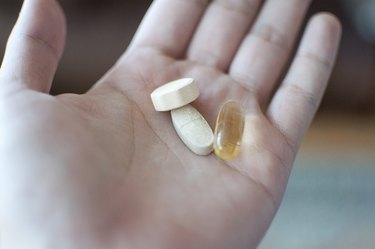
Although vitamin B-12 plays a role in the production of serotonin, you should not use dietary supplements to treat any mood-related symptoms you may be experiencing. Consult your doctor if you experience any indication of depression, anxiety or other troublesome symptoms. It's best to obtain nutrients from dietary sources. As with any dietary supplement, you should inform your doctor if you choose to take a vitamin B-12 supplement.
References
- University of Maryland Medical Center: Vitamin B12 (Cobalamin)
- Memorial Sloan-Kettering Cancer Center: SAM-e
- "Annals of Neurology"; Effect of Folic Acid and Vitamin B12 Deficiencies on 5-hydroxyindoleacetic Acid in Human Cerebrospinal Fluid; M. Botez, et al.; November 1982
- "Journal of Psychopharmacology"; Treatment of Depression: Time to Consider Folic Acid and Vitamin B12; A. Coppen, et al.; January 2005


Member Comments