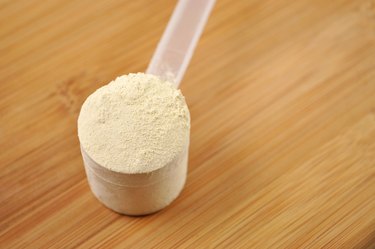
Diet powders help curb hunger, helping you consume fewer calories when used correctly. Dozens of varieties make appealing marketing claims, but not all can deliver on their promises. Rather than relying on the first supplement you find, use a healthy powder combined with a balanced diet and an active lifestyle.
Types
Video of the Day
Diet powders include drink mixes, protein powders, meal replacement formulas and powdered supplements. They are designed to make you feel full with just a moderate number of calories, so you may eat less throughout the day and gradually lose weight. Powders primarily contain dehydrated protein sources like soy or whey, ground grains, fortified vitamins and minerals, flavor enhancers and artificial or natural sweeteners. Not all powders have the same ingredients, calorie counts per serving or effects on appetite and fullness. Check ingredient and nutrition labels carefully when comparing products.
Video of the Day
Weight Loss Results
Regularly using a diet powder that stimulates feelings of fullness is one way to cut calories and slim down. Powders that feature whey protein as a main ingredient are effective because, according to Natural Standard, whey protein may act as an appetite suppressant. Soy powder has similar effects. In a 2003 "Nutrition Journal" study of participants with obesity and overweight, those who drank soy-based meal replacement shakes achieved "significant [positive] changes on body weight" and body shape. According to a 2010 study from "Diabetes/Metabolism Research and Reviews," subjects living with obesity who followed a diet using protein-rich powdered supplements lost more weight after 12 months than subjects who followed a more conventionally balanced diet and did not use supplements.
Nutrition Profile
How full you feel after consuming a diet powder results from a combination of factors, including calorie count of the product and its nutritional content. A standard 30-gram serving of whey protein powder has approximately 110 calories, 2 grams of fat, 1 gram of carbohydrates, 1 gram of sugar and 23 grams of protein. However, a 2007 article printed in the "American Journal of Clinical Nutrition" points out that most meal replacement drinks primarily contain sugar rather than protein. Although the article states sugar "can lead to a significant and sustained weight loss," it is far less nutritious than protein, and the article's authors note that its effects on satiety are highly variable and dependent on factors including mode of use and context.
Safety
Diet powders are classified as dietary supplements, which means that they aren't subject to the same health regulations as real foods. Dr. Monica Zangwill, public health expert, says that powders and meal replacements have no formal ingredient standards and may make claims that aren't substantiated by scientific research. Before using any diet powder to aid weight loss or supplement your normal eating plan, consult your physician for approval.
Considerations
Suppressing appetite with the aid of a diet powder is not guaranteed to work. You must take in fewer calories than you burn to successfully lose weight, so you're not likely to see results if you add powder to your diet but change nothing else or if you use a meal replacement powder that doesn't induce feelings of satiation. The healthiest way to maintain fullness and achieve a healthy weight is through a balanced, nutritious eating plan and regular exercise.
- Natural Standard: Whey Protein
- Diabetes/Metabolism Research and Review: Enhanced Weight Loss with Protein-Enriched Meal Replacements
- LIVESTRONG.com MyPlate: Calories in Whey Protein Powder
- Beth Israel Deaconess Medical Center: Diet Shakes and Meal Replacements - Can They Really Help You Lose Weight?
- Nutrition Journal: Results of Soy-Based Meal Replacement Formula . . .
- American Journal of Clinical Nutrition: Liquid Calories, Sugar and Body Weight