
How Bad Is It Really? sets the record straight on all the habits and behaviors you’ve heard might be unhealthy.
There are certain noises you expect to hear while exercising: The pound of your feet against the pavement during a run. The whoosh of your breath as your heart rate rises. The whir of your spin bike when you accelerate into a sprint. The thwhack of your paddle against the pickleball.
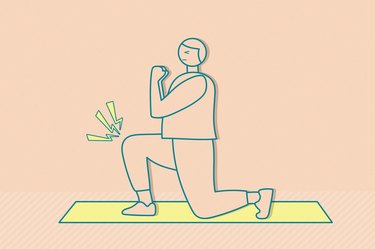
But other sounds are not so reassuring. If your knee pops, your back cracks, your hips creak or your shoulder clicks, is that a red flag something's amiss?
Video of the Day
Video of the Day
First, the good news: "A painless crack or pop is normal," says Timothy Gibson, MD, orthopedic surgeon and medical director of the MemorialCare Joint Replacement Center at Orange Coast Medical Center. "As long as it doesn't hurt or produce swelling, it's nothing to worry about."
But if the sound is accompanied by discomfort or inflammation, it might be cause for concern. Here's what you need to know.
Why Are My Joints Creaking During Exercise?
There are several reasons for noisy joints. "When the sound is not accompanied by pain, it can often be due to the release of air or gases in synovial fluid, which surrounds most joints," says Leda Ghannad, MD, a sports medicine specialist at Midwest Orthopaedics at Rush University. Moving your joints while working out can cause air bubbles in the fluid to escape, making a pop as they do so.
This is also what happens when you crack your knuckles, by the way, and it's totally harmless.
"Irregularities in the cartilage or other soft tissues can cause these noises," Dr. Ghannad says. Cartilage is the tough, flexible padding that coats the end of your bones and allows them to glide smoothly past each other, according to the National Institute of Health (NIH).
When Should I Be Concerned?
A yikes is in order if a clickety-clacking joint feels painful or swells up. We break down a few conditions that might be at play if your joints are popping and cracking all of a sudden.
1. A Sports Injury
Noisy joints could signify a workout injury, like cartilage damage.
"If your meniscus — the ring of cartilage around the knee — is loose or torn, it can result in swelling, pain, clicking and a pinching or 'catching' sensation," Dr. Gibson says. "Meanwhile, a chondral injury is when you actually shear off your cartilage as a result of high-intensity exercise, like doing box jumps during CrossFit."
Tendons (bands of tissue connecting muscles to bones) or ligaments (connective tissue attaching bones to other bones) might also be causing your pops.
"Sometimes a tendon or ligament can snap against a bone, especially if it is tight or inflamed," Dr. Ghannad says. According to the NIH, one typical example of this is a rotator cuff injury, when a tendon near your shoulder becomes inflamed, either from overuse or a one-time injury.
The type of exercise that causes the sound can help clue you into what might be going on.
"Lower-body [exercises], like squats or lunges, may cause popping in the knee joints due to irregular tracking of the kneecap in the groove of the femur," Dr. Ghannad says. "Shoulder popping may be more likely in overhead workouts involving weight-lifting or racquet sports, when tight ligaments snap over boney prominences in the shoulder region."
Another possibility is a torn or ruptured tendon or ligament, such as an ACL or MCL tear in your knee.
"A shoulder that hurts and pops could be from a labial cartilage tear," Dr. Gibson adds.
Sports injury treatment varies depending on the diagnosis and extent of damage. Tight tendons and ligaments can improve by stretching, according to the Cleveland Clinic. On the other hand, a meniscus or rotator cuff tear might call for surgery.
2. Osteoarthritis
Osteoarthritis (OA) is when the cartilage surrounding your bones begins to break down, either as a result of wear and tear or overuse or injury. According to the Centers for Disease Control (CDC), it's more likely to strike older adults, people assigned female at birth (AFAB), folks with obesity (additional weight puts more pressure on your joints) and anyone with a family history of OA.
Signs include achiness, stiffness, reduced mobility and last but not least, creaky sounds.
"If the cartilage surrounding a joint is worn out, the cracking is from the ends of your bones rubbing against each other," Dr. Gibson says.
While there's no cure for osteoarthritis, there are a variety of treatments that can help you feel better. The best course for you depends on your diagnosis.
Some strategies are relatively simple: "Your doctor might give you a cortisone or hyaluronic acid injection to lubricate the joint or a topical anti-inflammatory rub, like Voltaren Gel," Dr. Gibson says. "They might also suggest physical therapy to teach you modifications and strengthen the muscles around the joint."
Other interventions are more extensive, like arthroscopic surgery or a total joint replacement or reconstruction, according to Dr. Gibson.
3. Patellar Subluxation
Signs of a partially dislocated kneecap (called a patellar subluxation) include a snapping sound in your knee accompanied by pain, swelling or stiffness, per the Hospital for Special Surgery. Athletes AFAB and young adults AFAB with hypermobility are at greater risk.
Your kneecap might slide back on its own, or else a doctor can direct it into the proper position. You'll have to rest it for a while and may need a brace or crutches.
4. Chondromalacia Patella
If you feel a grinding around your kneecap, chondromalacia patella might be to blame. "For some people, the cartilage surrounding the knees is soft and can make a sound," Dr. Gibson says. It may or may not be accompanied by a dull, achy pain, according to the Cleveland Clinic.
A May 2022 NIH review says active young people — especially those AFAB — are at greater risk of chondromalacia patella. Runners and people who frequently climb stairs or kneel on the job also have a higher incidence.
Luckily, as long as it doesn't hurt, there's no need for concern. And even if it is uncomfortable, the prognosis is good. Treatment might include stabilizing braces, orthotics, anti-inflammatory meds and physical therapy to strengthen your quads and alleviate stress on the knees.
Should I Stop Doing the Exercise?
Not necessarily. "If you're just hearing noises, I wouldn't worry." Dr. Gibson says. "But if you have pain and swelling, that's your body's way of telling you to back off."
If you push through and keep working out despite discomfort or inflammation, it will probably only make things worse.
"For instance, putting a lot of force across an arthritic knee might make it swell more," Dr. Gibson says. "Or, say, you have a torn meniscus — continuing to exercise can lead to additional irritation."
Can a Vitamin Deficiency Cause Popping Joints?
A May 2020 review in Nutrients suggests having sufficient levels of vitamin K, found in leafy greens, is associated with a lower risk of OA, a creaky joint culprit. But researchers note that clinical evidence is limited. "There is no good proof that popping joints is due to a vitamin deficiency," Dr. Ghannad says.
Still, having a healthy diet is good for your joints. "Calcium, as well as vitamins D, C and B12 are attributed to joint health," Dr. Gibson says.
So is drinking plenty of water. "Staying hydrated will lubricate your joints," Dr. Gibson says.
3 Ways to Stop Joints from Cracking
Quick disclaimer here: If you have pain and swelling, stop exercising until you feeling better. And if your symptoms last more than a week, call your doc. But if it's just the sound that's bugging you, try these tips for how to stop your joints from cracking.
1. Warm Up
A February 2018 study in the Journal of Exercise Rehabilitation found warming up with brief aerobic exercise prior to your workout reduces muscle stiffness and increases elasticity. "This can prevent cracking caused by tight ligaments moving over bone," Dr. Ghannad says.
2. Stretch
A small September 2021 study in PLOS ONE found 60 seconds of static stretching just to the point of discomfort increased range of motion for 20 minutes. Stretching slightly past the point of discomfort also decreased tendon stiffness for 20 minutes.
3. Modify Your Activities
"Play around to see if making subtle tweaks to the exercise helps," Dr. Gibson says.
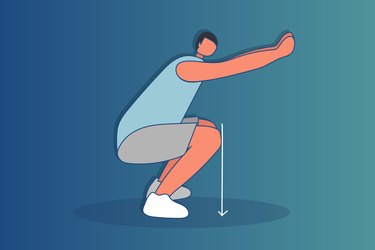
Let's say your knee pops when doing a squat. Rotate your toes differently, pointing them slightly out instead of straight ahead (or vice-versa). During a lunge, try lunging less deeply. If the cracking happens while resistance training, use lighter weights.
So, How Bad Is It Really if My Joints Crack During Exercise?
It depends on your other symptoms, if any. "Painless popping is not bad," Dr. Gibson says. "But don't ignore pain or swelling."
- Cleveland Clinic: Snap, Crackle, Pop: What You Need to Know About Joint Noises
- Cleveland.com: Those cracking sounds during exercise might your body saying, 'Take it easy': the You Docs
- Arthritis Foundation: 51 Ways to Be Good to Your Joints
- WebMD: Caring for Your Joints
- National Osteoporosis Foundation: Calcium/Vitamin D
- NIH: "Chondromalacia Patella"
- NIH: " Sports Injuries"
- Centers for Disease Control: "Osteoarthritis (OA)"
- Hospital for Special Surgery: "What Does a Pop in Your Knee Mean?"
- Nutrients: "The Relationship between Vitamin K and Osteoarthritis: A Review of Current Evidence"
- Journal of Exercise Rehabilitation : "The effect of warm-ups with stretching on the isokinetic moments of collegiate men"
- PLOS ONE: "Time course of changes in the range of motion and muscle-tendon unit stiffness of the hamstrings after two different intensities of static stretching"
Is this an emergency? If you are experiencing serious medical symptoms, please see the National Library of Medicine’s list of signs you need emergency medical attention or call 911.