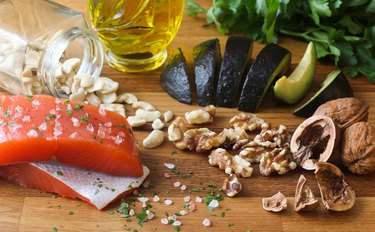
If you're old enough to recall the '80s and '90s, you probably remember it as a time of low-fat everything. Dietary fats, regardless of type — unsaturated, saturated, omega-3s or trans fats — were, for the most part, lumped together and seen as problematic when it came to weight loss and heart health.
It took us some time (read: a few decades) to understand that this line of thinking wasn't entirely accurate and that avoiding all fats was hurting our hearts and waistlines.
Video of the Day
Video of the Day
Fast forward to today where the keto diet is king, and it appears we're now living on the opposite end of the spectrum. We've gone from limiting fats as much as possible, to a trendy diet that is about 75 percent fat, 20 percent protein, and 5 percent carbohydrates.
So, where do fats belong when it comes to managing our weight and overall health?
The truth is, somewhere in the middle, and the science on this will continue to evolve — annoying, I know. The current Institute of Medicine guidelines, based on available science, recommend a diet that is 20 to 35 percent fat, 45 to 65 percent carbs and 10 to 35 percent protein.
Dietary Fat and Weight Loss
Fats are a crucial part of our diet. They are a source of energy and they help our bodies produce hormones and better absorb fat-soluble nutrients like vitamins A, D, E and K, as outlined by the American Heart Association.
A gram of fat (regardless of type) has 9 calories. They're more calorically dense than protein (4 calories per gram) and carbs (also 4 calories per gram). This is one of the reasons why we pursued low-fat diets long ago.
But it's important to keep in mind that eating an excess of calories, regardless of the macronutrient source, will lead to weight gain, and be aware that fats are actually beneficial for weight loss. Here's why:
Dietary Fats Slow Down Digestion
Dietary fats naturally slow "gastric emptying," i.e., the time it takes for food to leave your stomach and continue its course through your GI tract, according to the July 2014 issue of Today's Dietitian.
We know that foods that take a while to digest leave us feeling fuller longer. So, adding a little bit of fat to your meal, like olive oil on a salad, or avocado in your smoothie, will help to slow down how quickly you digest your meal.
Furthermore, research shows adding fiber slows down the digestion of fat even further.
Related Reading
Dietary Fats Favorably Affect Hunger Hormones
There's a growing body of research looking at the effect different types of fat have on various hunger hormones and satiety levels.
A March 2019 study published in Appetite found that eating meals higher in polyunsaturated fats (PUFAs) led to a greater decrease in ghrelin (a hormone that triggers hunger) and higher CCK levels (a hormone that suppresses hunger) compared to monounsaturated fat. The diet high in PUFAs also resulted in lower hunger ratings, although there was no difference between the amount of calories consumed and the reported feelings of fullness.
Related Reading
4 Fats to Add When You’re Trying to Lose Weight
1. Avocado
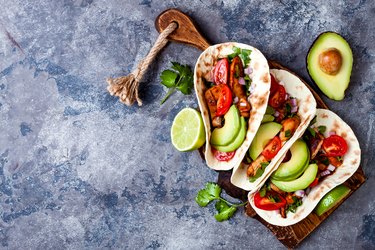
What makes avocados so special when it comes to weight loss? It's the healthy fat and fiber combo. A serving of avocado (one-third of the fruit) has 4.5 grams of fiber and 9 grams of fat, according to the USDA.
If you pair the avocado with a salad, chips or tacos, the added fat will help to slow down the digestion of the meal and the grams of fiber slow it down even further. The only caveat is portion control. Avocado is good, yes, but polishing off a bowl of guac isn't going to help your cause.
Related Reading
2. Salmon
Yes, eating fish is great for your health and waistline but salmon (and a few other fish like tuna and sardines) may have the upper hand. These specific types of fish are rich in omega-3 fatty acids and it turns out, these fats may help improve leptin resistance, according to a July 2015 article published in Today's Dietitian.
If you are carrying some extra weight, chances are you also have chronic inflammation and it's the inflammatory chemicals that cause our body to be less sensitive to leptin, a hormone that decreases our food intake and regulates our metabolism. Omega-3s however, can help make your body less resistant to leptin, allowing it to do its job.
Related Reading
3. Walnuts
Nuts are a good source of healthy fats — they can be up to 80 percent fat, per the Mayo Clinic. And, all tree nuts are good for us. Eating nuts is great for our heart because they help to lower LDL cholesterol levels and reduce inflammation linked to cardiovascular disease.
But walnuts are a standout because they're unique in that they contain a solid dose of omega-3s, according to California Walnuts. This also means they're rich in PUFAs, which we know has been shown to favorably alter our hunger hormone levels as well.
4. Olive Oil

It may seem counterintuitive to add oil to your salad if you're trying to lose weight, but olive oil may actually help you better manage your body weight. It is a staple of the Mediterranean diet after all, which has been touted as one of the healthiest and most researched diets that we can follow.
Researchers looked at 11 different randomized clinical trials addressing olive oil and weight management and concluded that a diet enriched with olive oil led to a greater reduction in weight than a control diet without, according to a November 2018 meta-analysis published in Revista Española de Salud Pública.
Related Reading
2 Fats to Limit if You’re Trying to Lose Weight
The biggest thing that will lead to weight gain is overeating — no matter the source of calories.
That said, we know some foods are beneficial for our health while others are not. Trans fats and saturated fats provide no benefit to our diet and can do more harm than good, although more research is coming out on the effects of different saturated fats — stay tuned!
1. Trans Fats
Here's the deal: Trans fats have no redeeming qualities, so much so that the U.S. Food and Drug Administration has required that the artificial fat be removed from all processed foods. While the amount in our food supply has been cut back drastically, some still exists, according to the Mayo Clinic.
Tip
Margarine, refrigerated dough, baked goods and fried foods like French fries and doughnuts may all contain trans fats.
You won't find trans fats in healthy fat sources of food like chia seeds and almonds, but you may find them in ultra-processed junk food that is typically high in refined grains, too. These are the types of foods you'll want to limit if you're trying to lose weight.
Related Reading
2. Saturated Fats
If you're trying to lose weight, chances are you're watching what you eat and trying to eat less. When we do that, it's especially critical that we focus on nutrient-dense foods so that we get all of the nutrients that we need.
By limiting the saturated fat in our diet — which we know provides no benefit — we leave room for more beneficial sources of fat like mono- and poly-unsaturated fats.
Tip
You'll find saturated fat in fatty meats, fried food and butter.
Additionally, saturated fats may increase inflammation by kicking on a pathway that triggers what's called obesity-induced inflammatory response, according to an April 2018 study published in Nutrients. So, if you're overweight, eating foods high in saturated fat may trigger a greater inflammatory response in your body.
- USDA National Agricultural Library: "Macronutrients"
- American Heart Association: "Dietary Fats"
- Today's Dietitian: "Gastroparesis"
- Appetite: "Appetite Responses to High-Fat Diets Rich in Mono-Unsaturated Versus Poly-Unsaturated Fats"
- Today's Dietitian: "Hunger Hormones"
- USDA: "Avocados"
- Mayo Clinic: "Nuts and Your Heart: Eating Nuts for Heart Health"
- California Walnuts: "Omega-3 ALA"
- Revista Española de Salud Pública: "Olive Oil and Body Weight. Systematic Review and Meta-Analysis of Randomized Controlled Trials"
- Mayo Clinic: "Trans Fat is Double Trouble for Your Heart Health"
- Nutrients: "Obesity, Inflammation, Toll-Like Receptor 4 and Fatty Acids"