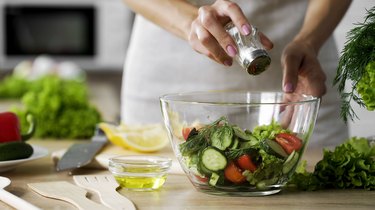
Sodium is a mineral your body needs for normal nerve and muscle function and fluid balance — but a little goes a long way.
And getting too much salt, which many of us are guilty of, is linked to serious health issues like heart disease, high blood pressure and stroke, according to the Centers for Disease Control and Prevention (CDC).
Video of the Day
Video of the Day
How Much Sodium Do You Need — and Why Cut Back?
The average American takes in about 3,400 milligrams of sodium per day, according to the CDC, which far surpasses the recommended maximum of 2,300 milligrams daily or 1,500 milligrams per day if you have a heart condition. To put things into perspective, 2,300 milligrams equates to just a teaspoon of salt.
When too much sodium enters your bloodstream, it increases the volume of your blood, leading to higher blood pressure, which burdens your heart, according to the Food and Drug Administration (FDA).
Not only that, but a high-sodium diet can also put your immunity at risk. Taking in an additional six grams of salt per day — which amounts to 2,400 milligrams of sodium (the maximum amount recommended per day) — is linked to immune deficiencies in humans, according to a March 2020 study in Science Translational Medicine. That's because too much salt can impair your neutrophils' ability to kill bacteria in the body, the research found.
And because high-sodium foods aren't usually very nutrient-dense, a sodium-rich diet can leave little room for healthy foods that promote overall wellness.
"Reducing salt intake is an honest aspiration if most of your diet consists of fast food, restaurant food, take-out, frozen meals, canned foods, condiments, traditional snacks [such as] chips, pretzels and crackers and packaged foods of any kind," Stephanie Paver, RD, an award-winning nutrition expert serving clients in Arizona and California, tells LIVESTRONG.com.
If this sounds like you or if your doctor has suggested a low-sodium diet, try these easy ways to slash some salt from your eating plan.
1. Read and Compare Nutrition Labels
Sodium content is listed on the nutrition label of packaged foods, along with the Daily Value (DV), or the percentage of the daily recommended intake one serving fulfills. To identify which product is actually low in sodium, check these common claims, per the FDA.
- Salt- or Sodium-Free: Foods labeled as such contain less than 5 milligrams of sodium per serving.
- Very Low Sodium: Food provides 35 milligrams of sodium or less per serving.
- Low-Sodium: Food provides 5 percent or less of the sodium DV per serving.
- Reduced Sodium: Food contains at least 25 percent less sodium than its traditional version.
- Light in Sodium or Lightly Salted: Food contains at least 50 percent less sodium than its traditional version.
- No-Salt-Added: No salt is added during processing, but these foods may not be sodium-free. Check the nutrition label.
Checking claims is more helpful than checking to see if salt, also called sodium chloride, is listed high on ingredient lists because salt isn't the only sodium provider. Other sodium sources include monosodium glutamate (MSG), baking soda and baking powder.
What's more, comparing labels on some of your favorite snacks can help you make smarter choices, says Paver, adding that salted cashews usually contain less sodium than potato chips per serving.
2. Watch Your Serving Sizes
Nutrition labels can be helpful, but if you eat two or more servings of a low-sodium food, you can easily take in hefty amounts of the mineral. To become more mindful of your serving sizes, measure them out until you get a feel for them.
When you dine out, use your eyes to guide portion sizes. A half-cup serving of rice or pasta is roughly the size of a tennis ball while a standard 3-ounce serving of meat, fish or poultry is about the size of a deck of cards, according to the Academy of Nutrition and Dietetics.
3. Think Fresh
Not all of your foods need to be fresh or homemade for you to cut back on salt, but the biggest sodium contributors tend to be processed foods. The American Heart Association recommends practicing caution around the "salty six" foods that provide the most sodium in our diets. These include:
- Cold cuts and cured meats
- Pizza
- Soups
- Breads and rolls
- Chicken
- Burritos and tacos
Go for fresh meats and fish or plant-based protein sources, such as tofu or dried and cooked beans or lentils, instead of bacon or sausage. Make a big batch of a healthy soup in your slow cooker to freeze in smaller containers for later use. And keep fresh fruits and vegetables on hand for convenient snacks and meal additions.
If you're really struggling to lower your sodium intake, keep a detailed food journal to discuss with your doctor or dietitian. It may take some time, but your wellness is worth the effort.
4. Season With Herbs and Spices
Stepping away from the salt shaker can go a long way. "When purchasing spices, herbs or seasonings at the grocery store, select the ones that don't list sodium on their labels," suggests Jenna Appel, RD, CPT of Appel Nutrition in Boca Raton, Florida. Choose garlic powder over garlic salt, for example.
Read more: How Often Should You Replace Your Spices?
5. Make Your Own Savory Snacks
A single bag of chips can pack in as much as 250 milligrams of sodium. "Instead of buying salty snacks like potato chips, make your own," Paver says. "Use a variety of vegetables like carrots, kale, jicama, potatoes and beets." Cut the vegetables into thin slices and then bake them until crisp. Season the slices with herbs and spices for extra flavor sans salt.
6. Choose (or Make) Low-Sodium Soups
Prepared soups are commonly high in sodium. One cup of chicken noodle soup, for example, may contain over 1,000 milligrams.
"Whenever possible, make fresh or buy low-sodium varieties," Karen Z. Berg, RD, a dietitian in Port Washington, New York, tells us. "If that's not an option, dilute the soup with extra-hot water if it's broth-based. Try diluting with hot milk or cream if it's cream-based."
7. Dine in More Often
People who are actively aiming to lower their sodium intake report dining out a lot less than people who aren't cutting back, according to a study published in the Journal of the Academy of Nutrition and Dietetics in May 2018. This makes sense, given that restaurant fare often contains more sodium than homemade dishes. Dining out also allows you less awareness and control over how much sodium you eat.
"If you eat out every day for lunch, scale it back," says Paver. "Make a goal to eat out four days instead of five and plan ahead to bring leftovers to work one day of the week." Saving some for leftovers also cuts back on your day's sodium intake.
Read more: The Ultimate Guide to Meal Planning for Beginners
8. Order Sauces on the Side
Watching your sodium intake doesn't mean you can't dine out, but you may want to tweak your ordering habits. Berg suggests asking for any sauces to be served on the side.
"All sauces, including tomato sauce, usually hide extra salt," Berg says. "So whenever possible, try to get your sauce on the side, so you can control how much gets on your food," she adds. "This can also help you save calories, because chefs like to use a lot more sauce than you actually need to get the flavor."
9. DIY Salad Dressing
Whether you dine in or out, salad dressings can be deceptively high in sodium. Two tablespoons of your average thousand island dressing contain 300 milligrams of sodium. If your salad contains other sodium sources like processed meat or cheese as well, it can really add up. Just two simple, natural ingredients — oil and vinegar — can help take care of this.
"Pre-made salad dressings have a lot of salt added, so whenever possible, opt for oil and vinegar, which is much healthier," says Berg. "Or, find a recipe online for your favorite dressing and just use half the salt required."
10. Switch to No-Salt-Added Canned Goods
Fresh foods are often the most nutritious options, but they aren't always convenient or realistic amid a hectic schedule. For quick dishes, keep low-sodium and no-salt-added canned goods on hand. Be sure to check the DV percentage on the label, keeping in mind that no-salt-added items can still contain other sodium sources.
"When purchasing canned vegetables or legumes, opt for those labeled no-salt-added and season them yourself with fresh herbs and spices," says Appel. Try adding Italian seasoning or chopped garlic to low-sodium beans to boost flavor.
Read more: 5 Popular Types of Salt and How to Use Them
- Centers for Disease Control and Prevention: "Get the Facts: Sodium and the Dietary Guidelines"
- Academy of Nutrition and Dietetics: "Serving Size vs Portion Size: Is There a Difference?"
- Journal of the Academy of Nutrition and Dietetics: "Reported Action to Decrease Sodium Intake Is Associated with Dining Out Frequency and Use of Menu Nutrition Information among US Adults"
- USDA Nutrient Database: "Thousand Island Dressing"
- FDA: "Use the Nutrition Facts Label to Reduce Your Intake of Sodium in Your Diet"
- American Heart Association: "A Closer Look at the Salty Six"
- Science Translational Medicine: "A high-salt diet compromises antibacterial neutrophil responses through hormonal perturbation"
- USDA: 2015 - 2020 Dietary Guidelines For Americans