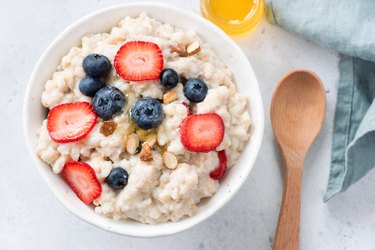
If you're wondering how many calories are in a cup of oats, raw versus cooked, you may be surprised to find out they don't have much of a difference in nutritional value. Raw or cooked, oats are a great source of fiber and essential vitamins.
Raw Oats Nutrition
Video of the Day
According to the USDA, 1 cup of raw oats contains 307 calories. The quantity of carbs in cooked oatmeal or in raw oats amounts to 54.8 grams. You can also find significant amounts of protein and fiber, as well as vitamins and minerals in just one cup of oats. This is why oatmeal makes for a hearty breakfast.
Video of the Day
One cup of oats contains 8.18 grams of insoluble fiber, 112 milligrams of magnesium, 332 milligrams of phosphorus, 293 milligrams of potassium and 10.7 grams of protein.
If you're wondering whether there's a difference between raw oats and oatmeal in terms of nutrition, Harvard Health Publishing says that cooking takes little away from oats, meaning they would essentially have the same nutritional value. In fact, cooked oats may help release certain nutrients that your body wouldn't be able to extract from raw oats.
Read more: How Many Calories Are in a Bowl of Oatmeal?
Health Benefits of Oats
The Dairy Council of California explains that oatmeal is especially rich in fiber, having the largest proportion of soluble fiber of any grain in the form of beta-glucan, a group which includes wheat, barley and rye. Oatmeal contains both soluble and insoluble fiber, both of which will help you maintain gastrointestinal health.
The soluble fiber has been found to lower low density lipoprotein (LDL) cholesterol, considered the "bad" cholesterol when consumed regularly. Research has shown other benefits of fiber. For example, fiber can reduce the risk of high blood pressure and the risk of cardiovascular disease mortality. Fiber can also help reduce the risk of colon cancer and help diabetics with better glycemic control.
Oatmeal can also make you feel full for longer due to the soluble fiber, says the Dairy Council of California, so eating oatmeal can help you avoid overeating later in the day, making it a good food option if you're trying to maintain a healthy weight.
Read more: What is the Nutritional Value of Oatmeal?
Types of Oats
According to the Harvard School of Public Health, there are several types of oats that vary depending on how they are processed. Oats that are more processed have a similar nutritional value to natural oats, though the less-processed oats take longer to digest and have a lower glycemic index.
Oat groats are whole oat kernels that have been cleaned and are mostly intact. Steel-cut or Irish oats are oat groats that have been cut into small pieces with a steel blade. Scottish oats are oats that have been ground and turned into a porridge. Rolled or old-fashioned oats have been steamed and flattened, then dried. Quick or instant oats are usually oats that have been steamed for a longer period of time and flavored or sweetened.
The Dairy Council of California advises making oatmeal with milk instead of water to increase the amount of protein and calcium. They also recommend adding yogurt to get the benefits of probiotics, and adding fruit, nuts and a low-calorie sugar substitute.