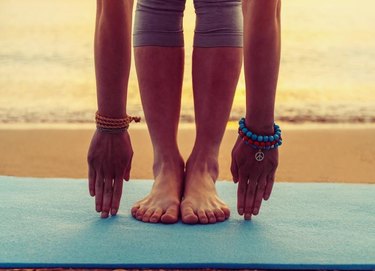
Yoga mats come in a variety of styles, sizes, materials and thicknesses. Finding the perfect yoga mat can be like searching for a pair of shoes, and it might take some time to determine the mat that is perfect for your unique style of practice. The standard yoga mat measures 68 inches long and 24 inches wide, but the right mat for you may differ.
Yoga Mat Sizing
Video of the Day
Yoga mats come in a variety of sizes, and there's no hard rule on the ideal size. Each manufacturer chooses their own measurements and may produce mats that are slightly larger or slightly smaller than that average mat of 68 x 24 inches. For anyone shorter than 6 feet tall, the standard size may be just right. If you're taller, you may find your feet and head hanging off the edges of your mat when you lay down or press into Downward-Facing Dog. Large yoga mats are readily available for taller individuals, coming in around 72 or 74 inches.
Video of the Day
Mat Thickness
The thickness of your mat may be the measurement to which you should pay closest attention. Lightweight mats designed for travel usually start around 1.5 millimeters. A standard mat is about twice as thick. Individuals with back or knee pain might prefer a thicker 4 to 5 millimeter mat, but thicker mats may make balancing poses, such as Tree or Half-Moon, more difficult.
Your yoga mat thickness is also heavily dependent on the type of surface you're practicing on; the wooden floor in your studio may require a different mat from your carpeted living room, or the field at your local park. Generally speaking, go with a softer, thicker mat when you practice on hard surfaces, and shift to your thin travel mat when you're on carpet. Experiment with a few thicknesses to see which mat suits your personal style and preference.
Read More: How to Choose Yoga Mat Thickness
The Right Match
Your practice preferences can dictate your yoga mat choice as well. For restorative yoga classes, a thick, supportive mat is an ideal choice for passive poses. Thicker mats let you hold these reclined and seated poses longer without discomfort. For rigorous, flowing classes like Bikram or Anusara, a thinner mat can help you maintain balance in demanding poses. Wider mats may also be useful in these classes, since your body position may shift more quickly in sequence.
Yoga mats are also a recent invention; they were first cut from carpet underlays only 40 years ago. Many asanas like Utthita Trikonasana, or Triangle pose, that involve strength, rather than flexibility, are best performed without any yoga mat at all. You can experiment with going mat-free to see if it might enhance your practice.
Read More: The 5 Best Eco-Friendly Yoga Mats
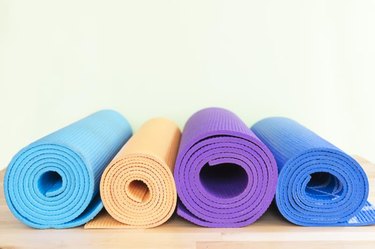
Yoga Mat Materials
Material choice should be a chief consideration when choosing a new mat. Traditionally, many yoga mats were made from foam materials that contained less than wholesome chemicals. Phthalates and polyvinyl chloride, specifically, can be detrimental to your health, throwing off your hormonal balance.
If you're committed to sustainable living practices, a biodegradable mat is a great way to reflect your values. These mats are made from safer and more natural materials like rubber, jute, latex, and woven grass. They're healthy to use in practice, and many can be composted when your mat reaches the end of its life.
Read More: The Best Yoga Mats
- The Wire Cutter: The Best Yoga Mats
- REI: Yoga Gear: How to Choose
- Gaiam: How to Choose the Right Yoga Mat
- Outdoor Gear Lab: The Best Yoga Mat Review
- Yoga Journal: The Truth About the PVC in Your Yoga Mat
- Yoga International: Yoga Mats: Are They Really Necessary?
- The Chopra Center: Yoga Mat Review: How to Find the Best Mat for Your Needs
- Gaiam: A Beginner's Guide to 8 Major Styles of Yoga