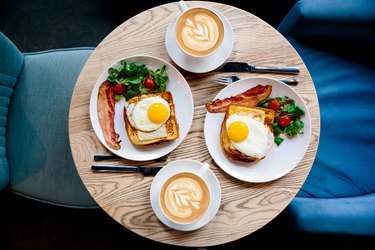
If you're following a 1,600-calorie diet, the goal is to make all of those calories count. To ensure that you meet all your vitamin and mineral needs, your meal plan needs to include a variety of foods that are rich in nutrients, but low to moderate in calories.
In addition to eating three meals of about the same size (or around 500 calories), you may want to incorporate one 100-calorie snack each day to help control hunger. To make sure you're sticking to your goal, it can be extremely helpful to meal prep so you don't fall off track.
Video of the Day
Video of the Day
1,600-Calorie Diet Meals
Start your day right and prevent overeating at your next meal with a healthy breakfast that contains about 500 calories. A good breakfast option on your 1,600-calorie diet might include a two-egg omelet stuffed with 2/3 cup of sliced mushrooms and 1 ounce of cheddar cheese, cooked in 1 tablespoon of butter and served with one-half cubed avocado. This filling, protein-rich breakfast will start you off with 510 calories.
When it's time for lunch, you want to aim to take in another 500 calories or so. A healthy and filling lunch on a 1,600-calorie meal plan might include 2 cups of mixed greens topped with 3 ounces of tuna, one hardboiled egg, 1 ounce of feta cheese and 2 tablespoons of natural lemon garlic salad dressing (Tessemae's is an all natural brand you can try). This combo will add another 493 calories to your day.
For dinner you might have 3 ounces of sirloin steak served with 1/2 cup of mashed sweet potatoes and 1 1/2 cups of steamed broccoli tossed in a tablespoon of olive oil and 1 tablespoon of grated Parmesan cheese. According to the USDA's FoodData Central, the whole meal comes in at 511 calories, making your total for the day, without snacks, 1,514 calories.
Choose Nutrient-Rich Snacks
You can get to 1,600 calories a day by adding a nutrient-rich snack that you can eat when you feel hunger strike. If you're incorporating an exercise routine with your 1,600-calorie diet, you might want to plan it so that you eat your snack either right before or right after your workout.
The Ohio State University Wexner Medical Center provides some snack options that you can choose from that are all under 100 calories, including:
- A hard-boiled egg
- Three thin slices of deli meat
- 1 tablespoon peanut butter
- 14 almonds
- 11 cashews
- 1 1/4 cup mixed berries
- 1 cup chopped celery with 1 tablespoon peanut butter
- 1 ounce (one package) string cheese
- 1/2 cup of yogurt
While you may be concerned with counting calories, keep in mind that the best thing to do on any diet plan is focus on nutrient maximization. In other words, try to incorporate a lot of foods that give you a lot of bang for your buck when it comes to vitamins, minerals and antioxidants. Harvard Health Publishing notes that this is especially important as you age, since your body doesn't absorb nutrients as well, yet you usually need fewer calories.
Load up on fresh fruits and veggies, lean meats and healthy fats and stay away from sugary foods or refined carbohydrates. While a cup of sugary cereal may fall into your 1,600-calorie meal plan, that doesn't make it a healthy choice. Of course, you're going to have days when you indulge, but make healthy, nutrient-dense foods the foundation of your diet.
Related Reading
- USDA FoodData Central: "Eggs"
- USDA FoodData Central: "Sliced Mushrooms"
- USDA FoodData Central: "Butter"
- USDA FoodData Central: "Cheddar Cheese"
- USDA FoodData Central: "Avocado, Raw"
- USDA FoodData Central: "Mixed Salad Greens, Raw"
- USDA FoodData Central: "Tuna, Canned, Water Pack"
- USDA FoodData Central: "Feta Cheese"
- USDA FoodData Central: "Tessemae's, All Natural Dressing, Marinade, Dip, Lemon Garlic"
- Ohio State University Wexner Medical Center: "100 Snacks with 100 Calories or Less"
- Harvard Health Publishing: "Add More Nutrient-Dense Foods to Your Diet"
- USDA FoodData Central: "Sweet Potato"
- USDA FoodData Central: "Beef, Top Sirloin, Steak, Separable Lean and Fat, Trimmed to 0" Fat, All Grades, Cooked, Broiled"
- USDA FoodData Central: "Cheese, Parmesan, Grated"
- USDA FoodData Central: "Broccoli, Cooked, Boiled, Drained, Without Salt"
- USDA FoodData Central: "Olive Oil"