








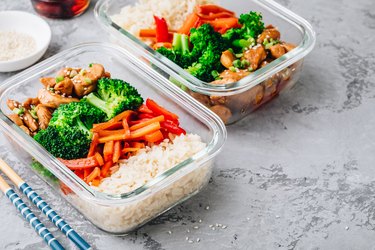









The American Dietetic Association says that healthy choices can be made in any type of restaurant or food establishment. The Olive Garden restaurant is no exception to the rule. There are many nutritious dishes, but some are more healthful than others and diners should be prudent when ordering.
Garden Fare Options
Garden fare options at the Olive Garden are healthier dishes that can be low-fat, low-carbohydrate, gluten-free or no sugar added. Low-fat options follow federal dietary guidelines with have less than 30 percent of calories from fat and include minestrone, capellini pomodoro, venetian apricot chicken, linguine ala marinara, shrimp primavera, mixed grill and mussels di Napoli. Be aware that the no-sugar-added torta di chocolate has 800 calories and 51 g of fat and 29 g of saturated fat, which exceeds the amount of saturated fat recommended for an entire day.
Appetizers
The ADA recommends sharing dishes whenever possible, especially ones that are high in calories and fat which, in excess, can contribute to obesity and multiple chronic diseases. The Olive Garden's healthiest appetizers are the zuppa Toscana and pasta e fagioli, which are less than 200 calories and lower in fat. Salad dressing adds 230 calories and 23 g of fat, so order it on the side to control the amount consumed.
Appetizers such as chicken alfredo pizza, lasagna fritta, smoked mozzarella fonduta and calamari have the calorie and fat content of an entrée so split them between diners or order them in place of an entree. Dipping sauces that accompany appetizers can also be high in calories and fat--the alfredo sauce has 380 calories, 35 g of fat and 22 g of saturated fat per serving. Tomato or marinara sauces are healthier options; both have less than 100 calories and 3 g of fat.
Pasta Entrees
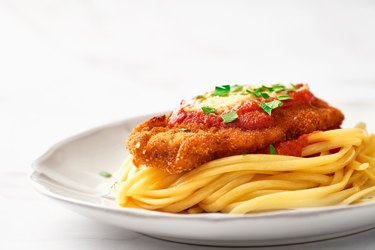
Cheese ravioli with meat sauce, ravioli de portobello and spaghetti with meat sauce are all under 800 calories and 30 g of fat and contain much less sodium than other pasta dishes. Limit or share high-calorie entrees such as the tour of Italy, which contains 1,450 calories, 74 g of fat, 33 g saturated fat and 3,830 mg of sodium. Based on a 2,000-calorie diet, this dish contains 112 percent, 165 percent and 166 percent of the fat, saturated fat and sodium, respectively, that is recommended over an entire day. Other less healthy options are the braised beef and tortellini, chicken parmigiana, fettuccine alfredo, five cheese ziti al forno, and spaghetti with Italian sausage or meatballs.
Chicken, Seafood and Meat Entrees
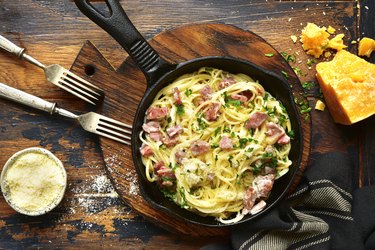
The healthiest entrees are herb-crusted salmon and parmesan-crusted tilapia, which both contain less than 600 calories and 30 g of fat. Share entrees such as chicken and shrimp carbonara and chicken alfredo, which have more than 80 g of fat. Pork Milanese should also be limited because it has 1,510 calories, 87 g of fat, 37 g saturated fat and 3,100 mg sodium, which exceed the daily recommendations for fat, saturated fat and sodium.
Desserts
Desserts can be high in calories and added sugar while offering few nutrients, which is why the ADA suggests ordering a single dessert for the entire table to share. The least healthy desserts at the Olive Garden are the zeppoli with chocolate sauce which has 1,130 calories and 38 g of fat and the white chocolate raspberry cheesecake which has 890 calories, 62 g of fat and 36 g of saturated fat.
Beverages
Alcoholic drinks at the Olive Garden have between 200 and 400 calories and should be balanced with lower-calorie foods. The ADA recommends that women limit their alcohol intake to one drink a day and men to two drinks a day. The best low-calorie options are water, tea, diet sodas and coffee.
References
- "Healthy Eating on the Run: A Month of tips"; American Dietetic Association; 2009
- Olive Garden Italian Restaurant: Nutritional Guide
- United States Department of Agriculture: Dietary Guidelines for Americans 2005


Member Comments