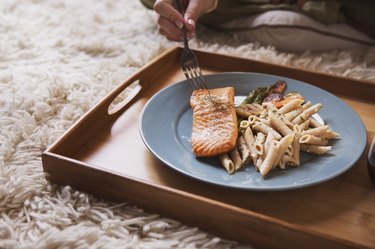
You may have heard one of your friends say they're a pescatarian, and you may have wondered what on earth that means. By definition, a pescatarian is a person who eats seafood but not other types of meat.
But just as each person is different, what they choose to eat can vary. If you're hosting a dinner party for a pescatarian, it's best to clarify with them what they eat and don't eat. If you're considering becoming a pescatarian yourself, you can use the four types of foods outlined below to guide you.
Video of the Day
Video of the Day
What Is a Pescatarian?
Pescatarians are similar to vegetarians, but the difference is that pescatarians eat fish and shellfish in addition to an otherwise vegetarian diet. Like vegetarians, most pescatarians include eggs and dairy in their diets, according to registered dietitian Judith C. Thalheimer in Today's Dietitian.
Major vegetarian organizations, including the Vegetarian Society, do not recognize pescatarians as true vegetarians. But pescatarians believe that they can improve their health, the plight of land animals and the condition of our planet by refusing to consume meats other than seafood.
While you can eat an unhealthy diet as a pescatarian, most pescatarians and vegetarians consume less total fat, less cholesterol and less saturated fat than people who eat meat regularly.
According to the UK's National Health Service, most people should include more seafood in their diet because fish and shellfish are rich in nutrients, and oily fish like like salmon are a great source of omega-3 fatty acids.
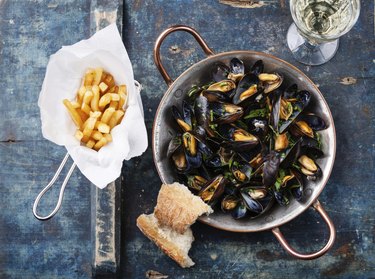
1. Seafood for Pescatarians
Pescatarians do not eat land animals and birds, including beef, pork, chicken and other types of poultry. They do, however, eat fish, including:
- Salmon
- Tuna
- Trout
- Whitefish
- Sardines
- Fish roe (fish eggs or caviar)
This type of diet also allows for shellfish like:
- Lobster
- Shrimp (or prawns)
- Crawfish
- Crab
- Scallops
- Clams
- Mussels
- Squid
- Octopus
- Oysters
These foods can be prepared in any manner, as long as they are not prepared with other ingredients that contain meat from land animals.
Read more: 9 Excuses to Eat More Seafood
2. Plant Foods for Pescatarians
Fruits, vegetables and plant-based proteins are often the main course for pescatarians, much like vegetarians and vegans. Depending on personal preferences and food allergies or sensitivities, they can eat any or all of the following:
- Fruits
- Vegetables
- Grains
- Beans
- Nuts
- Seeds
- Soy products such as tofu and tempeh
Some pescatarians rely on beans, nuts and dairy for the majority of their protein, eating fish and seafood only on occasion.
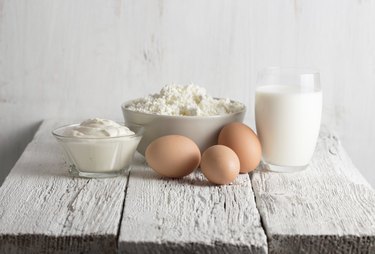
3. Eggs and Dairy for Pescatarians
Whether or not to consume eggs and dairy is a personal choice that each pescatarian makes based on his own preferences and values. Some of these products pescatarians may or may not eat include:
- Milk
- Yogurt
- Cheese
- Eggs
- Butter
- Whey
- Ice cream
- Baked goods containing eggs and dairy
4. Carbohydrates for Pescatarians
Carbohydrates are a staple of most pescatarian diets. Fruits, vegetables, beans and grains are rich sources of carbohydrates not found in meat and fish. These foods are excellent sources of not only carbohydrates for energy, but also vitamins, minerals and fiber.
Good sources of carbohydrates in a pescatarian diet include:
- Fresh fruits
- Fresh vegetables
- Whole grains such as brown rice and quinoa
- Whole wheat bread and pasta
- Black beans and chickpeas
- Hummus
- Sweet potatoes
The pitfall of some vegetarians and pescatarians is eating too many refined and processed carbohydrate foods. These foods are typically low in nutrients and high in fat and sugar.
Unhealthy carbohydrate foods pescatarians should avoid or limit include:
- Chips and other packaged snack foods
- Refined white bread and pasta
- White rice
- Pastries, cookies and cakes
- French fries
Disadvantages of a Pescatarian Diet
Fish and shellfish are good sources of protein and healthy fats, but eating too much increases your exposure to pollutants and mercury. Depending on the waters that are being fished, some of those pollutants can include polychlorinated biphenyls (PCBs), dioxin and perflourooctane sulfonate (PFO).
Excessive exposure to these pollutants on a pescatarian diet could potentially increase the risk of cancer, diabetes and thyroid disease. The risks of exposure are higher in people who are pregnant, people who may become pregnant, nursing people and young children.
The Environmental Protection Agency (EPA) provides a list of fish and shellfish that are safest to eat. Some of the best choices are:
- Salmon
- Black sea bass
- Cod
- Squid
- Tilapia
- Oysters
- Crawfish
- Sardines
- Scallops
- Shrimp
The FDA and EPA caution pregnant people and people who may become pregnant, people who breastfeed and young children to not eat shark, swordfish, king mackerel and tilefish because of the high levels of mercury those fish contain.
If you consume very minimal amounts of fish or animal products, be certain to choose vitamin B-12 fortified foods, like breakfast cereal or soy milk, to make up for a potential deficit, or ask your health care provider to recommend a supplement.
Read more: 13 Types of Fish to Avoid Eating
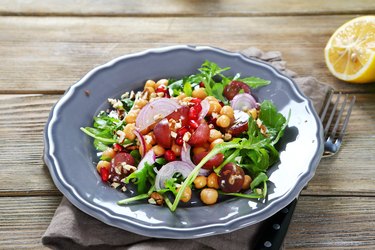
10 Healthy Pescatarian Recipes
Still not sure what to eat on a pescatarian diet? Try one of these healthy and delicious options morning, noon or night!
Breakfast
Lunch
- Champagne Cobb-Style Salad (with or without tuna)
- Fish and Veggie Tacos
Dinner
- White Winter Chili (with or without shrimp)
- Shrimp and Tofu Panang Curry
- Avocado Soup With Shrimp
Snacks
Is this an emergency? If you are experiencing serious medical symptoms, please see the National Library of Medicine’s list of signs you need emergency medical attention or call 911.