There's no cure for psoriasis, a chronic condition linked to the immune system that leads to red, scaly patches on your skin, according to the National Psoriasis Foundation. But medications and lifestyle adjustments — including to your diet — can help to ease symptoms and reduce flare-ups.
Much is unknown about this condition: Experts don't know why people get it, although genetics may play a role, or even why outbreaks occur, per the Cleveland Clinic. What is known is that the immune system plays a large role in psoriasis; the condition activates the body's inflammation response.
Video of the Day
Video of the Day
Read on to learn more about how the immune system plays an important part in psoriasis, and how the foods you eat might help manage the condition.
Psoriasis and the Immune System
Psoriasis is considered to be an "excessive immune response gone unchecked," Varsha Rathod, MD, a rheumatologist and internal medicine physician with Palm Health, tells LIVESTRONG.com.
As a result of the immune response overreacting, skin cells begin to grow at an extremely fast rate, 10 to 20 times faster than normal. While skin cells normally have a 28- to 40-day turnover rate, with psoriasis, that rate accelerates to every two to three days, leading to the excessive layers of skin piling up seen with the condition.
Inflammation can also affect other areas in the body outside of the skin, such as the joints and other organs, according to the National Psoriasis Foundation.
Inflammation is part of your body's biological response to infection or injury, says Cara Marrs, a registered dietitian nutritionist at UCHealth Yampa Valley Medical Center in Steamboat Springs, Colorado. During this process and response — which can be immediate, like if you cut your finger, or chronic and low-grade — tissues release chemicals that tell the body to start healing and repairing.
"Anti-inflammatory foods are foods that can slow or stop this cascade," Marrs says.
And, since many people with psoriasis also have insulin resistance and thus, a higher chance of developing type 2 diabetes, healthy diet choices that include anti-inflammatory food can also help decrease the risk of additional problems, Dr. Rathod says.
6 Foods That May Help Psoriasis
Since psoriasis is an inflammatory process, you should try to incorporate as many anti-inflammatory foods into your diet as possible, explains Kathy LeBarre, an RDN with Spectrum Health in Grand Rapids, Michigan.
The following are anti-inflammatory choices that may help with immune-related conditions such as psoriasis.
1. Fruits and Vegetables
Aim to eat a wide variety of fruit and vegetables, Dr. Rathod says. "The more colorful they can be, the more anti-inflammatory properties they have," she says. That's because of plant compounds called phytochemicals, which fight inflammation, per the Mayo Clinic.
Her favorites include celery, leeks, onions, garlic and sunchokes (aka Jerusalem artichokes) which she describes as tasting "like a water chestnut, but smoky."
2. Antioxidant-Rich Foods
Include foods that are high in antioxidants in your diet as well, Marrs recommends.
Antioxidants help neutralize free radicals, which may cause damage to cells and may lead to an increased risk of certain health conditions, per the Mayo Clinic. And antioxidant-rich foods have been shown to play a role in helping to reverse some of the effects of inflammation in the body, per an October 2016 review in Oxidative Medicine and Cellular Longevity Journal.
The Best Antioxidant-Rich Foods
- Berries
- Grapes
- Leafy greens
- Cruciferous vegetables like broccoli and kale
- Citrus fruits
- Dark chocolate
3. Probiotic-Rich Foods
Probiotics, which are good-for-you bacteria found in your gut, can help in cultivating a healthy microbiome, Dr. Rathod says. And, the health of your gut could affect your skin, per a November 2019 review examining the link between gut bacteria and psoriasis inflammation published in the Journal of Family Medicine and Primary Care.
Adding probiotics to your diet isn't a big challenge — yogurt is rich in probiotics, as are fermented foods such as sauerkraut, kombucha and kimchi, per the Mayo Clinic. You can also take probiotics as supplements, per the Mayo Clinic.
But Dr. Rathod cautions that probiotics are not like "grass seeds you can throw in your colon." In other words, you can't add a few probiotics to your diet and except to be cured of your ailments.
Probiotics, like people, are highly individualized. If you're interested in seeing if probiotics are helpful for you, work directly with a specialist to determine if and what type of probiotic might be beneficial for you, Dr. Rathod says.
Related Reading
4. Turmeric
Turmeric, a vividly hued spice, may be helpful with inflammatory diseases, such as psoriasis.
While more research is needed, turmeric showed promising results as a psoriasis treatment in mice, per an April 2016 paper published in Biochimie. And, a study in the lab found that curcumin — a compound found in turmeric — prevented psoriatic-like cells from multiplying, per a January 2018 review of turmeric's potential published in Open Access Macedonian Journal of Medical Sciences.
Turmeric may help to turn off inflammation at a cellular and immune level, Dr. Rathod says.
You can use turmeric as a spice, take it as a supplement or apply it as a topical cream, per the National Psoriasis Foundation.
Related Reading
5. Water
"Adequate fluid intake is important to help maintain skin hydration," LeBarre says, adding that you should get your hydration from plain water and not sweetened beverages of any kind.
Explore cooking with water or broth instead of traditional oils, as even too much plant-based oil can drive inflammation, Dr. Rathod recommends.
6. Fatty Fish
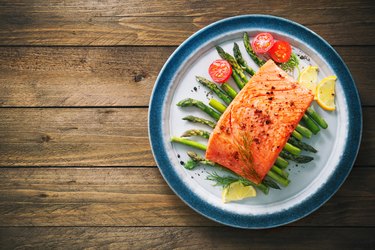
Individuals with psoriasis may benefit from adding foods with omega-3 fatty acids, which help to decrease inflammation, to their diet, per the National Psoriasis Foundation. One great source for omega-3 fatty acids are fatty fish — such as salmon, mackerel, tuna and herring.
But fish aren't the only source for omega-3. Marrs also recommends that individuals with psoriasis consume avocado, flax, nuts and seeds, which are high in anti-inflammatory omega-3 plant fats.
Related Reading
Foods to Avoid if You Have Psoriasis
While adding anti-inflammatory foods to your diet is crucial for managing psoriasis, it's also important to cut out certain food items, as well. Fortunately, there's some good news here: There isn't one specific type of food or food group that should be avoided with psoriasis, per Dr. Rathod.
However, as Lebarre explains, inflammatory foods may exacerbate a condition like psoriasis, so it's best to avoid them to help bring down the inflammation in any way you can. She recommends staying away from:
- Refined sugars
- Refined grains (think white bread or rolls, white pasta and white rice)
- Packaged and ultra-processed foods
- Full-fat dairy and high-fat foods — particularly saturated fats — like butter, margarine and lard
- High-fat meats
Anything that is obviously "not food," like unpronounceable, unnamable things, should definitely be avoided, Dr. Rathod adds. "They can provoke inflammatory reactions that [can] trigger things like eczema and psoriasis," she explains.
You may also benefit from avoiding alcohol, since it's a common trigger for psoriasis flare-ups and may also make some psoriasis treatments less effective, per the Mayo Clinic.
In the end, it's important to remember that there is no one-size-fits-all diet for any health condition, Marrs says. But making choices that can help lower inflammation in the body and eating less highly processed foods can be helpful for both anyone with inflammatory skin conditions and for overall health.
- National Psoriasis Foundation: "What is Psoriasis?"
- Biochimie: "Curcumin Shows Excellent Therapeutic Effect on Psoriasis in Mouse Model"
- The National Psoriasis Foundation: “Don't Fall for These Psoriatic Treatments”
- Endocrine & Metabolic Disorders: “Vitamin D and its Role in Psoriasis: An Overview of the Dermatologist and Nutritionist”
- International Journal of Disease Reversal and Prevention: “Efficacy of a Plant-Based Anti-Inflammatory Diet as Monotherapy in Psoriasis”
- Oxidative Medicine and Cellular Longevity Journal: “Role of Antioxidants and Natural Products in Inflammation”
- Mayo Clinic: "Slide show: Add antioxidants to your diet"
- Open Access Macedonian Journal of Medical Sciences: "Use of Curcumin in Psoriasis"
- Mayo Clinic: "Vitamin D"
- Journal of Family Medicine and Primary Care: "The role of gut microbiome in the pathogenesis of psoriasis and the therapeutic effects of probiotics"
- Mayo Clinic: "Psoriasis"
- Cleveland Clinic: "Psoriasis"
- Mayo Clinic: "How plant-based food helps fight cancer"
- Mayo Clinic: "Prebiotics, probiotics and your health"
Is this an emergency? If you are experiencing serious medical symptoms, please see the National Library of Medicine’s list of signs you need emergency medical attention or call 911.