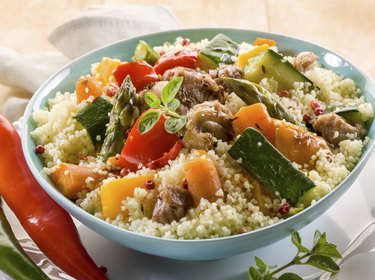
Couscous, typically made from durum wheat semolina, is a North African dish that cooks quickly. A traditional dinner might consist of couscous, a vegetable and bean stew and some chicken, but couscous salads can be made with ingredients such as beans, cheese and vegetables. You can have couscous for dinner if you have diabetes as long as you are cautious to monitor your portion sizes and the way you prepare your couscous.
Carbohydrates in a Couscous Dinner
Video of the Day
A cup of cooked couscous contains 36 grams of carbohydrates. A healthy diet for individuals with diabetes includes a relatively consistent amount of carbohydrates at each meal, with 45 to 60 grams being a good goal for many people. Have a cup of couscous with chicken breast or fish, which are carbohydrate-free, and some nonstarchy vegetables, which are low-carbohydrate. Add another 15 grams of carbohydrates to your dinner by mixing 1/3 cup of cooked garbanzo beans to your vegetables or having a small apple for dessert.
Video of the Day
Choose Whole-Wheat Couscous
The American Diabetes Association recommends that individuals with diabetes choose whole grains, such as whole-wheat couscous, instead of refined options, such as regular couscous. Because they contain the entire grain kernel, whole grains tend to be higher in dietary fiber than their refined counterparts. They are also less likely to spike your blood sugar levels because of their lower glycemic index, according to the University of Michigan.
Control Your Weight
The American Diabetes Association explains that if you are overweight and have type-2 diabetes, losing a small amount of weight can help lower your blood sugar levels. Losing weight requires you to consume fewer calories than you expend, and a dinner with couscous can fit into a calorie-controlled diet. Each cup of cooked couscous contains 176 calories. Over your cooked couscous, serve fish cooked with low-calorie ingredients such as stewed tomatoes, zucchini, turnips, garlic and cumin.
Make Your Meal Heart-Healthy
Consider your heart health as you plan your dinner with couscous, since having diabetes increases your risk for heart disease. Reduce your consumption of cholesterol-raising saturated fat by serving your couscous with lean proteins, such as beans or chicken breast, instead of fatty meats, such as merguez or another spicy sausage. Add high-fiber ingredients, such as carrots, bell peppers, tomatoes and onions, to help lower your cholesterol levels, and limit your use of salt to keep your sodium consumption and blood pressure down.