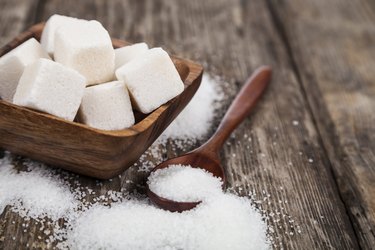
American each consume an average of 19.5 teaspoons of sugar every day. That translates to about 66 pounds of sugar per person consumed each year, according to University of California. In recent years, interest in wholesome sweeteners such as organic sugar has increased as more people become concerned with the potential health hazards of eating refined and processed foods. While there are some distinct differences between organic and white, or pure cane sugar, it's still important to monitor and limit your consumption of either type of sugar to maintain a healthy diet. Using a calorie counter app as a monitoring tool is a great resource.
Processing and Organic Sugar
Video of the Day
Contrary to popular belief, the label "organic" does not mean unprocessed when it comes to sugar. The U.S. Food and Drug Administration labels pure raw sugar as unfit for direct consumption because of the impurities it often contains. All sugar, therefore, must undergo some form of processing before it's sold. The term organic is actually used to indicate the farming methods used to grow the sugarcane or sugar beets from which the sugar is obtained. White sugar, in addition to being processed in a way that removes all traces of its natural molasses content, is usually obtained from sugarcane or sugar beets grown in fields utilizing commercial chemical pesticides and herbicides. If you are concerned about potential pesticide contamination and want sugar that has undergone the least amount of processing, you should look for sugar labeled "organic" and "raw" or "natural," according to USDA Labeling Organic Products.
Video of the Day
Difference in Nutritional Value
Some organic, raw sugar advocates claim that organic raw sugar has more to offer than the cane sugar benefits because the natural molasses has not been processed out of it. According to Monica Reinagel, chef and board-certified nutritionist, there is no meaningful difference between the nutritional value of white sugar versus organic raw or natural sugar. In fact, both types of sugar are chemically recognized as sucrose, contain the same caloric count, and are processed by the body in the same way.
Read More: How Much Sugar Should You Eat in a Day?
Does the Flavor Change
White sugar is refined through a multi-step process using several different chemicals, including sulfur dioxide, phosphoric acid, and calcium hydroxide. This refining process removes any impurities from the sugar, as well as the natural molasses that gives natural organic sugar its varying shades of brown color.
At the end of the refining process, white sugar is 100 percent sucrose, according to a report from Elmhurst College. To sugar connoisseurs, this exacting process of purification also removes the elements that provide flavor to sugar, leaving only sweetness. Refined organic sugar may undergo a similar process — organic sugar that has been purified this way will be extremely white and have a slightly finer texture than standard white table sugar. Refined organic sugar will share the same basic flavor as refined white sugar.
Organic raw or natural sugar, however, does have a distinctive flavor difference, caused by the natural molasses content in each sugar crystal. Organic sugar labeled "turbinado" has the highest natural molasses content and may sometimes even have a slight aroma reports an article in TIME magazine.
Read More: 15 Reasons to Kick Sugar
- Elmhurst College: Carbohydrates -- Sucrose
- U.S. Food and Drug Administration: CPG Sec. 515.400 Raw Sugar
- United States Department of Agriculture: Labeling Organic Products
- Quick and Dirty Tips: Nutrition Diva: Is Natural Sugar Better for You?
- University of Kentucky: Re-Naturalizing Sugar -- Narratives of Place, Production, and Consumption
- TIME: Better than Sugar? 5 Natural Sweeteners Demystified
- UCSF Sugar Science: How Much Is Too Much?