




















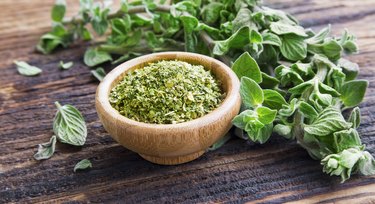



































Sage originated in the Mediterranean but can grow almost anywhere in the world. Steam distilling leaves from common sage--salvia offinalis--produces the essential oil. Sage essential oil has a clear color and a fairly strong herbal aroma. Well known and used often in various culinary applications, sage acts much differently in its essential oil form. Do not use sage essential oil without first consulting a certified aromatherapist.
Historical Uses
Sage has a long history of use for medicinal purposes. Aromatherapist Patricia Davis writes in her book, "Aromatherapy: An A-Z," that sage's name even comes from the same Latin root word as "salvation" because its healing properties were so highly regarded in ancient times. Sage was used to treat infections, help heal wounds and to improve memory.
Current Known Properties
Like a lot of essential oils, sage possesses many properties that can be beneficial. In "375 Essential Oils and Hydrosols," essential oil expert Jeanne Rose notes sage's anti-infection abilities. Sage is antibacterial, antiviral and also antifungal. As the University of Maryland Medical Center points out, sage also has estrogen-like properties, which make it an emmenagogue--something that stimulates menstruation.
Current Uses
Before even thinking about using sage essential oil, know that aromatherapists regard sage oil as too harmful to use under any circumstances. Davis highlights the potential dangers and says there may be a few safe uses under supervision of a trained professional. If diluted to a very low concentration in alcohol, sage can be used in a mouthwash or gargle for its antibacterial abilities. Rose says that you can use it in a well-diluted massage blend to help relieve muscular pain, which Davis also writes but suggests using other oils that provide similar benefits, without the risks.
Negative Side Effects
Sage oil has a long list of negative side effects. Many side effects come from sage oil's high thujone content. Thujone is a substance known to damage your central nervous system. The University of Maryland Medical Center also says that if you have increased risk for seizures, avoid sage essential oil. Sage oil also stimulates uterine contraction and menstrual bleeding so it should never be using during pregnancy. Children should also not use sage oil because it could damage their still-developing central nervous system.
Alternative Oils
Davis suggests avoiding using sage essential oil and instead using an alternative oil. Clary sage is one good option. It possesses similar beneficial actions but does not contain hardly any thujone, so it does not produce the same harmful side effects. To help relieve muscular pain or soreness, Davis says try using lavender, marjoram or rosemary.
References
- "Aromatherapy: An A-Z"; Patricia Davis; 2000
- "375 Essential Oils and Hydrosols"; Jeanne Rose; 1999
- University of Maryland Medical Center: Aromatherapy
- University of Maryland Medical Center: Seizure Disorders


Member Comments