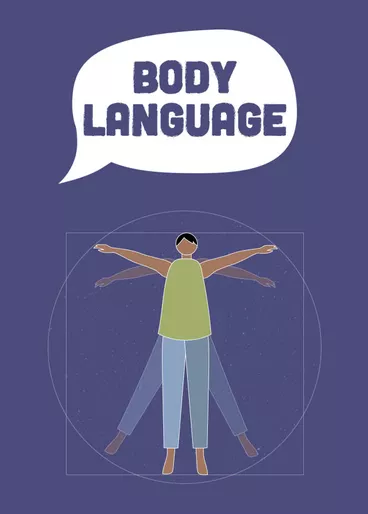









Verbal communication makes up 7 percent of your message, according to the College of DuPage's mangement department, and "the remainder is composed of 38 percent tone and 55 percent nonverbal cues." Verbal and nonverbal communication frame the meaning of conversations and cannot be separated during face-to-face discussions. Your nonverbal signals are equally important as the words you speak and the tone of your voice. Verbal and nonverbal cues mutually send a message and define your relationship with others.
Definition
Verbal communication is the spoken word and includes actual words, intended and inferred meanings, tone and vocal inflection. The question "What are you doing?" has different meanings depending on tone.
Nonverbal communication is your body language and includes facial expressions. It is used to replace or reinforce your verbal communication. Someone directing traffic replaces verbal communication by pointing in the direction you need to drive. A doctor or nurse reinforces medical directions with a demonstration.
Function
Verbal and nonverbal communication are interrelated. Steve Duck and David McMahan's text "Basics of Communication" maintains that "the function of nonverbal communication" is to engage the "interconnection with verbal communication." When you communicate a verbal message you will "send a corresponding nonverbal message." For instance, if you are introduced to a new person, you greet him and offer your hand out to shake. If you see a friend you have not seen in some time, you might give a big hug in addition to a happy greeting.
Barriers
The College of DuPage's Management department reports barriers to communication as judging someone, attacking another person or making snap judgements. Preconceived notions challenge your ability to communicate.
Another barrier occurs when your nonverbal communication does not align with your verbal communication. If your arms are crossed during a work-related discussion, your body language is telling the person you are speaking with that you are not open to his ideas.
Benefits
According to the "Basics of Communication," "Communication and relationships are an intertwined process" and that "communication creates a world of meaning." Because, verbal and nonverbal communication are so closely connected, they offer the basis for understanding the world around you and define your relationships with others. When you talk you are "not just speaking into the air but into the relationships defined by your culture."
Warnings
Steve Duck and David McMahan maintain that while it is acceptable to replace nonverbal communication for verbal communication, you should proceed with caution, "because many cultural differences exist in the meaning of such gestures." "Body Language 101" describes some types of cultural differences involving communication as chatting distances, greetings, friendly intentions and shaking hands. It is important to remember that what one culture finds acceptable, another might regard that same action as uncomfortable or impolite.
References
- College of Dupage: Communication Supplement
- "Basics of Communication: A Relational Perspective"; Steve W. Duck and David T. McMahan; 2008
- "Body Language 101"; David Lambert; 2008


Member Comments