
























































Lupus is an autoimmune disease that causes chronic inflammation affecting many organs in the body. The symptoms can include joint pain, fatigue, swelling and skin rashes. It is a chronic disease, though people with lupus can experience periods of remission and periods of flares. Conventional medicine controls flares and relieves symptoms. Herbal treatments are not intended to cure lupus, though herbs may be useful in alleviating and preventing certain symptoms of the disease.
Green Tea
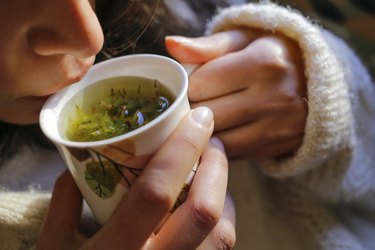
In addition to its high antioxidant content, green tea may help to block inflammation and reduce joint pain associated with lupus. The Department of Oral Biology and Maxillofacial Pathology, School of Dentistry, Medical College of Georgia, conducted a study on the chemical compounds of green tea. The report, published in 2006 in the Journal of Biochemistry and Molecular Biology, showed that green tea helps to protect against skin rashes associated with lupus autoimmune reactions. Two to three cups of caffeine-free green tea daily is the suggested dose.
Holy Basil
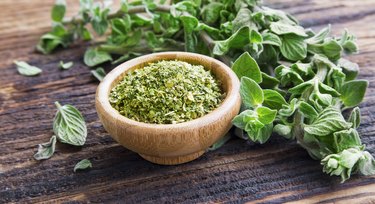
Holy basil is an adaptogenic herb, also known as tulsi, that has been used in ayurvedic medicine for centuries. The herb is valued for its anti-inflammatory properties as well as its stress reducing agents. Stress can intensify lupus symptoms or induce the onset of a flare. A study conducted by the Department of Physiology, Pt. B. D. Sharma Post Graduate Institute of Medical Sciences in India, tested the herb for its antistressor abilities in rabbits. The research, published in 2007 in Methods and Findings in Experimental and Clinical Pharmacology, found that after 30 days, oxidative stress had a lesser effect on the animals. You can find holy basil in essential oils, capsules and tea form. You can safely consume two to three cups of tea a day.
Cat's Claw
Cat's claw, a vine native to South and Central America, has been used traditionally to reduce inflammation. The University of Maryland Medical Center recommends cat's claw for the treatment of arthritic pain, in conjunction with conventional medicine. The effectiveness of cat's claw on lupus is currently being studied. UMMC suggests taking 100 mg per day in capsule form for joint pain.
Yucca
Yucca, a plant native to Mexico, is a source of steroidal saponins and polyphenolics, which may help to reduce joint pain associated with inflammation. Yucca has been used in traditional folk medicine to prevent and reduce arthritis symptoms. The dried plant comes in capsule or tea form. There is no standardized dose for yucca at this time, according to Drug Information Online, and additional clinical research is needed.
References
- University of Maryland Medical Center: Systemic lupus erythematosus
- University of Maryland Medical Center: Complementary Medicine: Cat's claw
- Pub Med: A new approach to managing oral manifestations of Sjogren's syndrome and skin manifestations of lupus
- Pub Med: Antistressor activity of Ocimum sanctum (Tulsi) against experimentally induced oxidative stress in rabbits
- Drug Information Online: Yucca


