





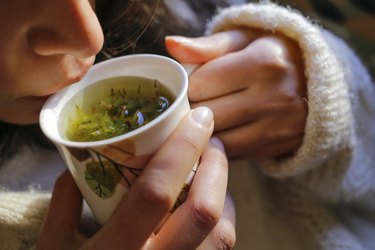















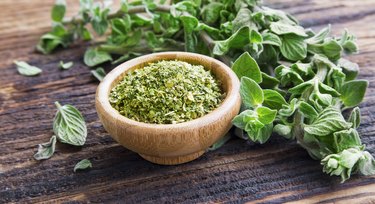





















Ayurveda is a healing art that originated in India. The Sanskrit meaning of the word Ayurveda stems the word ayus, meaning longevity, and veda, meaning science. As with most traditions, Ayurveda uses herbs to promote health and aid the body in the detoxification of pollutants. According to the book "Cultivation and Processing of Selected Medicinal Plants" written by the NIIR Board, some of the main detox herbs used in the practice of Ayurveda include Shatavari, Amalaki and Bhumyamalaki. Always consult your primary doctor before taking any herbal remedies if you have a severe condition or are under medical treatment.
Shatavari
Shatavari is known botanically as Asparagus racemosus and is a part of the Lilly family. It is a climbing medicinal herb that can grow up to seven feet high with nettle-like leaves and small white flowers. It is native to the tropical climates of northern India and Africa. One of its main detoxifying properties is its high mucilage content, which is a complex carbohydrate that helps release waste material from the large intestine. Shatavari is also a diuretic herb that will help release toxins from the kidneys by stimulating the flow of urine. According to an article called "New Findings Vindicate Efficacy of Shatavari" written by Lalit Tiwari for the website Infinity Foundation, shatavari also promotes the flow of bile, helping cleanse the gallbladder and liver.
Amalaki
Botanically known as Emblica Officinalis, amalaki is an Ayurvedic detox herb native to southwestern and northern India. According to the website Mother Herbs and Agro Products, amalaki seeds and fruits are used as diuretic and laxative aids.
According to the website Banyan Botanicals Ayurvedic Herbs, amalaki detoxifies the body by purifying the blood and promoting bowel movements that will keep the digestive tract clean and healthy.
Bhumyamalaki
Bhumyamalaki, also known botanically as Phyllanthus niruri, is an annual herb native to the Indian subcontinent. It is a laxative that is also used to stimulate and cleanse the liver, making it useful in the treatment of jaundice and liver enlargement, according to the website Herbal Cure India. This action is due to its hepatprotective property, which means it can help treat Hepatitis A and B and viral Hepatitis B. Bhumyamalaki is another useful diuretic and it is a safe herb with no known toxic effects.
References
- Infinity Foundation: New Findings Vindicate Efficacy of Shatavari
- Mother Herbs and Agro Products: Amalaki
- Banyan Botanicals Ayurvedic Herbs: Amalaki
- Herbal Cure India: Bhumyamalaki
- "Cultivation and Processing of Selected Medicinal Plants"; NIIR Board; 2006


Member Comments