

















































Left untreated, chronic keratoconjunctivitis sicca, or chronic dry eye, can lead to eye inflammation, infection and scarring of the cornea. This is a serious condition that develops when the lacrimal gland above your eyelids produces insufficient tear fluid, or when tear fluid does not contain the right balance of oil, water and mucus to lubricate your eyes properly. According to MayoClinic.com, age, fluctuating hormones, illness and tear gland damage are common causes. Although curing chronic dry eyes requires addressing the underlying cause, treatments such as herbal supplements can provide relief from its symptoms.
Always consult with a health care authority before embarking on an herbal regimen.
Eyebright
According to A 2 Z of Health, Beauty and Fitness magazine, herbalists use the name eyebright when speaking of the flowering herb euphrasia because of the many benefits it provides to your eyes. This herb appears to work according to principles of Chinese medicine by stimulating the liver to relieve conditions, such as dry eyes, that affect eyesight.
To use eyebright as a compress or eyewash, steep 1 oz. of eyebright herb in hot water for 10 minutes, and then strain. Pour some of the liquid onto a washcloth and place it over your eyes for 20 minutes; or let it cool and pour the liquid in sterile cups and use as an eyewash.
Check with a physician before using eyebright.
Chrysanthemum Flowers
Dr. Jian Pi, a certified acupuncturist and herbalist, states that white chrysanthemum flowers are beneficial to the eye in treating redness, pain and dry eye syndrome. According to theories of Chinese medicine, chrysanthemums target liver and kidney functions to correct imbalances that affect your eyes.
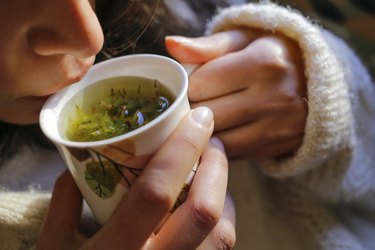
You can boil the flowers to make chrysanthemum tea, and then either drink the tea as a beverage or add it to a cold compress and place it over your eyes. To make chrysanthemum tea, wash 60 to 80 white flowers, then combine the flowers with 3 tsp. of jasmine green tea and place in a teapot. Fill the teapot with 1 gallon of water, bring to a boil and steep for 20 minutes. Sweeten the tea with rock sugar or honey, let cool to room temperature and strain.
Consult a health care practitioner before using chrysanthemum for dry eyes.
Oatstraw
Susan Weed, herbalist and author of numerous books focusing on women's health issues, recommends the herb oatstraw to combat chronic dry eyes that often develop if you begin a program of hormone replacement therapy during menopause. According to Weed, in addition to the cooling and moisturizing effect oatstraw has on your eyes, drinking 2 to 4 cups per day also helps strengthen your bones.
To make an oatstraw infusion, combine 1 oz. of dried oatstraw with one quart of boiling water and let steep for a minimum of four hours. Strain and refrigerate.
Although anecdotal reports demonstrate an efficacy with regard to relief, check with a doctor before using this remedy to treat dry eyes.


