If you've watched the Rick Moranis three-quel Honey, We Shrunk Ourselves, you probably know that bananas are a good source of potassium. (Recap: One of the kids passes out and he needs potassium, and Moranis' son pipes up, "Potassium, potassium, bananas have potassium!")
But while the yellow fruit is often thought of as the main source of the mineral, there are actually plenty of foods with more potassium than bananas.
Video of the Day
Video of the Day
Potassium is a crucial mineral needed to support kidney and heart health as well as muscle and nerve function, according to the National Institutes of Health (NIH). The mineral is an electrolyte and works with sodium (another electrolyte) to keep fluid levels balanced, according to the University of Michigan.
How Much Potassium Do You Need?
While the NIH recommends a daily potassium intake of 3,400 milligrams and 2,600 milligrams for adults assigned male and female at birth, respectively, the FDA calculates its Daily Value (DV) percentages based on eating 4,700 milligrams of potassium per day. So how much potassium do you really need?
"Aiming for 3,400 to 4,700 milligrams per day is generally regarded as safe and is recommended to decrease the risk of developing chronic diseases where the risk may be modifiable with adequate amounts of dietary potassium [such as high blood pressure]," says Maya Feller, RD, CDN.
Below, find a list of foods rich in potassium to add to your shopping cart. Note that the DVs cited below are based on eating 4,700 milligrams of potassium per day.
1. Beet Greens: 28% Daily Value (DV)
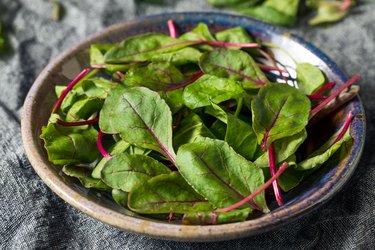
Rich in a host of nutrients including folate, iron and vitamin C, leafy greens are powerhouses. Greens are a great source of potassium, with beet greens taking the lead, providing 1,309 milligrams or 28 percent of the Daily Value (DV) per 1 cup.
2. Salmon: 23% DV
Not only is salmon an excellent source of lean protein (43 grams per 6 ounces) and heart-healthy omega-3 fatty acids, but it's also one of the best low-carb foods high in potassium.
A 6-ounce serving of cooked wild-caught salmon offers 1,067 milligrams or 23 percent of the DV and 6 ounces of cooked farmed salmon has 14 percent of the DV for potassium. Wild-caught salmon has less saturated fat than farmed salmon, but both are nutritious options.
3. Cannellini Beans: 21% DV
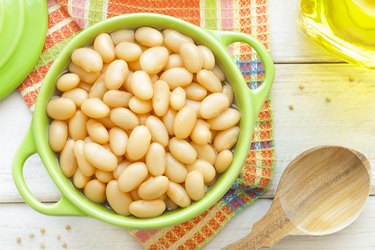
Cannellini beans (also known as white kidney beans) provide the highest amount of potassium in the bean family — 1,004 milligrams or 21 percent of the DV per 1 cup cooked.
Using beans as a base for your cooking is a good way to bump up your nutrition, and they go great with any kind of veggie or meat. Try them in these high-protein canned bean recipes.
4. Avocados: 21% DV
Everyone's favorite fatty fruit (yes, avocados are fruit!) has good-for-you unsaturated fats, vitamin E, fiber and vitamin C and just happens to be one of the best keto foods high in potassium.
One whole avocado provides 975 milligrams or 21 percent of the potassium DV (and a 1/4 avocado has 5 percent DV). They're filling and versatile, making them great for breakfast, lunch and dinner. Try them in these avocado recipes that aren't toast or guac.
5. Lima Beans: 21% DV
All beans are high in potassium, but lima beans (also referred to as butterbeans) are especially rich in the mineral.
One cup of cooked lima beans has 969 milligrams or 21 percent of your potassium DV, 23 percent DV for iron, nearly 12 grams of plant-based protein and about 9 grams of satiating fiber. Plus, they have a mild taste and work beautifully in a variety of dishes.
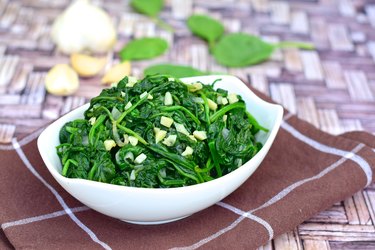
6. Swiss Chard: 20% DV
Another leafy green to add to your potassium list is Swiss chard. Like its beet green friend, Swiss chard is a great low-carb food high in potassium — 1 cup cooked has 960 milligrams or 20 percent of the DV — and is a good source of non-heme (plant-based) iron and vitamin C. Swiss chard sautés well, making it a popular stir-fry ingredient.
7. Potatoes: 20% DV
Potatoes are one of the best vegan foods high in potassium and even the white ones provide a host of nutrients. One baked white potato with skin has 925 milligrams or 20 percent of the DV for potassium as well as satiating fiber. Sweet potatoes have less potassium than white potatoes, with 9 percent DV per potato.
Prefer them mashed? Per cup, there are 692.1 milligrams of potassium in mashed potatoes — that's 15 percent of your DV. Get cooking with these easy potato recipes under 300 calories.
8. Acorn Squash: 19% DV
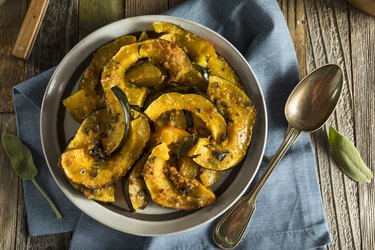
Thanks to its bright orange color, acorn squash (and its other squash relatives) is high in free-radical-fighting antioxidants, according to Harvard Health Publishing.
One cup of cooked acorn squash provides 896 milligrams or 19 percent of the DV for potassium and 36 percent of the DV for fiber.
9. Pinto Beans: 16% DV
Add them to soups, salads, chilis and even sandwiches for a protein, fiber and potassium boost. Just 1 cup of cooked pinto beans provides 745.6 milligrams or 16 percent of your potassium DV.
10. Lentils: 16% DV
Similar to beans, lentils are high in plant-based protein, iron and potassium — 1 cup of cooked lentils offers 730 milligrams or 16 percent of your DV of the mineral. Thanks to their versatility, lentils make a hearty base for any meal, whether it's vegetarian or with meat.
Lentils come in a variety of colors, including green, black, red and yellow, all of which provide slightly different amounts of nutrients. Try them in these high-protein lentil recipes.
11. Tilapia: 14% DV
Tilapia is a mild-tasting white fish that contains a good dose of satiating protein. What's more, a 6-ounce cooked portion contains 646 milligrams or 14 percent of the DV for potassium.
While tilapia does contain some omega-3 fatty acids, other fish, such as salmon, are higher in healthy fats, according to Harvard Health Publishing.
12. Coconut Water: 13% DV
Coconut water is having a moment, and for good reason: It's a great source of electrolytes, including potassium, making it a go-to for hydration.
One cup of coconut water contains 600 milligrams or 13 percent of the DV of the mineral, deeming it a top drink high in potassium. But unlike good ol' H2O, coconut water does contain calories (46 per cup).
Small but mighty, these mushrooms provide fiber, iron and potassium, as well as a satisfying umami flavor when cooked. A cup of cooked white button mushrooms offers 555 milligrams or 12 percent of the DV for potassium.
Mushrooms can easily add nutrition to omelets, stir-fries and pasta dishes. White button mushrooms even provide some vitamin D — 2 percent of the DV per cup — as well as 15 percent of the DV for iron.
14. Kiwi: 12% DV
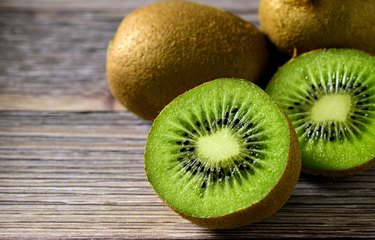
Kiwi, the tiny sweet fruit that hails from New Zealand, is rich in fiber and vitamin C (185 percent of the DV!). A cup of kiwi also provides 561 milligrams or 12 percent of the DV for potassium while one fruit contains 5 percent of the DV.
15. Tomatoes: 11% DV
Bright red thanks to lycopene, a powerful antioxidant, tomatoes are rich in vitamin C, iron and potassium. One cup of cooked tomatoes contains 523 milligrams or 11 percent of the DV for potassium. Cooked tomatoes contain a bit more potassium than ripe tomatoes, but both will add color and nutrition to your plate.
Lycopene found in tomatoes is linked to a lower risk of stroke, according to an October 2012 study in Neurology of more than 1,000 men.
16. Oranges and Orange Juice: 11% DV
Your morning glass of OJ provides vitamin C and other antioxidants to help support a healthy immune system. Fortified orange juice, a good source of calcium, is also often fortified with vitamin D, and the combination makes OJ good for bone health, per an October 2014 paper in the Journal of Medicinal Food.
An 8-ounce glass of orange juice provides 496 milligrams or 11 percent of the DV for potassium while one large orange has 7 percent DV. Orange juice is high in natural sugar (it's fruit juice, after all) with about 21 grams per cup, so it's important to enjoy it in moderation.
17. Bananas: 10% DV
Although many of us already know bananas have potassium, the fruit is also a good source of fiber and vitamin C. One large banana offers 487 milligrams or 10 percent of the DV for potassium.
Bananas are perfect granola and oatmeal toppers, taste great on their own and can serve as the main ingredient for many a muffin and bread recipe. Pair one with peanut butter for the ultimate balanced snack or try them in these creative banana recipes.
18. Cantaloupe Melon: 10% DV
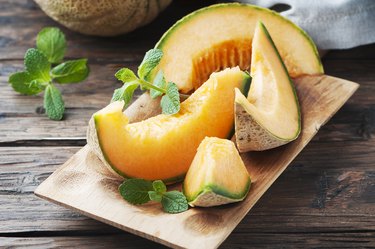
Cantaloupe melon makes for the perfect fruit salad ingredient. A serving contains 72 percent of your daily recommended intake for vitamin C, plus it offers fiber, a bit of protein and potassium.
One cup provides 473 milligrams or 10 percent of the DV for the mineral, deeming it a top vegan food high in potassium.
19. Yogurt: 8% DV
So long as you don't choose varieties loaded with added sugar, yogurt is a nutritious snack. Most yogurts are a great source of probiotics, aka good-for-you bacteria that can help promote gut and immune health, according to the National Center for Complementary and Integrated Health.
Yogurt also provides fat, calcium, protein and potassium, making it bone- and muscle-friendly. A 1-cup serving of yogurt provides 379 milligrams or 8 percent of the DV for potassium.
20. Milk: 7% DV
Whole milk is a nutrient powerhouse: It's high in fat, protein and calcium and is often fortified with vitamin D. Milk is also a good source of potassium across all varieties (whole milk, reduced-fat, low-fat and skim).
An 8-ounce glass has 322 milligrams or 7 percent of the DV.
21. Sunflower Seeds: 5% DV
Nuts and seeds add flavor, fat, plant-based protein and antioxidants to snacks and salads. And because they're high in healthy fats, a small serving goes a long way in helping you feel fuller for longer.
An ounce of sunflower seeds provides 241 milligrams or 5 percent of the DV for potassium. Sunflower seeds also contain fiber and are excellent sources of antioxidants vitamin E and selenium.
22. Raisins: 7% DV
Dried fruit like raisins makes for a sweet, fiber-rich addition to yogurt bowls, cereal and even some savory meat dishes. Plus, raisins are high in potassium, offering 319.9 milligrams or 7 percent of your DV in just one 1.5-ounce box.
23. Prunes: 6% DV
Like raisins, prunes are also high in potassium, giving you 290 milligrams or 6 percent of the DV in a 1/4 cup.
The notoriously effective fruit for constipation contains the natural sugar alcohol sorbitol, which has a laxative effect, per Tufts University. It also has 3 grams of fiber per serving.
24. Strawberries: 5% DV
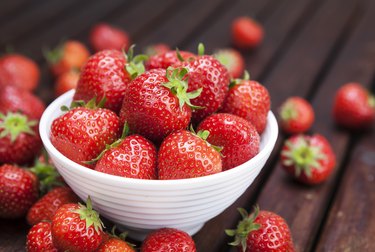
The juicy fruit is high in antioxidants, fiber and even potassium: 1 cup sliced has 254 milligrams or 5 percent of your DV of the mineral. Besides snacking on the fruit, try it in these strawberry breakfast recipes.
Check out the potassium-rich foods chart below for the best sources of the mineral.
Top 10 Foods High in Potassium
Food | Serving Size | Potassium Content |
|---|---|---|
Beet Greens | 1 cup raw | 1,309 mg, 28% DV |
Salmon | 6 oz. cooked | 1,067 mg, 23% DV |
Cannellini Beans | 1 cup cooked | 1,004 mg, 21% DV |
Avocados | 1 whole fruit | 975 mg, 21% DV |
Lima Beans | 1 cup cooked | 969 mg, 21% DV |
Swiss Chard | 1 cup cooked | 960 mg, 20% DV |
Potatoes | 1 medium cooked potato | 925 mg, 20% DV |
Acorn Squash | 1 cup cooked | 896 mg, 19% DV |
Pinto Beans | 1 cup cooked | 745.6 mg, 16% DV |
Lentils | 1 cup cooked | 730 mg, 16% DV |
- Neurology: "Serum Lycopene Decreases the Risk of Stroke in Men"
- National Institutes of Health: "Potassium"
- University of Michigan Medicine: "Potassium in Blood"
- Harvard School of Public Health: "Carbohydrates — Good or Bad for You?"
- Harvard Health Publishing: "Add Color to Your Diet for Good Nutrition"
- Harvard Health Publishing: "Flap Over Tilapia Sends the Wrong Message"
- National Center for Complementary and Integrated Health: "Probiotics: What You Need to Know"
- Journal of Medicinal Food: "Impact of Orange Juice Consumption on Bone Health of the U.S. Population in the National Health and Nutrition Examination Survey 2003-2006"
- My Food Data