The thought of eating grapefruit either has you craving the tang and sourness or sends you running toward the sweetness of an orange. But you don't want to miss out: Grapefruit is full of vitamins, minerals and antioxidants that stack up to some pretty impressive health benefits.
Grapefruit Nutrition Facts
Video of the Day
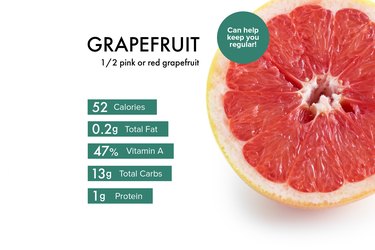
A half grapefruit is equal to one serving. Half a pink or red grapefruit contains:
Video of the Day
- Calories: 52
- Total fat: 0.2 g
- Cholesterol: 0 mg
- Sodium: 0 mg
- Total carbs: 13 g
- Dietary fiber: 2 g
- Sugar: 8.5 g
- Added sugar: 0 g
- Protein: 1 g
Grapefruit Macros
- Total fat: A half grapefruit has 0.2 grams of total fat, which includes 0 grams of saturated fat and trans fat.
- Carbohydrates: A half grapefruit has 13 grams of carbs, which includes 2 grams of fiber and 8.5 grams of natural sugars.
- Protein: A half grapefruit has 1 gram of protein.
Vitamins, Minerals and Other Micronutrients
- Vitamin A: 47% of your Daily Value (DV)
- Vitamin C: 43% DV
- Grapefruit is not a good source of potassium (4% DV), magnesium (3% DV), calcium (2% DV) or other vitamins and minerals.
Health Benefits of Grapefruit
The tangy fruit is not only low in calories and nutrient-dense, but it's also linked to some seriously good benefits for your body.
1. It's Linked to Reducing Inflammation
Grapefruit is an excellent source of vitamin C, a powerful antioxidant that can help protect your cells from damage and fight inflammation, which may cause chronic diseases, according to a March 2014 study in Mini Reviews in Medicinal Chemistry.
The National Institutes of Health advises women get 75 milligrams a day and men get 90 milligrams daily, and grapefruit can help you hit those goals. According to a May 2014 article published in Food and Nutrition Research, men and women who ate fresh grapefruit or drank 100-percent grapefruit juice had higher overall intakes of vitamin C and improved their overall diet quality.
Plus, vitamin C can increase your absorption of iron — a nutrient many menstruating women are low in — which is linked to heart and metabolism health, according to the International Food Information Council Foundation.
Tip
People who smoke need more vitamin C in their diets to help protect the body from damage caused by nicotine. Pregnant people also need higher amounts.
2. Grapefruit Can Help Keep You Regular
It's no secret that there's a fiber issue in the U.S. Only 5 percent of Americans actually get the recommended amount of fiber per day, according to a January 2017 article published in American Journal of Lifestyle Medicine.
The macronutrient — found mainly in fruits, vegetables, whole grains, nuts and legumes — helps prevents constipation and maintain digestive health, per the Mayo Clinic.
Women need 25 grams of fiber per day, while men need 38 grams, according to the Academy of Nutrition and Dietetics. One grapefruit can help bridge the gap with its 4 grams.
Bonus: You'll also be getting extra hydration from the water content of the citrus fruit. When you increase fiber in your diet, it's important to also increase your fluids, since not drinking enough may cause constipation.
3. Are Grapefruits Good for Weight Loss?
That fiber in grapefruit may also help with appetite control, weight loss and weight management, according to Harvard Health Publishing. Plus, the satiating macro can improve your body's response to insulin, which may, in turn, help you manage your weight.
In fact, researchers found that eating grapefruit is associated with modest weight loss and a significant reduction in waist circumference in adults who have overweight, according to a small July 2012 study in the journal Metabolism.
4. Grapefruit Is Packed With Lycopene
Lycopene is a carotenoid, a natural plant pigment that's responsible for grapefruit's lovely rosy color as well as some potential health benefits — especially when it comes to heart health.
Lycopene has anti-inflammatory properties and is linked to protection against high blood pressure, according to the National Library of Medicine. However, more research is needed to truly understand lycopene's effects.
The same July 2012 Metabolism study also found that adding grapefruit to the diet improved participants' blood pressure and total cholesterol and lowered their harmful LDL cholesterol.
What's more, adding lycopene to men's diets may even boast prostate-protective benefits. Eating more lycopene was associated with a significantly lower risk of developing prostate cancer, an August 2015 meta-analysis in Medicine found.
Is Grapefruit Juice as Good as Eating a Grapefruit?
The short answer: No. If you go the juice route, you miss out on all the blood-sugar-stabilizing fiber that's found in the grapefruit's flesh and pulp, according to the Mayo Clinic. You're better off blending the fruit into a smoothie rather than juicing it.
Tasty Grapefruit Recipes
Grapefruit Health Risks
Food Allergies
Despite grapefruit's benefits, some people shouldn't eat the fruit.
Allergies to citrus are rare and most are related to oranges, but a grapefruit allergy is possible. With citrus fruits, oral allergy symptoms such as itching and burning around the mouth are more common than severe anaphylaxis, according to a patient case study published in a July 2013 issue of Clinical and Translational Allergy.
Drug Interactions
People on certain medications shouldn't eat grapefruit or drink the juice, since a chemical in the fruit has the ability to bind to an enzyme in your intestinal tract, which reduces the absorption of your meds, according to Harvard Health Publishing. If you have been told by your doctor that you should not eat grapefruit or if there's a similar warning on your medication bottle, then stay away.
These medications include:
- Statins such as Lipitor and Zocor
- Immunosuppressants such as Sandimmune
- Anxiety and insomnia medication such as Versed and Valium
- Psychiatric medications such as Zoloft
- Calcium channel blockers such as Plendil and Procardia
Alternatives to Grapefruit
If you're not a fan of the tang of white grapefruit, try going redder: The darker the fruit, the sweeter it is.
If you still can't stomach grapefruit — whether it be the flavor or because you're on certain medications — go for oranges to get in on similar nutrients. If you're looking for lycopene, try tomatoes or watermelon.
Heating lycopene-rich foods and pairing them with a source of dietary fat helps your body absorb the antioxidant more easily, according to the American Institute for Cancer Research. Tomato sauce could be a perfect way to get some lycopene, so get cooking!
- Food and Nutrition Research: "Consumption of Grapefruit is Associated With Higher Nutrient Intakes and Diet Quality Among Adults, and More Favorable Anthropometrics in Women, NHANES 2003–2008"
- National Institutes of Health: "Vitamin C Factsheet"
- American Journal of Lifestyle Medicine: "Closing America’s Fiber Intake Gap"
- Harvard Health Publishing: "Grapefruit and Medication: A Cautionary Note"
- Clinical and Translational Allergy: "Allergy to Citrus Juice"
- Academy of Nutrition and Dietetics: "Fiber"
- Mini Reviews in Medicinal Chemistry: "Ascorbic Acid: Its Role in Immune System and Chronic Inflammation Diseases"
- Metabolism: "The Effects of Daily Consumption of Grapefruit on Body Weight, Lipids, and Blood Pressure in Healthy, Overweight Adults"
- Harvard Health Publishing: "Making One Change — Getting More Fiber — Can Help With Weight Loss"
- MyFoodData: "Nutrition Facts for Pink Grapefruit"
- American Institute for Cancer Research: "HealthTalk: Lycopene"
- Mayo Clinic: "Dietary Fiber: Essential for a Healthy Diet"
- International Food Information Council Foundation: "Vitamin C and Iron: A Perfect Match"
- Medicine: Lycopene and Risk of Prostate Cancer: A Systematic Review and Meta-Analysis"
- Mayo Clinic: "Is Juicing Healthier Than Eating Whole Fruits or Vegetables?"
- U.S. National Library of Medicine: "Lycopene"