


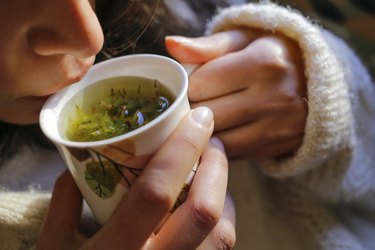











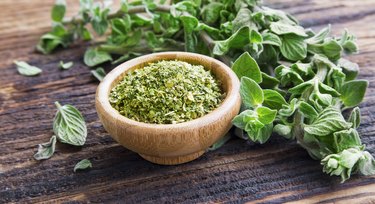







Herbs may offer a more natural option to the standard hormone replacement therapy. Due to the recent popularity of natural treatments for menopause, research to test the efficacy and safety of popular herbs or botanicals such as black cohosh, dong quai root, ginseng, kava, red clover and soy is currently under way. While herbs are natural, they should still be used with caution, as some may cause side effects or adverse reactions when combined with prescription medication.
Symptoms
Some of the most common complaints during menopause are hot flashes, night sweats, insomnia, vaginal dryness, forgetfulness, incontinence, tiredness, stiff or painful joints, depression, anxiety and irritability. Herbs may help with some of these symptoms due to their ability to affect vasomotor symptoms, or symptoms that present as a result of the expansion of the blood vessels, such as hot flashes and night sweats.
Black Cohosh
The most popular herb used for the symptoms of menopause is black cohosh. Black cohosh did not relieve hot flashes or night sweats in postmenopausal or in women nearing menopause, according to a the National Center for Complementary and Alternative Medicine, in a study they cofunded with the National Institute on Aging. However, Dr. Tieraona Low Dog, recipient of Time magazine's 2001 Innovator in Complementary and Alternative Medicine award, recommends 40 to 80 mg of the herb twice daily. She believes that black cohosh relieves hot flashes by working as an antidepressant.
Other Options
Other herbs or botanicals for the treatment of menopausal symptoms include dong quai, ginseng, kava, red clover, and soy. Dong quai, a Chinese herb, has undergone only one randomized clinical study, which found it ineffective for reducing hot flashes. The National Institutes of Health State-of-the-Science conference panel agreed that while ginseng may improve sleep and mood, it does not help hot flashes. The panel also determined that red clover and kava are unable to reduce hot flashes, though kava may decrease anxiety. The National Cancer Institute reports that most soy studies show it is no better than a placebo for hot flashes.
Cautions
Some herbs should be used with caution. The United States Pharmacopeia does not recommend the use of black cohosh for women with liver disorders. Additionally, several case reports of hepatitis and liver failure have been reported in women taking black cohosh. Dong quai, which is often used in Chinese medicine for menstrual disorders, may increase the effects of blood-thinners. According to the National Center for Complementary and Alternative Medicine, soy has few side effects when taken for short periods of time, but a thickening of the lining of the uterus has been linked to long-term use.
Considerations
Remember, just because herbs and botanicals are natural doesn't necessarily mean they are safe. If you are interested in a more natural approach for the symptoms of menopause, talk to your doctor or seek the advice of a qualified naturopathic physician or herbalist. Be sure to let your health care provider know if you have any preexisting conditions or if you are currently taking any other medications that may interact with herbal therapy.


Member Comments