






























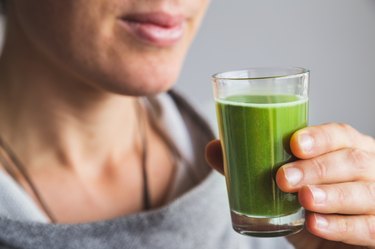











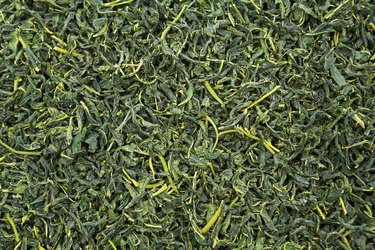






Green tea use dates to 2,737 BC, when a green tea leaf mistakenly ended up in a Chinese emperor's boiling water. Now, nearly 5,000 years later, science is discovering that there may be something to this green tea phenomenon. The list medicinal uses is exhaustive, ranging from gum disease to genital warts. Epidemiologists are investigating cultures that drink tea regularly and noticing differences in health conditions and weight maintenance. Although many influences affect lifestyle habits, there may be a plausible link between green tea and weight loss.
Flavanols
Green tea extract contains potent antioxidant chemicals called flavanols. These chemicals may reduce inflammation, protect the heart and neurological systems and increase fat loss. Dr. Parris Kidd evaluated multiple clinical trials using green tea extract and published this work in the September 2009 issue of "Alternative Medicine Review." Kidd states that studies using green tea extract are inconsistent due to a limited ability of the body to process the flavanol. One study, Kidd says, developed a binding agent, or phytosome, that may help absorb the flavanols. The 90-day trial consisted of two groups consuming a calorie-controlled diet, with one using the green tea extract. The green tea group lost an average of 30 lbs., compared to 11 lbs. in the diet-only group. More research may prove successful for weight loss treatment.
Green Tea and Caffeine
A study, published in the January 2010 issue of the "American Journal of Clinical Nutrition," evaluated clinical trials using green tea extract, with and without the use of caffeine, measuring the effects on human body composition. The results involving 1,243 people of varying demographics, revealed that green tea extract combined with caffeine decreased body weight, body mass index and waist circumference, whereas the green tea extract without caffeine did not. It is difficult to determine the exact causal factor based on this analysis. Researchers say that studying particular ethnicities, sex and age groups may influence results. In contrast, a February 2009 study published in the "Journal of Nutrition" compared groups consuming either a green tea extract/caffeine beverage or a caffeine-only beverage and found the green tea extract/caffeine group lost more weight and had more loss of abdominal fat than the caffeine-only group.
Metabolic Rate
A small pilot study involving the use of green tea extract and six obese men proved hopeful for further investigation. Published in the June 2007 issue of the "Journal of the American College of Nutrition," the study, although small, divided the men randomly not knowing whether they received the placebo or green tea extract -- nor did researchers -- and then switching places with the other group to compare results to eliminate limitations of the study. The men consumed capsules for two days then reported for a meal to measure metabolic effects of the beverages. They found that 300 mg doses of green tea extract increased energy expenditure, or metabolic rate, especially after a meal and may prove positive for weight control. These results warrant further testing on a larger scale.
Considerations
Although results are mixed, there is enough evidence to provide motivation for more research. Green tea may have many other health benefits, such as preventing cancer, improving heart conditions and reducing fatigue. According to Medline Plus, "green tea is likely safe for most adults." Rare cases of green tea extract use have caused liver problems. Green tea may block absorption of iron, and high doses of green tea, 10 to 14 g, can be fatal. As a precaution, discuss your weight-loss plans, including the use of green tea, with your physician.
References
- Green Teas: History of Green Tea
- Medline Plus: Green Tea; November 2010
- "Alternative Medicine Review"; Bioavailability and Activity of Phytosome Complexes from Botanical Polyphenols: The Silymarin, Curcumin, Green Tea and Grape Seed Extracts; Parris Kidd; September 2009
- "American Journal of Clinical Nutrition"; Effect of Green Tea Catechins With or Without Caffeine on Anthropometric Measures: A Systematic Review and Meta-analysis; Olivia J. Phung, et al.; January 2010
- "Journal of the American College of Nutrition"; The Effects of Epigallocatechin-3-Gallate on Thermogenesis and Fat Oxidation in Obese Men: A Pilot Study; Michael Boschmann and Frank Thielecke; June 2007
- "Journal of Nutrition"; Green Tea Catechin Consumption Enhances Exercise-Induced Abdominal Fat Loss in Overweight and Obese Adults; Kevin C. Maki, et al.; February 2009


Member Comments