Selenium has basically become synonymous with Brazil nuts, but it's not the only way to get the vital mineral.
Here's why your body needs this nutrient: Selenium supports reproduction, thyroid gland function, DNA production and helps protect you from inflammation, according to the National Institutes of Health (NIH).
Video of the Day
Some signs of a selenium deficiency include depressed mood, anxiety and confusion, and it could also contribute to myodegenerative diseases such as muscle weakness, according to the NIH.
While it's important to avoid selenium deficiency (which is very rare in the U.S.), too much of the nutrient — aka selenium toxicity — can lead to health issues, including severe gastrointestinal and neurological symptoms, hair loss, muscle tenderness and (rarely) death, per the NIH.
Video of the Day
How Much Selenium Do You Need Per Day?
Adults need 55 micrograms of selenium per day, according to the NIH. The upper limit, or the amount above which can cause health concerns, is 400 micrograms per day.
Read on for a list of foods high in selenium ranked by their Daily Value (DV) percentages. Note that the FDA's DV percentages are based on eating 55 micrograms of selenium per day.
1. Brazil Nuts: 990% Daily Value (DV)
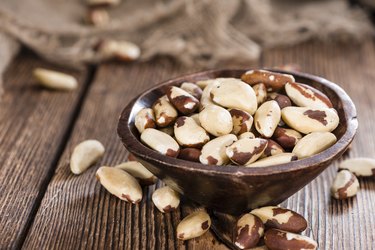
Brazil nuts are big. This is why it's easy to hit your max limit of selenium without even realizing it. A 1-ounce serving — which is just four to six nuts — contains 544.4 micrograms or 990 percent (!) of the DV, which makes them the best source of selenium.
Because these numbers are so high, have just one or two nuts at a time. One Brazil nut has 174 percent of your selenium DV.
Brazil nuts are also rich in zinc, magnesium and fiber.
2. Oysters: 238% DV
Oysters have been touted for having aphrodisiac qualities. There actually isn't any scientific evidence to back that up, but they do contain high levels of selenium, which is important for reproductive health.
Oysters are a top food rich in selenium and zinc, with 130.9 micrograms or 283 percent of the DV for selenium and 257 percent of the DV for zinc per 3 ounces cooked. They also contain more than 1,000 percent of the DV for vitamin B12, which supports cell health.
3. Tilapia: 168% DV
Tilapia is a mild fish that provides heart-healthy fat, lean protein and 92.5 micrograms or 168 percent of the DV for selenium per 6-ounce cooked serving. The FDA and the Environmental Protection Agency recommend adults eat 4 ounces of low-mercury fish, like tilapia, two to three times per week.
4. Pork Chops: 147% DV
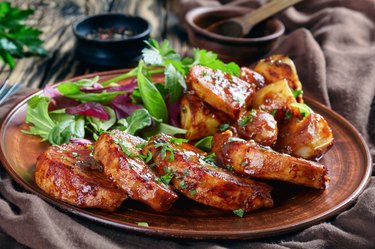
While not all pork is created equal when it comes to its health benefits — bacon, for example, is high in not-so-good-for-you saturated fat — lean pork chops can be a nutritious, healthy meal.
A 6-ounce cooked serving contains 80.6 micrograms or 147 percent of the DV for selenium, but it's important to remember that the recommended serving size for meat is 3 ounces, per the Dietary Guidelines for Americans. Try one of these recipes for leftover pork.
5. Salmon: 145% DV
Perhaps one of the most nutritious foods out there, salmon boasts high levels of omega-3 fatty acids, lean protein and selenium — with 79.6 micrograms or 145 percent of the DV per 6-ounce cooked serving.
The American Heart Association recommends adults eat about 7 ounces of fish per week, so long as it's a low-mercury fish like salmon and white fish varieties.
6. Kamut: 100% DV
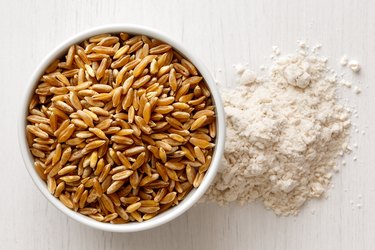
Yes, meats contain high levels of selenium, and you may be wondering what plants are high in selenium — aside from Brazil nuts, of course. Kamut is an ancient grain, and for every cooked cup, you'll get 59.9 micrograms or 100 percent of the DV for selenium.
Kamut, popular in the Middle East and Asia, also contains nearly 10 grams of plant-based protein and more than 7 grams of fiber.
7. Chicken Breast: 99% DV
Like pork chops, chicken breast is a lean meat that checks off many nutrition boxes, including protein, vitamin B12, iron and selenium. A 6-ounce cooked serving contains 54.2 micrograms or 99 percent of the DV for selenium.
And like pork, chicken is pretty versatile when it comes to dishes and flavors. Try the poultry in these delicious air fryer chicken recipes.
8. Turkey: 97% DV
The next time you're craving a meaty burger, reach for the ground turkey. Poultry, like turkey and chicken, is a better-for-you meat choice than red meat, which is associated with an increased risk of heart disease, per a March 2021 paper in Circulation.
A 6-ounce cooked portion of ground turkey contains 53.4 micrograms or 97 percent of the DV for selenium and just 1 gram of saturated fat compared with ground beef's 3 grams.
9. Tofu: 80% DV
Tofu contains complete protein and is a nutritional powerhouse. A 1-cup serving has 43.8 micrograms or 80 percent of the DV for selenium, as well as nearly 6 grams of fiber and 44 grams of plant-based protein.
Unsure of the best way to cook it? Try one of these flavor-filled tofu recipes.
10. Whole-Wheat Pasta: 77% DV
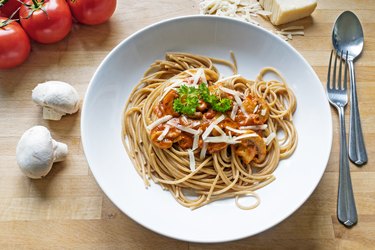
While whole-wheat pasta might not be everyone's favorite noodle, it provides a host of important nutrients, including fiber, plant-based protein and 42.5 micrograms or 77 percent of the DV for selenium per 1 cup cooked.
Prep it with your favorite herbs, homemade marinara and some veggies, and it'll become one of your favorite vegan foods high in selenium.
11. Shrimp: 76% DV
A 3-ounce cooked serving, or about 12 large shrimp, contains 42.1 micrograms or 76 percent of the DV. Shrimp and seafood also contain high levels of vitamin B12 — 59 percent per serving of shrimp — which is important for cell metabolism.
12. Shiitake Mushrooms: 65% DV
Holy shiitake! This variety of mushrooms will add flavor to your favorite dishes — we're partial to egg scrambles and frittatas — and 1 cup cooked contains 36 micrograms or 65 percent of the DV for selenium.
Certain mushrooms can also provide some vitamin D, which isn't often found in food (the best source is from Mr. Sun).
13. Portobello Mushrooms: 48% DV

Try grilling up a portobello mushroom at your next barbecue: You'll be a hit with the plant-based eaters, and it'll be a nutrient-rich dish with protein, fiber, vitamin D and selenium.
A 1-cup cooked serving contains 26.5 micrograms or 48 percent of the DV for selenium. (If you do end up grilling, a large portobello cap clocks in just under a 1-cup serving size.)
14. Sunflower Seeds: 41% DV
If you can't stop at just a few Brazil nuts (which you should because they're super high in selenium), load up on the tiny sunflower seed instead. A 1-ounce serving gives you 22.5 micrograms or 41 percent of the DV for selenium, making them a great salad topper or oatmeal or yogurt mix-in.
Sunflower seeds are one of the top foods high in vitamin E, a powerful antioxidant, in addition to unsaturated fat, plant-based protein and fiber.
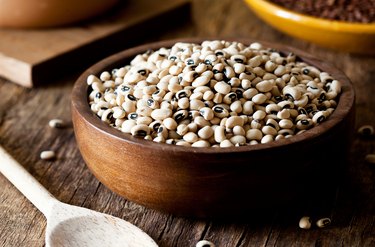
There are few things beans can't do. They're high in plant-based protein, fiber and low in fat. Navy beans, which are white, are small, quick-cooking beans that can add 15.2 micrograms or 28 percent of the DV for selenium per cup.
Together with rice, beans provide all nine essential amino acids needed for a complete protein, making beans such a popular plant-based food for nutrition. Try one of these bean recipes that pack a punch in flavor and nutrition.
16. Peanut Butter: 24% DV
Peanut butter is a crowd favorite for good reason. It tastes great, obviously, and it is an easy way to check off a host nutrients: selenium — 12.9 micrograms or 24 percent of the DV per 2-tablespoon serving — protein, non-heme (or plant-based) iron and healthy fat.
And pssst! There are plenty of ways to use peanut butter that aren't in a sandwich (although that's one of our favorites).
17. Oatmeal: 23% DV
You know what goes great with peanut butter? Oatmeal. And oatmeal is a great way to start the day, thanks to its filling fiber — beta-glucan, specifically, which has been tied to a reduced risk of heart disease, according to the FDA.
One cup of cooked oatmeal also contains 12.6 micrograms or 23 percent of the DV for selenium as well as iron and protein.
18. Brown Rice: 21% DV
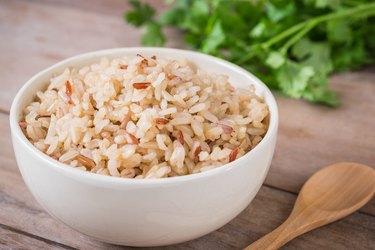
Another healthy grain is brown rice, which provides protein, fiber and 11.7 micrograms or 21 percent of the DV for selenium per 1-cup serving.
Generally, brown rice is considered better for you than white rice because it is a whole grain, which means it contains more nutrients. So while brown rice has gained notoriety for being high in arsenic — it contains 80 percent more arsenic than its white counterpart, according to the National Celiac Association — your best bet is to mix and match, per research from Dartmouth College.
19. Flaxseed: 13% DV
Ground flaxseed, which is more easily digested than whole seeds, provide loads of nutrients, including selenium — 7.2 micrograms or 13 percent of the DV per 1-ounce serving — fiber and healthy fat.
Flax seeds have a mild nutty flavor that mixes well in yogurt, granola, oatmeal and smoothies.
20. Florida or White Grapefruit: 6% DV
Fruits aren't high in selenium, but certain types of grapefruit contain a bit of the mineral. One white grapefruit or Florida grapefruit gives you 3.3 micrograms or 6 percent of the DV for selenium.
Next up are plantains with 5 percent of the DV for selenium, and then bananas with just 2 percent of the DV for selenium.
21. Asparagus: 6% DV
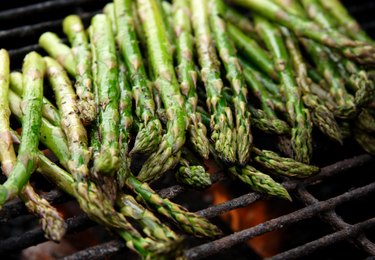
When it comes to plant-based sources of selenium, you can see your best bet is grains, nuts, seeds and mushrooms. But there are some vegetables that provide selenium, even if it's just a little bit. Per 1-cup serving, asparagus contains 3.1 micrograms or 6 percent of the DV for selenium.
Asparagus also has fiber, iron and is an excellent source of vitamin K.

- National Institutes of Health: "Selenium"
- International Journal of General Medicine and Pharmacy: "Selenium–vitamin E Supplementation in Infertile Men: Effects on Semen Parameters and Pregnancy Rate"
- National Institutes of Health: "Selenium" (Health Professional Fact Sheet)
- U.S. Food and Drug Administration: "Advice About Eating Fish"
- U.S. Dietary Guidelines for Americans
- American Heart Association: "Fish and Omega-3 Fatty Acids"
- Circulation: "Cardiovascular Harm From Egg Yolk and Meat: More Than Just Cholesterol and Saturated Fat"
- U.S. Food and Drug Administration: "Code of Federal Regulations Title 21"
- National Celiac Association: "Arsenic in Brown Rice"
- Dartmouth Toxic Metals Superfund Research Program: "Arsenic in Rice and Rice Products"
- Mayo Clinic: "Does Ground Flaxseed Have More Benefits Than Whole Flaxseed?"