























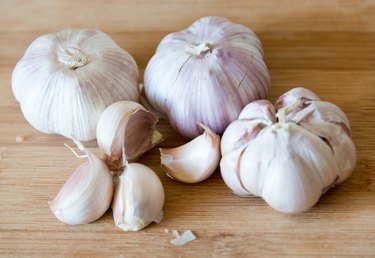





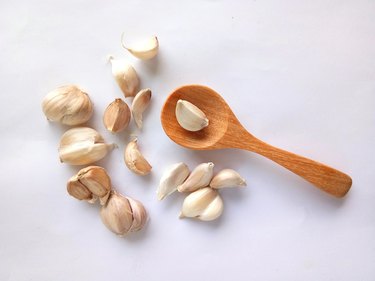








Garlic is well-known as a flavoring for food, but it has also been used medicinally for a variety of conditions, including respiratory ailments and digestion problems. It is also used to prevent or treat cardiovascular disease, prevent cancer, enhance the immune system and manage prostate problems. As with any herb, consult with your doctor before taking garlic for prostate conditions or any other medicinal use.
About the Prostate
The prostate is a small gland in men that is located around the neck of the bladder and urethra, or the tube that connects the bladder to the outside of your body for excreting urine. Its major purpose is to help make semen, the fluid that contains sperm during ejaculation. With age, the prostate can become enlarged, causing pressure on your urethra and symptoms such as frequent urges to urinate. The enlargement can be cancerous or non-cancerous, called benign prostatic hyperplasia or BPH.
Function
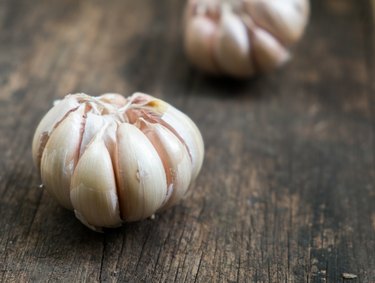
Garlic may have properties that work to relieve symptoms of an enlarged prostate. Garlic contains an odorless substance called alliin that changes to another compound, allicin, when crushed. Allicin is the main active substance that is responsible for garlic's odor and health benefits. Because allicin is poorly absorbed, garlic is aged to break down allicin into components that are more absorbable.
Effectiveness
Preliminary scientific evidence suggests that garlic may be helpful for preventing urinary symptoms from an enlarged prostate. A study published in "Nutrition Research" in 2003, showed that men with BPH or prostate cancer who took aged garlic by mouth had significant improvement in urinary symptoms, such as enhanced urinary flow and decreased urinary frequency, after one month of treatment. While the size of the prostate gland was reduced in the BPH group, this did not occur in those with prostate cancer.
Preparations and Dosage
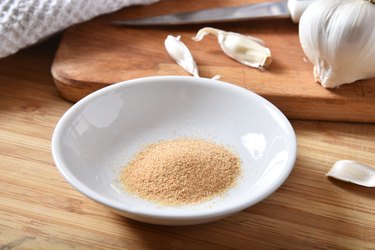
You can buy garlic supplements as dried or freeze-dried garlic, garlic oil and aged garlic extracts. The University of Maryland Medical Center reports daily doses of whole garlic as 2 to 4 g, or about two to four cloves; 600 to 1,200 mg of aged garlic extract per day in divided doses; and 400 mg of freeze-dried garlic tablets, standardized to 1.3 percent alliin or 0.6 percent allicin, taken three times daily.
References
- University of Maryland Medical Center: Garlic
- National Institutes of Health: Prostatic Diseases
- PaloAltoMedicalFoundation.org: Garlic
- "Nutrition Research"; Consumption of Aqueous Garlic Extract Leads to Significant Improvement in Patients with Benign Prostatic Hyperplasia and Prostate Cancer; I. Durak, et al.; February 2003


