






























































Antifungal Oral Herbs for Skin

Antifungal Oral Herbs for Skin
Photo Credit Burke/Triolo Productions/Brand X Pictures/Getty Images

If you've ever had an athlete's foot infection or jock itch, you know it can take some time to clear up and go away. Although a yeast infection caused by the yeast-like Candida albicans fungus usually affects mucous membranes of the mouth and vagina, it can also occur in between your skin folds, especially if you are overweight, have diabetes or taking strong antibiotics. Fungal infections affecting the skin are typically treated externally with topical medications. However, some strains of fungi can be resistant to treatment and taking oral antifungal agents can speed the healing process along. Some herbs can be taken orally for a fungal infection of your skin, but get your doctor's advice on using them properly.

Garlic

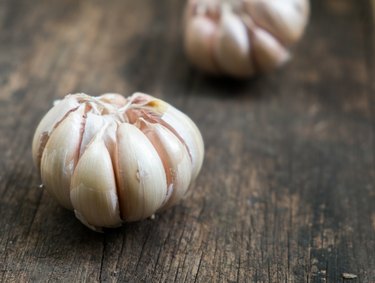
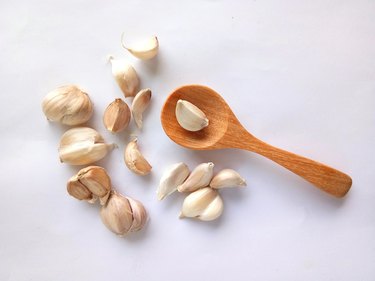
Garlic is an ancient herb that is used medicinally and as a pungent food flavoring. Garlic contains the compound allicin, which possesses strong antimicrobial properties. The University of Michigan Health System states that taking garlic supplements containing 4,000 mcg to 5,000 mcg of allicin has a stronger antifungal action than the prescription drug nystatin and may be very effective in eliminating fungal skin infections caused by Candida albicans. Talk to your doctor before taking garlic for a fungus infection, especially if you are pregnant or taking blood-thinning medication.

Aloe Vera Juice

Aloe vera is another herb that has been used medicinally for thousands of years. A juice derived from the gel inside its succulent leaves can be used to help clear fungal infections of the skin. Aloe vera juice can be taken orally to help treat infections caused by Candida albicans. Phyllis A. Balch, author of "Prescription for Herbal Healing," states that aloe stimulates white blood cells to eliminate the infection. Only take aloe vera juice under the direct supervision of your physician. Never use aloe vera juice for a child or take it if you are pregnant, nursing or have liver or kidney disease.

Chamomile

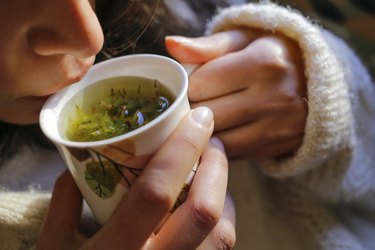
Chamomile is a sweet-smelling annual plant that has been used for centuries as an herbal remedy. The daisy-like flowers of the plant are picked in full bloom and used to make tinctures, capsules, creams and teas. Best known for its sedative effects, chamomile also has some antifungal properties. To treat a fungal infection of the skin, chamomile can be taken orally in a tea several times daily. You can also apply the leftover tea, or teabag, directly to the affected area as an additional treatment. Talk to your doctor before taking chamomile, and don't take it if you are pregnant or taking other sedatives or blood thinners.

Thyme

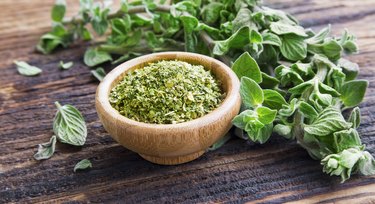
Thyme is an aromatic member of the mint family of plants with a long history of use as a culinary spice and an herbal medicine. The leaves of the thyme plant are collected and used medicinally. Thyme can be taken internally as a capsule or tincture or in a tea, to treat fungal infections of the skin, including athlete's foot. Balch states thyme is a strong antifungal agent, containing substances that also cross-link with skin proteins to form a barrier against fungal infections. Take thyme as directed by your health care provider, and never take essential oil of thyme internally. Don't take thyme if you are pregnant or have duodenal ulcers.

References

Article reviewed by Christine Brncik Last updated on: Jul 17, 2011

Must see: Photo Galleries

Member Comments