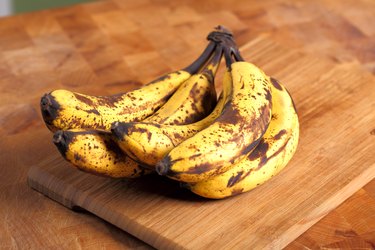
Eating overripe bananas isn't just a great way to reduce food waste. When fully ripe, these fruits are even healthier and more nutritious than their green counterparts. Plus, you can use them in a multitude of recipes, from smoothies and milkshakes to banana bread.
Tip
Overripe bananas are higher in sugar than their green counterparts, but they also boast higher antioxidant levels. With their naturally sweet flavor, they can make clean eating a lot easier and help you cut down on sugar.
Video of the Day
Is Eating Overripe Bananas Safe?
These tropical fruits are prized for their high nutritional value. Rich in fiber, potassium and vitamin C, they fit into any diet and support optimal health. There are only 112 calories in one serving (4.4 ounces) of fresh bananas, so you can enjoy them without the guilt.
Video of the Day
The downside is they have a relatively short life. Like most fruits, bananas produce ethylene gas, a natural compound that regulates the ripening process. Ethylene causes them to turn brown, changing their color, texture and flavor. It also affects their nutritional value.
According to the Greater Chicago Food Depository, bananas don't pose any health risks until they are extremely overripe. If you notice bruises, simply remove them with a knife. The brown spots on fully ripe bananas don't affect their quality, either. With their sweetness and smooth texture, these fruits make a healthy addition to creamy desserts.
Read more: Do Overripe Fruits Cause Gastric Distress?
Eating overripe bananas is perfectly safe as long as there are no strange odors or traces of mold. Don't throw them away, even if they're past their prime.
Blend them with peanut butter for an energy-boosting milkshake, make a no-bake banana cheesecake or prepare a delicious banana pudding in the microwave. Fully ripe bananas are also a great addition to pancakes, muffins, sponge cakes, granola bars and oatmeal cookies. Your imagination is the only limit.
Ripe Banana Benefits
Ripe bananas not only taste amazing, but they're healthy, too. A study published in the December 2013 edition of the International Food Research Journal assessed the changes that occur in the antioxidant content and chemical composition of bananas during ripening.
The levels of antioxidants and vitamin C increased at the fully ripened stage, and antioxidant activity was higher in fully ripe bananas. Also, it's important to note that the ripening process increased their sugar content as well.
Read more: Top 10 Health Benefits of Bananas
If you're struggling with chronic constipation, ripe bananas are your best choice. Compared to their green counterparts, they're lower in tannins and resistant starch.
Tannins, a class of water-soluble phenolic compounds, may cause constipation, abdominal pain and headaches when consumed in large amounts, according to a research paper featured in the January–February 2019 edition of the Jornal de Pediatria.
Furthermore, they may affect mineral absorption and digestion, leading to a greater risk of nutrient deficiencies. Researchers believe that tannins prevent the digestive tract muscles from relaxing, which in turn, may worsen constipation.
As mentioned above, ripe bananas are also lower in resistant starch. This type of carbohydrate isn't digested in the gut, so it doesn't raise blood sugar levels. The downside is that it ferments in the small intestine, causing gas and bacterial overgrowth, especially when consumed in excess. Eating overripe bananas may help prevent these side effects.
How to Use Overripe Bananas
With their naturally sweet taste, ripe bananas go well in most desserts. You can even use them as a substitute for sugar in baked goods, smoothies and cakes.
Banana protein pancakes, for example, make a healthy breakfast or pre-workout meal. All you need is one banana, two eggs and 1 teaspoon of olive oil. You'll get a delicious high-protein treat that tastes just as good as it looks.
Craving ice cream? Try a low-calorie Banana Choklat Fro-Yo instead. Use overripe bananas for a creamy texture and extra flavor. Or mix them with chickpeas, real butter, coconut milk and other healthy ingredients for a protein-rich hummus dessert.
Fully ripe bananas are also a perfect addition to milkshakes, protein shakes, puddings and mug cakes. Loaded with carotenoids, phenolic compounds and other antioxidants, these fruits offer both flavor and nutrition. Due to their high potassium content, they may help restore your electrolyte balance, keep your blood pressure within normal limits and improve bone health.
- Journal of Experimental Botany: "Banana Ethylene Response Factors Are Involved in Fruit Ripening Through Their Interactions With Ethylene Biosynthesis Genes"
- Greater Chicago Food Depository: "Salvageable Fruit and Vegetable Guidelines"
- International Food Research Journal: "Changes in Antioxidant Properties and Chemical Composition During Ripening in Banana Variety ‘Hom Thong’ (AAA Group) and ‘Khai’ (AA Group)"
- Pediatric Gastroenterology, Hepatology & Nutrition: "Diets for Constipation"
- Jornal de Pediatria: "Functional Constipation in Children"
- Johns Hopkins University: "What Is Resistant Starch?"
- Digestive Health Institute: "Resistant Starch – Friend or Foe?"
- Food Chemistry: "Bioactive Compounds in Banana and Their Associated Health Benefits: A Review"
- National Institutets of Health: "Potassium"
- USDA: "Nutrition Facts for Bananas"