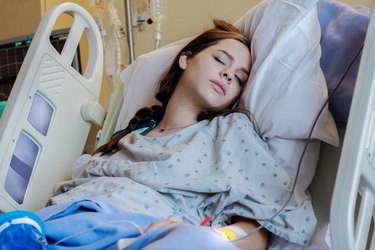







The term "missed abortion" refers to an inevitable miscarriage in a woman who has not yet experienced any vaginal bleeding or uterine cramping. In a missed abortion, the pregnancy will not progress because, although the woman retains embryonic...
The cervix is the structure at the upper end of the vagina that dilates to allow a baby to enter the birth canal. Dr. William Rich of the University of California states there are two types of cervical cancer, adenocarcinoma of the lining of the...
Progesterone is a naturally occurring hormone made in the ovaries to assist with conception and sustaining pregnancy. During a female's normal menstrual cycle, the level of progesterone fluctuates depending on what stage of the cycle she is in....
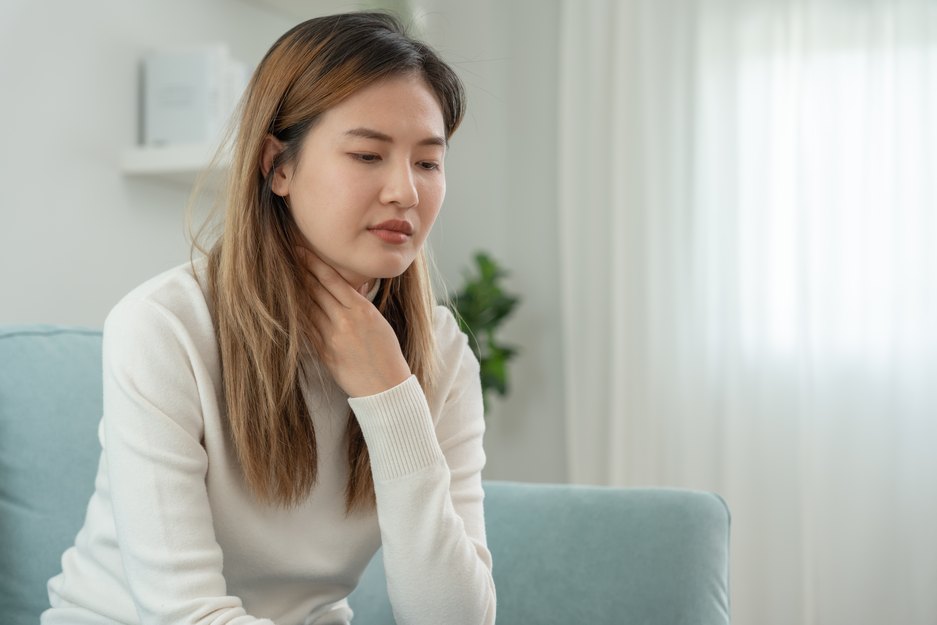
Hyperthyroidism, an overactive thyroid, affects less than 1 percent of pregnant women, the New York Thyroid Center states, but can have devastating consequences. Some symptoms of hyperthyroid that occur in pregnancy are common to everyone with...
Progesterone is one of the hormones that your body depends upon to help maintain pregnancy. If you experience a miscarriage, your doctor will likely test for a variety of potential causes, some of which have to do with production of progesterone...
Arnica cream, or arnica montana cream, is a homeopathic medicine obtained from the arnica plant. Arnica extracts, obtained from the fresh or dried flower of the plant, have been used since the 1500s as a treatment for various muscle issues,...
Acupuncture is an alternative Chinese therapy that uses the insertion of needles into the skin. Proponents claim that acupuncture is a viable option to treat pain, disease and infertility. However, medical evidence showing acupuncture to be either...
Pregnant women must gain weight. Fetal growth and development, as well as maternal health, depend on it, according to Eleanor Whitney and Sharon Rolfes in "Understanding Nutrition." During pregnancy, diet is extremely important because the foods...
Progesterone is an essential hormone that is involved in more than just reproductive phases. According to "Harrison's Principles of Internal Medicine," progesterone is essential to the renin-agiontensin-aldosterone system and the metabolism of...
Having a miscarriage puts a strain on your mental and physical health. You might feel hopeless and depressed when trying to conceive again, but you can take certain steps to prime your body for conception, which might help improve your chances of...
The spontaneous loss of pregnancy during the first 20 weeks after conception is called a miscarriage or spontaneous abortion (SAB). There is nothing a woman can do to prevent a miscarriage, but there are some things she can do that may increase...
Miscarriage is loss of a pregnancy up to 20 weeks; most occur by 12 weeks. Miscarriage before seven weeks of pregnancy is common; as many as 10 to 25 percent of diagnosed pregnancies end in miscarriage, according to the American Pregnancy...
A miscarriage, also known as a spontaneous abortion, is the unexpected loss of a fetus before the completion of the 20th week of pregnancy. A miscarriage is not something any woman expects, but it happens to women from all walks of life. The...
Miscarriage is a major fear of nearly every woman during pregnancy--for good reason, as they're not terribly uncommon. As many as 10 to 20 percent of pregnancies result in miscarriage, says the Mayo Clinic. A miscarriage, sometimes called a...
While most pregnancies proceed without complications, in a small percentage of cases, difficulties arise. Complications are more common in women of advanced maternal age, and just as conceiving can be more challenging at age 40, maintaining a...
Signs of miscarriage are not the same for every woman. Symptoms can occur over a matter of days, culminating in loss of pregnancy. Miscarriage is the result of improper development of the fertilized embryo in the womb in the majority of cases....
Agave is any of a genus of succulent plants having spiny-margined leaves and flowers in tall, spreading panicles. These plants are grown in warmer regions for their fiber or sap or for ornament. Their main use is as a natural sweetener, also...
According to the American College of Obstetrics and Gynecology, miscarriage, also called spontaneous abortion, is the most common type of pregnancy loss, affecting 15 to 20 percent of all pregnancies. Miscarriage is classified as the spontaneous...
Miscarriage is defined as the spontaneous loss of a fetus before the 20th week of pregnancy (after the 20th week, it is called preterm delivery). Miscarriage is sometimes referred to as spontaneous abortion, although it has no relation to a...
Thuja is a family of evergreen trees in the cypress family native to eastern North American and Europe. Parts of the plant contain the oil thujone which has been used in folk medicine to treat arthritis, menstrual irregularities, headaches and...
A woman who smokes harms her own health as well as health of her unborn child. Smoking causes nicotine, carbon monoxide and other chemicals to be passed to the baby. When a woman inhales nicotine it is transmitted to the placenta. The placenta...
A miscarriage, the loss of a pregnancy before 20 weeks gestation, is a devastating event that can make your days emotionally difficult and full of grief. Getting back to the activities that you enjoy and being physically active can help lessen the...
Bleeding can occur at any time during the gestational period. Bleeding does not always mean there is something drastically wrong, though it is often a signal of a problem with the pregnancy. If it occurs in the first trimester it can be...
The first trimester of pregnancy lasts from fertilization to the 13th week. During this time the embryo will implant, form the fetal part of the placenta and develop all its organs. Your body will pump out hormones and produce more blood cells to...
The causes of miscarriage are varied. It is estimated that 15 to 20 percent of all known pregnancies end in miscarriage, 80 percent of which occur during the first 12 weeks of gestation. Some early miscarriages result from maternal hormonal or...
The loss of a pregnancy within the first trimester---a medical condition commonly referred to as a miscarriage or spontaneous abortion---can be emotionally and physically traumatic. According to the American Pregnancy Association (APA), the...
The term "spontaneous abortion" or the initials SAB are often used to describe a pregnancy that ends on its own within the first 20 weeks of gestation. According to the American Pregnancy Association, most miscarriages occur during the first 13...
An estimated 10 percent of pregnant women in the United States light up during pregnancy--this despite the fact tobacco smoke contains carbon monoxide, benzene, cyanide, ammonia, nitrosamines, vinyl chloride, radioactive particles and other...
Each month the uterus builds up a lining to prepare for the implantation of an embryo. If a woman is not pregnant, she sheds the lining in a process commonly referred to as a menstrual period. When a woman is pregnant, she stops having this...