You need carbohydrates for energy to fuel your everyday physical activity, but the quality of carbohydrates you choose is most important.
Foods high in healthy carbs are unprocessed or minimally processed whole foods that also have fiber, vitamins, minerals and phytonutrients, according to the Harvard T.H. Chan School of Public Health.
Video of the Day
How Many Carbs Do You Need?
About 45 to 65 percent of your daily calories should come from carbohydrates, according to the U.S. Department of Health and Human Services. That means if you’re eating a 2,000-calorie diet, aim for 1,100 calories from carbohydrates — or 275 grams — per day.
While 45 to 65 percent of your calories coming from carbs sounds like a lot, that doesn't mean you should go for soft pretzels and milkshakes for half your meals. Choose options that are full of nutrients when deciding what to eat: Make half of your grains whole grains, fill half of your plate with fruits and vegetables and choose foods with less added sugar, per the 2020-2025 Dietary Guidelines for Americans.
Find the top foods high in carbohydrates below. Note that the FDA's Daily Value (DV) percentages are based on eating 275 grams of carbohydrates per day.
Video of the Day
1. Sweet Potatoes: 59.1 g, 20% Daily Value (DV)
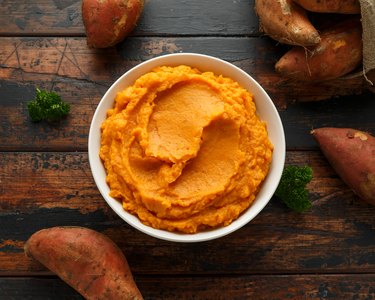
These crowd-favorite spuds are a healthy source of carbohydrates, with 20 percent of the DV in 1 cup cooked.
Sweet potatoes also have a naturally occurring plant chemical called beta-carotene (a precursor to vitamin A) and they're rich in vitamin B6, vitamin C, potassium and fiber. Try them in these creative sweet potato recipes.
2. Spelt: 51.3 g, 17% DV
Spelt is a nutritious source of carbohydrates — with 17 percent of the DV per cup cooked — that also has magnesium, zinc and iron.
This species of wheat was an important crop in Europe during the Middle Ages, per the Encyclopaedia Britannica. Today, you'll find it ground into flour and baked in artisanal breads and pastas. You can also eat cooked spelt on its own or as part of a salad.
3. Kamut: 47.5 g, 16% DV
Kamut is the trademarked brand name of Khorasan wheat, which provides 16 percent of the DV for carbohydrates per cooked cup.
It is a type of large-grained wheat that's a relative of durum, per the Farmers' Almanac. This carbohydrate-rich grain provides 100 percent of the DV for selenium, plus large amounts of manganese, copper and zinc.
4. Amaranth: 46 g, 15% DV
Amaranth is a good source of carbohydrates — with 15 percent of the DV per cup of cooked amaranth — and is also rich in protein (each cup has 9.3 grams of protein).
It's particularly high in lysine, an essential amino acid that's typically low in cereal crops like wheat, per the Purdue University Center for New Crops & Plant Products. Most commonly, the grain is ground into a flour for use in breads, pancakes, noodles, cookies and other flour-based products, but it can also be popped like popcorn or eaten like oatmeal.
5. Taro: 45.7 g, 15% DV
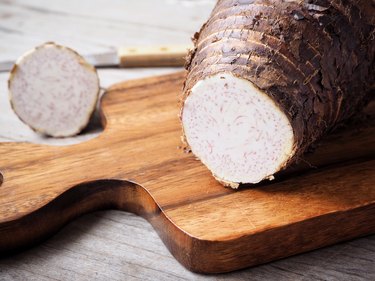
Taro is a healthy way to eat carbohydrates, providing 15 percent of the DV per cup cooked. This vegetable also has 6.7 grams of fiber, 26 percent of the DV for vitamin E and 14 percent of the DV for potassium. Taro is an important staple of the native Hawaiian diet and is cooked as a starchy root vegetable, per the USDA.
6. Chickpeas: 45 g, 15% DV
Healthy, carbohydrate-rich chickpeas — with 15 percent of the DV per cup cooked — have vitamins and minerals such as folate, potassium and iron.
They're not a significant source of sodium unless it's added. When you buy canned chickpeas, look for reduced-sodium or no-salt-added varieties. Try the legume in these protein-packed chickpea recipes.
7. Granola: 44.5 g, 15% DV
Granola is often touted as a healthy breakfast option, with 15 percent of the DV for carbohydrates per 1/2 cup. It certainly can be nutritious if it provides healthy carbohydrates through ingredients like whole grains, nuts and seeds (which also contain protein and fiber).
That said, many granolas are sugar traps, so it's important to check the label. In an analysis of granola products, sugar content ranged from 1 to 14 grams per serving, according to Consumer Reports.
8. Rice Noodles: 42.3 g grams, 14% DV
Cooked rice noodles, which have 14 percent of the DV for carbohydrates per cup, are a staple in dishes like stir-fries, pad see ew and pad Thai. More than 90 percent of the calories in a serving of rice noodles come from carbohydrates.
They are also a good source of minerals selenium and manganese and offer 3.2 grams of protein.
9. Quinoa: 39.4 g, 13% DV
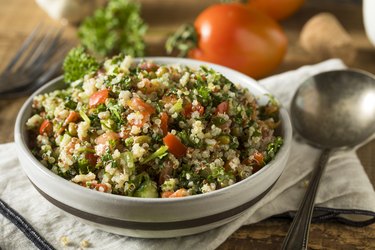
Quinoa has risen to fame as a healthy carbohydrate-rich staple: It offers 13 percent of your carb DV per cup cooked.
It's been cultivated for about 5,000 years and is indigenous to the Andean region of South America — particularly Chile, Bolivia, Ecuador and Peru, according to the Harvard T.H. Chan School of Public Health. Even though it's technically a seed, quinoa is typically considered a whole grain and is a rare source of complete, plant-based protein.
10. White Potatoes: 36.5 g, 12% DV
Spuds are a food high in carbs and low in fat, with 12 percent of the DV for carbohydrates per medium baked potato. About 90 percent of the calories in a potato come from carbohydrates, while 9 percent come from protein and 1 percent come from fat.
Potatoes also offer up plenty of healthy micronutrients such as vitamin C and potassium. Try them in these healthy potato recipes under 300 calories.
11. Whole-Wheat Pasta: 35.2 g, 12% DV
Although not quite as high in carbohydrates as rice noodles (but very close!), pasta is a quintessential carbohydrate-rich food with 12 percent of the DV per cup cooked.
About 75 percent of the calories in whole-wheat pasta come from carbohydrates, but it also has 4.6 grams of heart-healthy fiber per cup. Try it in these comforting pasta meals.
12. Bananas: 31.1 g, 10% DV
With about 30 grams or 10 percent of the DV for carbohydrates per large banana, the popular fruit has more healthy carbs than several other types of fruit.
For instance, one large orange has 22 grams of carbohydrates, while a cup of sliced strawberries has 13 grams of carbohydrates. Snack on a banana before a workout for fuel or try it in these brilliant banana recipes.
13. Acorn Squash: 30 g, 10% DV
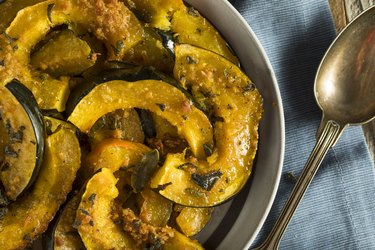
Acorn squash packs 10 percent of the DV for carbohydrates and 25 percent of the DV for vitamin C per cup baked. Vitamin C is a water-soluble nutrient that helps to protect your cells from damage caused by free radicals, which are formed during digestion or when you're exposed to environmental factors like cigarette smoke, air pollution or ultraviolet light from the sun, per the National Institutes of Health.
Vitamin C is also essential for the production of collagen, a structural protein that gives skin its elasticity and helps wounds heal. Try the veg in these delicious acorn squash recipes.
14. Oatmeal: 28 g, 9% DV
Carbohydrate-packed oats, with 9 percent of the DV per cup of cooked oatmeal, are the edible seeds of oat grass. They have beta-glucan soluble fiber, which is associated with a lower risk of coronary heart disease, per the Harvard T.H. Chan School of Public Health.
Oats are also rich in phosphorus, thiamine, magnesium and zinc, and oatmeal can help you stay satiated because of its high water and soluble fiber content. Try it in these high-protein oatmeal recipes.
Often the star of baked bean recipes, navy beans are a type of white bean — and are considered a food high in complex carbs, with 9 percent of the DV for carbohydrates in 1/2 cup canned.
With 6.4 grams of fiber per 1/2 cup, these beans provide 24 percent of the DV for fiber. They are also a good source of magnesium and iron.
16. Brown Rice: 25.8 grams, 9% DV
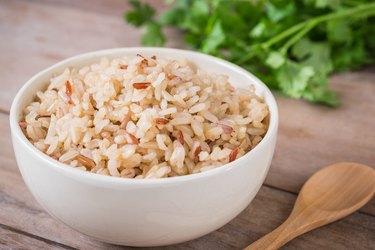
Cooked brown rice, which has 9 percent of the DV for carbohydrates in 1/2 cup, is a healthy whole grain and one of many foods high in complex carbs.
That's because it has all parts of the grain: the fiber-rich bran, the germ and the carb-rich endosperm, per the University of Pittsburgh Medical Center. Research shows that whole grain foods are linked to helping lower your cholesterol and your risk of stroke, type 2 diabetes and heart disease.
17. Sweet Corn: 24.8 g, 8% DV
Corn has many health benefits beyond being a nutritious source of carbohydrates, with 8 percent of the DV in a large, boiled ear of sweet corn.
Its high fiber content can aid in digestion, its B vitamins can support your overall health and its lutein and zeaxanthin (types of antioxidants) support eye health, per Johns Hopkins Medicine. Corn can be roasted, broiled, boiled, steamed, grilled or even microwaved. Try it in these delicious corn recipes.
18. Lentils: 19.9 g, 7% DV
Lentils are one of the many healthy foods high in good carbs, with 7 percent of the DV per 1/2 cup cooked. They also have 7.8 grams of fiber (28 percent of the DV) and 8.9 grams of protein (18 percent of the DV) and are a good source of iron and zinc.
Try them in these lentil recipes with more protein than chicken.
19. Wild Rice: 17.5 grams, 6% DV
It may surprise you that wild rice, which provides 6 percent of the DV for carbohydrates per 1/2 cup cooked, isn't in the same rice family as Oryza sativa — the scientific name for rice like jasmine, basmati or sushi rice. Instead, wild rice is a seed from a grassy aquatic plant, per the Harvard T.H. Chan School of Public Health.
Wild rice is high in fiber and minerals, and with 6.5 grams of protein per cup, it is slightly higher in protein than brown rice.
20. Beets: 16.9 g, 6% DV
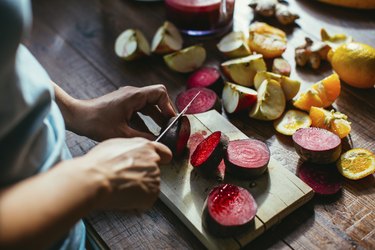
Carbohydrate-filled beets, with 6 percent of the DV per cooked cup, get their bright red hue from betalains — a natural plant pigment that has antioxidants and anti-inflammatory properties, per the Cleveland Clinic.
Beets also are high in fiber and have nitrates (which can help improve blood pressure) and folate (a B vitamin that's particularly important during pregnancy).
Check out the foods high in carbohydrates chart below.
Top Healthy Foods That Are High in Carbohydrates
Food | Serving Size | Carbohydrate Content |
|---|---|---|
Sweet potatoes | 1 cup, cooked | 59.1 g, 20% DV |
Spelt | 1 cup, cooked | 51.3 g, 17% DV |
Kamut | 1 cup, cooked | 47.5 g, 16% DV |
Amaranth | 1 cup, cooked | 46 g, 15% DV |
Taro | 1 cup, cooked | 45.7 g, 15% DV |
Chickpeas | 1 cup, cooked | 45 g, 15% DV |
Granola | 1/2 cup | 45.5 g, 15% DV |
Rice noodles | 1 cup, cooked | 42.3 g, 14% DV |
Quinoa | 1 cup, cooked | 39.4 g, 13% DV |
White Potatoes | 1 medium baked potato | 36.5 g, 12% DV |
Whole Wheat Pasta | 1 cup, cooked | 35.2 g, 12% DV |
Bananas | 1 large banana | 31.1 g, 10% DV |
Acorn Squash | 1 cup, cooked | 30 g, 10% DV |
Oatmeal | 1 cup, cooked | 28 g, 9% DV |
Navy Beans | 1/2 cup, cooked | 26.8 g, 9% DV |
Brown Rice | 1/2 cup, cooked | 25.8 g, 9% DV |
Sweet Corn | 1 large ear, cooked | 24.8 g, 8% DV |
Lentils | 1/2 cup, cooked | 19.9 g, 7% DV |
Wild Rice | 1/2 cup, cooked | 17.5 g, 6% DV |
Beets | 1 cup, cooked | 16.9 g, 6% DV |
- Harvard T.H. Chan School of Public Health: "Carbohydrates"
- Office of Disease Prevention and Health Promotion: "Appendix E-3.1.A4. Nutritional goals for each age/sex group used in assessing adequacy of USDA Food Patterns at various calorie levels"
- United States Department of Agriculture: "2020-2025 Dietary Guidelines for Americans"
- U.S. Food and Drug Administration: "Daily Value on the New Nutrition and Supplement Facts Labels"
- MyFoodData: "Mashed Sweet Potatoes"
- Harvard T.H. Chan School of Public Health: "Sweet Potatoes"
- MyFoodData: "Cooked Spelt"
- Encyclopaedia Britannica: "Spelt"
- MyFoodData: "Kamut Cooked"
- Farmers' Almanac: "What The Heck Is Kamut?"
- MyFoodData: "Cooked Amaranth"
- Purdue University Center for New Crops & Plant Products: "Amaranth"
- MyFoodData: "Cooked Taro"
- United States Department of Agriculture: "Taro"
- MyFoodData: "Chickpeas (Garbanzo Beans) (Cooked)"
- Illinois Extension: "Chickpeas (Garbanzo Beans): Hummus and Beyond"
- MyFoodData: "Cereal Granola"
- Consumer Reports: "Is Granola Good for You?"
- MyFoodData: "Rice Noodles (Cooked)"
- MyFoodData: "Quinoa Cooked"
- Harvard T.H. Chan School of Public Health: "Quinoa"
- MyFoodData: "Baked Potatoes"
- MyFoodData: "Whole Wheat Pasta"
- MyFoodData: "Bananas"
- MyFoodData: "Oranges"
- MyFoodData: "Strawberries"
- MyFoodData: "Baked Acorn Squash"
- National Institutes of Health: "Vitamin C"
- MyFoodData: "Cooked Oatmeal"
- Harvard T.H. Chan School of Public Health: "Oats"
- MyFoodData: "Canned Navy Beans"
- MyFoodData: "Brown Rice"
- University of Pittsburgh Medical Center: "Brown Rice vs. White Rice: Which Is Healthier?"
- MyFoodData: "Cooked Yellow Sweet Corn"
- MyFoodData: "Lentils (Cooked)"
- MyFoodData: "Cooked Wild Rice"
- Harvard T.H. Chan School of Public Health: "Rice"
- MyFoodData: "Cooked Beets"
- Cleveland Clinic: "The Health Benefits of Beets"
- Johns Hopkins Medicine: "Health Benefits of Corn"